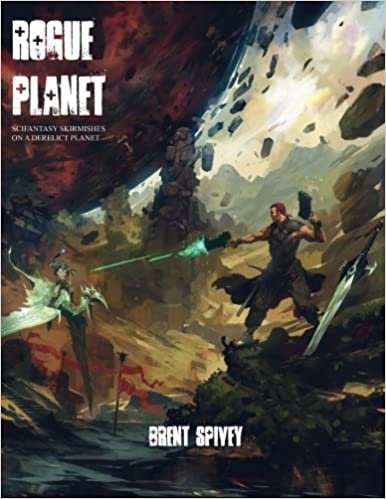
Solo wargaming has been on my mind a lot recently. Playing with or against friends has so many obvious benefits and there’s no need to go into them here. But family, work, and a lack of human opponents can really limit your opportunities to roll some dice.
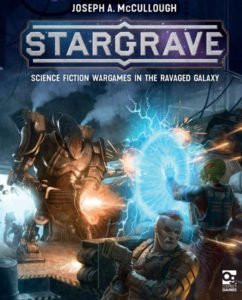
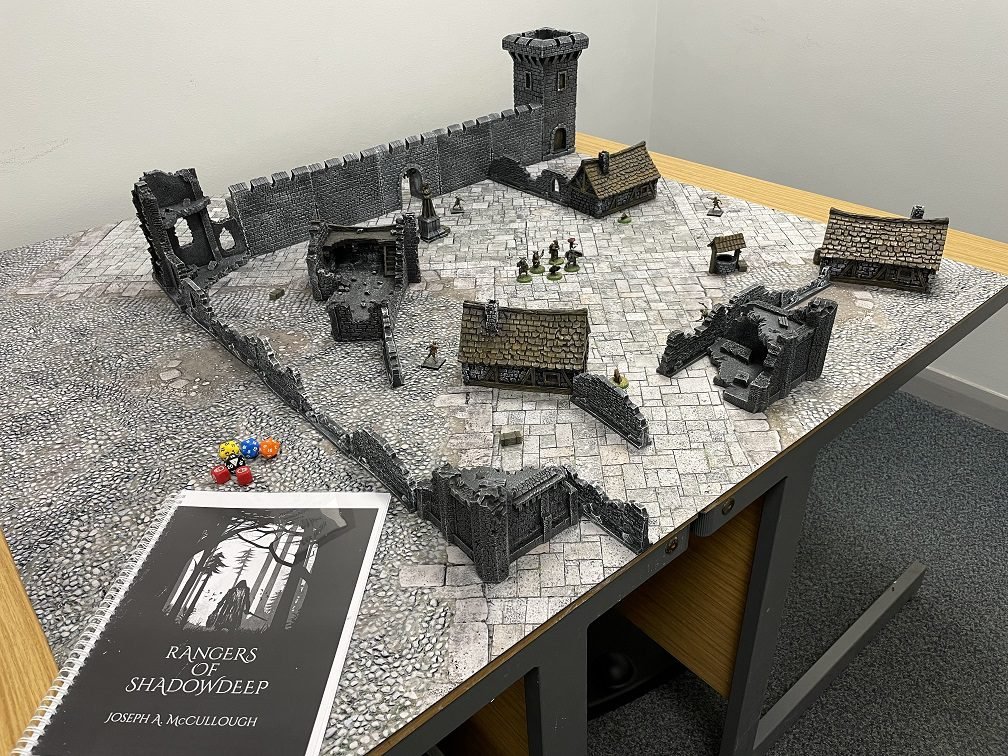
I’m not a vastly experienced wargamer. In fact, the range of games I’ve played is probably quite limited compared to most others. But, for what it’s worth, I consider Joe McCullough’s Rangers of Shadow Deep the gold standard of solo and co-op narrative wargaming. I also see his Perilous Dark book (predominantly created around Frostgrave) as something of a Bible in this area.
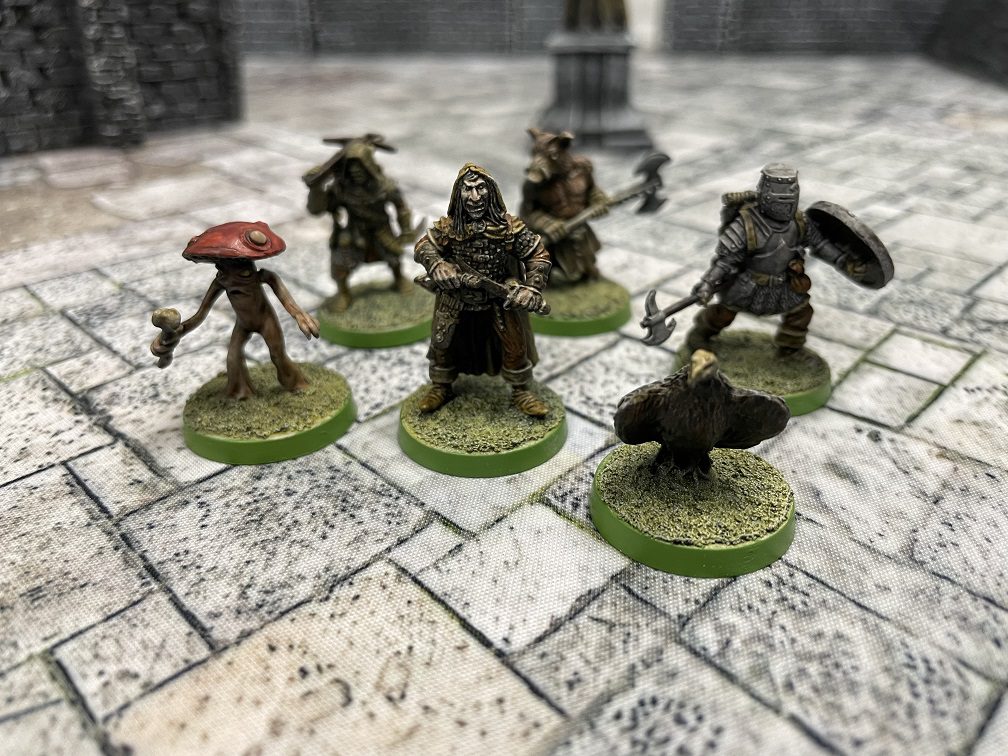
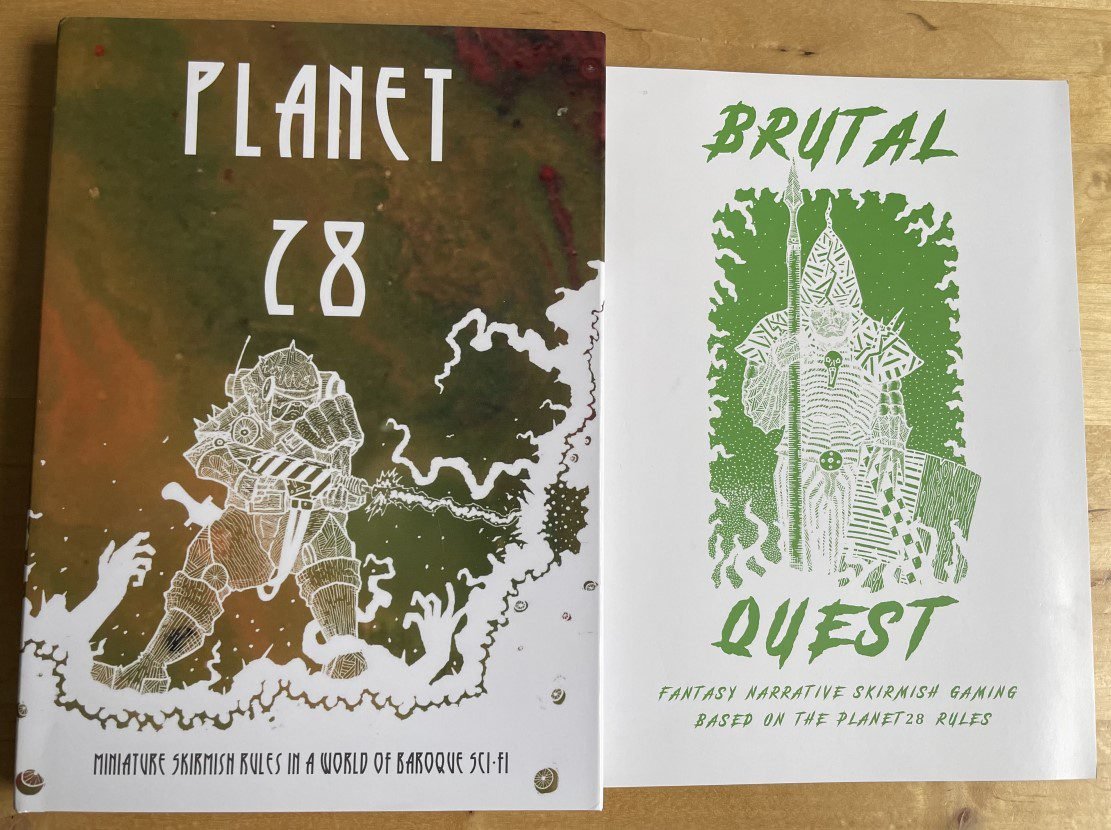
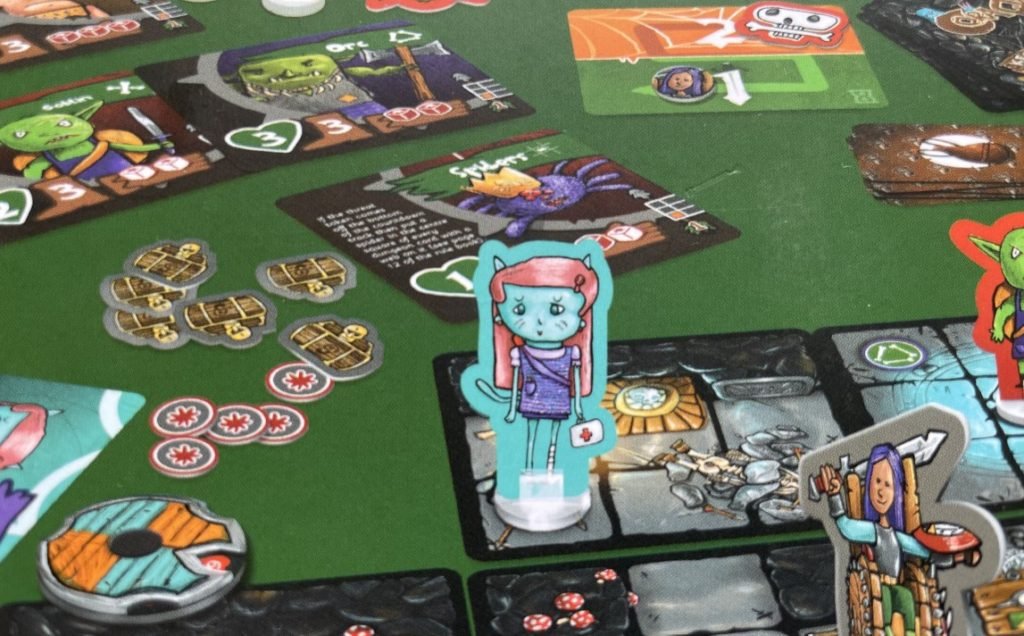
As much as I enjoy Joe’s games, I’m always keen to try out others, and my latest points of interest have been Brutal Quest and Planet 28, two titles by Mammoth Miniatures.
With an enjoyable solo sci-fi game of Planet 28 already under my belt, I’m now in the process of planning a narrative solo campaign for its fantasy alternative, Brutal Quest. I wanted to draw heavily from Rangers of Shadow Deep and Perilous Dark to make this complex, immersive, and challenging, even without the involvement of another human player.
With that in mind, I’ve gone about putting together this solo and co-op narrative campaigns guide. And, though it’s based around Brutal Quest, it’s easily transferable to any other gaming system.
Related reading: Random events for solo/co-op rank and flank battles.
Powered by RedCircle
I’ve also spent the past few months tinkering with AI. I know some folks are, at best, suspicious of such technology, but, in my opinion, it has a lot of great potential to enhance solo and co-op narrative wargaming campaigns. I think you can liken AI to magic in any fantasy story – too much of it can be overwhelming, but, when used acutely and wisely, it offers a lot of benefits and advantages.
That said, I’m not someone who wants to bring the digital world into my analogue hobby, so I’d never be looking to use AI during my games. This is more about crafting ideas and narratives in the preparation and planning stages.
I also acknowledge that AI has its flaws. Every output it generates must come from somewhere, and there’s always a very real risk of plagiarism. Not that this guide is intended as a product for sale. It’s just something I’ve been putting together anyway as I plan my own narrative campaign.
I figured that others might enjoy and benefit from it, too, so I’m publishing it in the hope that it might help you add a few extra dimensions to your solo and co-op games. If you’d like to chat more about it offer any feedback, suggestions, or pointers, please join the Tabletop Miniature Hobby Discord, which is a brilliant community of enthusiastic and friendly hobbyists.
For now, though, let’s crack on with building this campaign…
My Campaign Narrative
So, to my story, then. I’ll be setting it in the Warhammer World where I’ll aim to take a traditional RPG-style party of four (sorcerer, barbarian, dwarf, and ranger) on a journey from The Dark Lands, North through the World’s Edge Mountains, skirting around the edge of The Empire, and onwards to the Realm of Chaos itself.
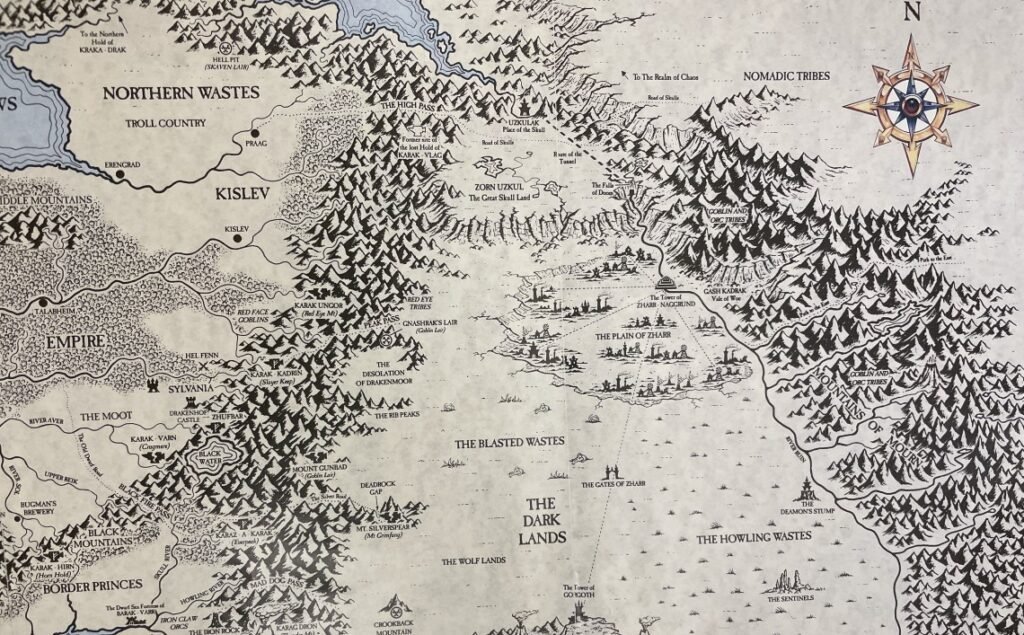
They are in pursuit of an antagonist, and they’re not your typical band of do-gooder heroes.

- Zargul Fireweaver, a Hobgoblin Shaman
- Drakar Bloodtracker, a Hobgoblin Ranger
- Courtney Lovecraft, a Mutant Barbarian
- Xarzul Twobeards, a two-headed Chaos Dwarf

The antagonist is another Chaos Dwarf by the name of Balrik Flameforged, the estranged cousin of Twobeards, who betrayed an imprisoned him in The Dark Lands. The other three are also former prisoners and slaves of Flameforged, and each has their own personal desire for vengeance.
The campaign will pit the party against a diverse range of opponents in a wide variety of environments. There’s a real risk in situations like this where you feel like you’re repeating the exact same game only with a different set of miniatures and terrain on the table. This guide is an attempt to avoid that.
When creating examples for each of the sections in this guide, I’m going to use a scenario where the party face-off against Festerblade Rotsworn’s Nurgle worshipping warband. This includes Festerblade himself, a Chaos Warrior called Brother Rust, a daemon called Festemus, a Best of Nurgle called Festergrub, multiple bases of Nurglings, and several Plaguebearers.
Cards & Random Roll Tables
Cards and tables will play an integral role in this narrative campaign. I know these aren’t unique to Rangers of Shadow Deep and Frostgrave, but to me, they’re standout factors in both games. These can be used for anything, from treasure and clues, to plot points and major events.
Having a standard deck of cards where each card is assigned to a particular random event can keep games fresh and unique. And, having more cards than there are turns, means you don’t know exactly what’s going to be drawn or included.
With that all said, let’s kick on towards part one where we’ll look at scenarios and mission objectives in solo, co-op, and narrative wargaming campaigns.
Scenario & Mission Objectives
If you’re playing a solo or co-op game, then you won’t get a lot of mileage out of filling the table up with baddies and trying to kill them. Instead, think about what your characters need to achieve. The baddies or monsters are still there to try and stop them. But killing them all probably isn’t the big-picture goal.
In Perilous Dark, Joe McCullough uses the example of characters trying to destroy a statue, and coming up with some potential reasons for why said statue needs to be destroyed. He also talks about missions where players are tasked with collecting a certain number of artefacts or items.
Here, it can be as simple as looking at your terrain and miniature collection, deciding what you want to put on the table, and then creating a story (and objective) from that.
Narratives That Go Beyond Combat
Taking to AI for a moment, here are some examples of objectives that go beyond trying to out-kill a bunch of NPCs.
Retrieve the Artifact: Your party must secure a valuable artifact hidden on the battlefield and successfully escape with it.
Hold the Line: Defend a specific area or objective for a set number of rounds against waves of enemies to win.
Infiltration: Infiltrate the enemy camp, gather intelligence, and escape without being detected.
Sabotage: Destroy a critical enemy structure or weapon within a limited number of turns.
Rescue Mission: Locate and rescue a captive ally or important NPC while fending off enemy forces.
Race to the Finish: Your party must reach a specific location on the battlefield before the enemy does.
Diplomatic Solution: Negotiate with a neutral faction on the battlefield to gain their support or cooperation.
Escort Duty: Safely escort a vulnerable NPC or convoy from one side of the battlefield to the other.
Protect the VIP: Defend a high-value target within your party from assassination attempts.
Survival Challenge: Outlast a continuous onslaught of enemies for a specific duration without losing all party members.
Of course, these can offer a lot more fun (and meaning) when they are a small part of a bigger narrative campaign. For example, my own warband are trying to track down and kill the antagonist Balrik Flameforged. Therefore, each battle they fight should tie into that wider story.
Scenario Objectives & Outcomes
Going back to AI, I told it all about Festerblade Rotsworn’s Nurgle worshipping warband my party of antiheroes will be up against, as well as the general setting and layout of my terrain. I can then ask it to come up with some potential victory conditions.

Here’s what it offered me:
Claim the Moldering Banner: Festerblade Rotsworn’s banner, crafted from flayed human flesh, is a gruesome symbol of power. Your heroes believe that capturing this gruesome symbol could lead to clues about Balrik’s whereabouts.
Harness Nurgle’s Corruption: As your party pursues Balrik, they discover that he’s been tampering with the forces of Nurgle. Completing forbidden rituals or manipulating the taint’s energy can provide your heroes with the unholy strength needed to confront him. These rituals might uncover secrets related to Balrik’s plans.
Exploit the Valuable Captive: Rotsworn’s warband holds a captive who may hold knowledge of Balrik’s whereabouts. Your goal is to rescue this hostage and exploit their knowledge or worth to your advantage. Victory involves securing their cooperation or extracting valuable information.
Plunder the Plaguebearer Nests: Plaguebearer nests conceal tainted relics and artifacts. Your heroes must locate and loot these nests, seizing any valuable items for their gain. Winning requires plundering all the plaguebearer nests.
Disrupt the Chaos Portal: Rotsworn’s warband is attempting to open a rift to the Realm of Chaos in an effort to aid Balrik Flameforged’s escape. Reach the portal’s location and perform sinister rituals to bend its power to your will. Victory involves establishing mastery over the portal.
Seize the Forbidden Relic: A powerful relic hidden in the desolate terrain beckons your heroes. They believe that possessing this artifact could give them an advantage in the hunt for their nemesis.
Survive the Plague Wind: A noxious Plague Wind is sweeping across the battlefield, carrying deadly diseases. Your objective is to survive a set number of turns while dealing with the effects of the Plague Wind. You win by keeping all your heroes alive until the end.
I can then choose the one that appeals the most and dig for some more details about what success (or failure) could look like in this encounter. Let’s opt for “Exploit the Valuable Captive”.
“Your party has learned that Rotsworn’s warband holds a captive of significant value, whether it be a skilled artisan, a spy with crucial information, or someone with connections to your primary target, Balrik Flameforged. Your goal is to rescue this hostage and exploit their knowledge or worth to your advantage. Victory involves securing their cooperation or extracting valuable information.”
Potential Victory Conditions
Rescue and Extraction: The primary condition for victory is successfully rescuing the valuable captive from the clutches of Rotsworn’s warband. To achieve this, your warband must reach the location where the captive is held, confront any guards or obstacles, and escort the hostage to safety. Victory is yours if the captive is safely extracted by the end of the game.
Secure Cooperation: In addition to rescuing the captive, another path to victory is gaining their cooperation. This could involve persuading, convincing, or even intimidating the hostage into willingly aiding your warband. Victory is achieved if, by the end of the game, the captive is cooperative and provides valuable information, assistance, or services that will aid your campaign.
Interrogation and Intelligence: If your warband successfully captures and interrogates the valuable captive, you may obtain essential intelligence or secrets that can be used to your advantage in your quest to track down Balrik Flameforged. Victory is achieved if your warband successfully interrogates the captive and acquires valuable information.
Evasion and Escape: If Rotsworn’s warband becomes overwhelmed or incapacitated, and your warband manages to escape the battlefield with the valuable captive, it’s considered a victory. This outcome acknowledges that Rotsworn’s warband’s power and control over the hostage have been broken.
Limit Nurgle Influence: If your warband can disrupt Nurgle-themed rituals, actions, or spells aimed at corrupting or manipulating the captive, you may hinder Rotsworn’s warband’s influence over the hostage. Achieving a certain number of disruptions within the game may lead to victory, as it demonstrates your warband’s ability to protect the captive.
Clue Markers & Plot Points
In Perilous Dark, Joe McCullough talks a fair bit about treasure tokens and clue markers that can further an investigation, as well as a narrative. Let’s look at how such plot points might look within the “Exploit the Valuable Captive” scenario.
Captive’s Journal: Your party finds a bloodstained journal near a clue marker. It belongs to the captive and contains cryptic notes about Balrik Flameforged’s recent activities and connections to a hidden artifact. The journal hints at the artifact’s location.
Hidden Chamber: Investigating a clue marker reveals a concealed chamber beneath the battlefield. Inside, your party discovers an ancient tome filled with forbidden rituals. The captive’s knowledge of these dark arts could be exploited to your advantage.
Secret Meeting: A clue marker leads your party to a location where members of Rotsworn’s warband held a clandestine meeting. Intercepted documents detail a plan to ally with a different chaos faction, revealing potential weaknesses in the Rotsworn’s warband’s defenses.
Enchanted Shackles: Your characters find a set of peculiar shackles near a clue marker. These enchanted restraints were used to hold the captive. Upon inspection, your party realizes that these shackles could be repurposed to restrain a powerful enemy in the future.
Cryptic Map: Your party uncovers a torn map that seems to point to a hidden cache of valuable items. The captive’s information confirms that these items are essential for your campaign against Balrik Flameforged.
Traitorous Note: A note found at a clue marker suggests that a member of Rotsworn’s warband might be willing to betray their leader in exchange for safety. This information could be used to sow discord within the enemy ranks.
Random Event Cards
Now, we can add further flavour to the narrative and challenge to the gameplay with some random event cards.
Foul Stench: A putrid cloud of noxious gas engulfs the battlefield. All characters, including your own, suffer a -1 penalty to their Attack and Agility for the next turn as they struggle to endure the foul odor.
Pestilent Aura: Rotsworn’s warband’s presence exudes an aura of pestilence. Characters within 10cm of any Plaguebearer or Festemus must pass a Psyche test at the start of their turn or suffer 1 damage. Rotsworn’s warband members are immune to this effect.
Swarm of Nurglings: A horde of Nurglings erupts from the ground at a clue marker, obstructing your path. To pass, a character must defeat the Nurglings in combat. Victory allows you to proceed, but defeat results in a -1 Agility penalty.
Brother Rust’s Vengeance: Brother Rust, the Chaos Warrior, seeks vengeance against one of your characters. Randomly select a character; they are targeted by Brother Rust during his next activation, ignoring other targets if possible.
Festemus’ Pestilence: Festemus, the Daemon, releases a burst of pestilential energy. All characters within 10cm of Festemus must pass a Psyche test or become diseased, suffering -1 Agility until cured.
Nurgle’s Resilience: Rotsworn’s resilience is bolstered. All Nurgle followers gain +1 Melee for the next turn, making them even more challenging to defeat.
Plague Wind: A noxious cloud of pestilence sweeps across the battlefield. All characters must make a (P) roll. Failure results in suffering 1 damage for each point below the target number. Nurgle followers are immune.
Rotten Ground: The ground becomes treacherous as it turns to rot and decay. All characters moving through or standing on open ground suffer a -1 (A) penalty for one turn.
Nurgle’s Resilience: The Plaguebearers’ bodies become more resilient. They each gain +1 to their armor rolls for the next turn.
Plaguebearer Regeneration: Plaguebearers exhibit their unnatural vitality, restoring lost wounds. All Plaguebearers recover 1D6 lost hit points.
Nurgle’s Blessing: Nurgle’s blessings bring despair to your warband. One random player-controlled character must make a break test. Failure results in that character losing 1 action point on their next turn.
Epidemic Outbreak: Nurgle’s diseases spread rapidly. Each character within 10cm of a Plaguebearer must make a break test. Failure results in suffering 1 damage for each point failed. Nurgle followers are immune.

Character Dynamics & Development
For any story to live and breathe on the tabletop, we need to see our miniatures as characters, rather than something akin to chess pieces. Being on the same side doesn’t guarantee that your characters get on. Some might even hate each other and see their alliance as nothing more than a temporary necessity.
We can also use random events to give clues about a character’s backstory, or to add or limit certain character effects.
A concept I’m drawn to, though, is one of individual personal objectives that exist alongside the overall scenario objective. Let’s dig up some options from our AI gaming buddy.
Personal Objectives
Zargul Fireweaver (Hobgoblin Shaman)
Blightbearer’s Curse: Zargul aims to weaken Rotsworn’s warband by placing a curse on one of the Plaguebearers, sapping its strength. His objective is to cast a debilitating curse on a Plaguebearer during the battle.
Drakar Bloodtracker (Hobgoblin Ranger)
Secure the Escape Route: Drakar is tasked with ensuring the group’s safe escape after extracting the captive. His objective is to locate and secure a viable escape route marked by a clue marker.
Courtney Lovecraft (Mutant Barbarian)
Engage Festemus in Battle: Courtney wishes to challenge Festemus, the Daemon, in combat to prove her strength. Her objective is to engage Festemus in melee combat and emerge victorious.
Xarzul Twobeards (Two-Headed Chaos Dwarf)
Gather Intelligence on Balrik: Xarzul seeks information on Balrik’s whereabouts and weaknesses. His objective is to gather intelligence from a clue marker regarding Balrik Flameforged’s location.
Internal Warband Dynamics
Now, let’s generate a character dynamics table that you can roll on, prior to playing a particular scenario.
Bitter Rivalry: Two characters in your warband have a long-standing feud. They refuse to work together and receive a -2 penalty to skill rolls when they are within 5cm of each other.
Unlikely Allies: Two characters who previously disliked each other have found common ground during a recent mission. They now receive a +2 bonus to skill rolls when they are within 5cm of each other.
Mentorship: One character takes another under their wing, providing guidance and training. The mentee may reroll one failed skill roll per turn while within 5cm of the mentor.
Hidden Affection: Two characters in your warband have developed romantic feelings for each other but are keeping it secret. If they fight alongside each other, they gain a +1 bonus to skill rolls.
Frenemies: Two characters have a love-hate relationship, often bickering but still working together effectively. They may reroll one failed skill roll per turn while within 5cm of each other.
Grudge: One character holds a grudge against another for a past mistake. When within 5cm of the target of their anger, they receive a +1 bonus to skill rolls but suffer a -1 penalty to (P) rolls.
Loyalty Test: A charismatic character challenges the loyalty of their comrades. All characters must make a (P) roll. Those who fail receive a -2 penalty to all skill rolls for the next turn.
Estranged Friends: Two characters who were once close friends have drifted apart. When they fight alongside each other, they suffer a -2 penalty to skill rolls.
Sacrifice: One character is willing to sacrifice themselves to save another. If they are in combat together, they can use their actions to protect the other character, but they cannot attack or move.
Sibling Rivalry: Two siblings in your warband are highly competitive. When they fight together, they gain a +2 bonus to (A) rolls but a -2 penalty to (P) rolls.
Shared Tragedy: Two characters share a painful past event that has brought them closer. If one of them is injured, the other gains a +2 bonus to skill rolls until the end of the turn.
Old Friends: Two characters have been friends for a long time. When they fight together, they gain a +1 bonus to all skill rolls and may share an action once per game.
Secret Admirer: One character secretly admires another from afar. If they are in combat together, they gain a +1 bonus to skill rolls, but the admired character has no knowledge of the admirer’s feelings.
Sibling Protection: An older sibling is highly protective of their younger sibling. They may use one of their actions each turn to protect the younger sibling, granting them a +1 bonus to (A) and (M) rolls.
Revenge Pact: Two characters have sworn vengeance against a common enemy. When they fight that enemy together, they gain a +2 bonus to skill rolls and may reroll one failed skill roll each.
Unwavering Loyalty: One character is unwaveringly loyal to another. If the loyal character is within 5cm of their chosen ally, they may use one of their actions to reroll a failed skill roll for that ally.
Jealousy: One character is envious of another’s success. When the successful character gains a reward, the jealous character must pass a (P) roll or become distracted, receiving a -2 penalty to skill rolls for one turn.
War Stories: Two characters enjoy sharing tales of their past exploits. When they’re near each other, they gain a +1 bonus to (P) rolls and a +1 bonus to break tests.

Ongoing Character Development
When playing a campaign, you’re going to want these dynamics carry over and evolve from game to game. It’s a good idea to implement a campaign system that tracks character development, interactions, and storylines. Here are some ideas:
Campaign Record Sheet: Create a campaign record sheet where players can track their warband’s progress, character relationships, and significant events. Include sections for each character’s name, traits, abilities, and any notable relationships.
Character Advancement: Characters should gain experience points (XP) or campaign points (CP) based on their performance in each game. These points can be used to improve skills, acquire new traits, or deepen relationships.
Relationship Points: Introduce a mechanic for tracking relationship points between characters. Positive interactions and teamwork during games can earn relationship points, while negative interactions or betrayals can lead to lost points.
Character Bonds: Encourage players to develop character bonds by creating backstory connections. For example, two characters might be childhood friends, siblings, rivals, or sworn protectors of each other. These bonds can provide bonuses or special abilities when characters are together.
Evolve Relationships: Allow character relationships to evolve over the course of the campaign. For instance, a rivalry might turn into mutual respect, or a secret admirer might eventually reveal their feelings. Let players role-play these changes during games.
Campaign Events: Introduce campaign-specific events or scenarios that focus on character development and relationships. For example, a scenario could revolve around resolving a conflict between two characters or helping two characters become closer friends.
Narrative Consequences: Make the narrative consequences of relationships more apparent. For instance, if two characters have a strong friendship, they might gain additional bravery or synergy during games. Conversely, a broken relationship could lead to penalties.
Character Arcs: Develop character arcs based on their relationships and backstories. Characters can have personal goals related to their connections with other members of the warband. Completing these goals can lead to character growth.
Events and Choices: Incorporate choices and events that impact character relationships. For example, a critical decision in one game might determine whether a rivalry intensifies or resolves in the next game.
Campaign Storyline: Weave an overarching campaign storyline that integrates character relationships and personal goals. Make sure that the narrative reflects the evolving dynamics within the warband.
Campaign Events Log: Keep a log of significant campaign events, including character interactions, rivalries, alliances, and any major storyline developments.
Relationship points
I liked the suggestion of creating a Relationship Points (RP) mechanic for narrative campaigns. This definitely has the potential to add depth and storytelling opportunities to our games.
I decided to ask the AI for a guide on how to implement and use an RP system in narrative campaigns:
Define the Purpose of Relationship Points
Determine what RP will represent in your campaign. RP can signify various aspects of character relationships, such as trust, friendship, rivalry, or even romantic interest. Decide whether RP will be a measure of positive or negative interactions between characters.
Establish Starting RP
At the beginning of the campaign, assign starting RP values to characters based on their backstories, bonds, or pre-existing relationships. This sets the foundation for how characters feel about each other at the campaign’s outset.
Determine RP Gain and Loss Conditions
Clearly define the conditions under which characters can gain or lose RP. Consider the following factors:
Successful teamwork and cooperation: Characters gain RP when they collaborate effectively during games.
Saving or protecting another character: Award RP for acts of selflessness or heroism.
Achieving shared objectives: Characters earn RP when they work together to accomplish goals.
Personal quests or favors: Completing a mission or assisting another character in their personal quest may result in RP gain.
Set RP Thresholds
Determine RP thresholds that trigger specific effects or consequences in the campaign. For example:
Crossing a certain RP threshold might solidify a friendship or create a lasting rivalry.
High RP between characters can unlock special abilities, bonuses, or unique scenarios.
Low RP might lead to distrust, conflicts, or personal quests to mend relationships.
Track RP
Create a campaign record sheet or digital tool to track RP between characters.
Implement RP Consequences
As RP values change, introduce consequences that reflect the evolving dynamics between characters. These can include:
Bonuses or penalties to skill rolls or combat effectiveness based on RP.
Personal quests or character-specific scenarios triggered by RP thresholds.
Role-played reactions and dialogue between characters during games.
Opportunities for characters to resolve conflicts or deepen their bonds in-game.
Campaign Progression
Let RP influence the overall campaign progression. For example, RP milestones could unlock new story elements, alter alliances within the warband, or affect the warband’s reputation in the game world.
Adapt and Evolve
Be flexible with your RP system. Allow it to evolve organically as characters grow and develop.
Implementing an RP mechanic in your narrative campaign adds a layer of storytelling and character development to your games. It encourages you to invest in their characters’ relationships and creates memorable, narrative-driven experiences.
Gaining or Losing Relationship Points
Continuing on with the Relationship Points system, here are some more in-depth examples of how a character may gain or lose them.
Gaining RP:
Rescuing a Teammate: A character saves another character from certain danger during a game, earning gratitude and trust. +2 RP.
Effective Teamwork: Characters consistently work together efficiently during battles and challenges. +1 RP per successful cooperation.
Completing a Personal Quest Together: Two characters assist each other in achieving their personal quests, deepening their bond. +3 RP.
Gift-Giving: One character gives another a thoughtful gift between games, symbolizing their friendship. +2 RP.
Losing RP:
Betrayal: A character betrays the trust of another by stealing, lying, or endangering them during a game. -3 RP.
Conflict and Disagreements: Characters frequently argue or disagree without resolving their issues. -1 RP per unresolved conflict.
Failure to Protect: A character fails to protect another during a dangerous situation, leading to resentment. -2 RP.
Selfish Actions: A character consistently prioritizes their own interests over the group’s well-being, leading to mistrust. -2 RP.
Failure to Fulfill Promises: A character repeatedly fails to follow through on promises or commitments made to another character. -2 RP.
Time limitation
Given enough time, a human player will usually get the better of their NPC opponents. So bringing in some time constraints is another dynamic we can add to the mix to keep things challenging and interesting.
Keeping in theme with this guide, we want to have some narrative reasons for time constraints. You can limit yourself to six or eight turns, but what’s the in-story reason for that hard stop? Not only that, but how can each turn be more challenging than the last, priming us for a frantic and desperate finish? Here are some examples designed for the Festerblade Rotsworn scenario:

Captive’s Degeneration: The captive’s condition deteriorates rapidly due to their exposure to foul energies. Your party must secure their cooperation or extract vital information within a set number of turns before the captive succumbs to the corruption. To make it more challenging, every few turns, the captive’s health worsens, reducing their ability to provide information effectively.
Festering Rift: A temporal rift has opened nearby, causing erratic time fluctuations. Every few turns, there’s a chance for a time warp event to occur. During these events, the scenario clock advances by two turns, forcing your party to expedite their objectives. Additionally, with each time warp, the battlefield becomes increasingly unstable, making movement and actions more challenging.
Festerblade’s Ritual: Festerblade Rotsworn is preparing a dark ritual with the potential to unleash a cataclysmic plague. Your party must complete their objectives and escape before Festerblade’s ritual is completed. Each turn, roll a dice, and if you roll a certain number, the ritual advances, increasing the urgency. As the ritual progresses, the battlefield becomes corrupted, making it harder for your party to move and act.
Nurgling Infestation: The nurglings accompanying Rotsworn’s warband are multiplying rapidly and spreading throughout the area. Your party must achieve their objectives within a limited number of turns before the nurglings become overwhelming. To make it more challenging, the nurglings’ numbers grow each turn, hindering your party’s actions and mobility.
Noxious Fog: A toxic, time-altering fog envelopes the battlefield. This fog will lift in a fixed number of turns, but until it does, your party is unable to achieve their objectives. To escalate the challenge, as the fog persists, it releases poisonous spores that damage and hinder your party, making each turn more perilous.
Enemy Effects or Generation
It’s likely that you’ll start any scenario with a set amount of NPC enemies on the table. The danger of more arriving will keep things challenging, interesting, and add to the time-sensitive nature of your mission.
Spawn points are a popular and easy way to do this. Clue or event markers might also reveal enemies as opposed to information or loot. Here are some ideas for bolstering the ranks of Festerblade Rotsworn’s warband:
Reinforcement Wave: At the start of every second or third turn, a reinforcement wave of Nurgle’s minions arrives from a specific edge of the battlefield. This could represent additional Plaguebearers, Nurglings, or other corrupted beings drawn to the conflict.
Summoning Circle: There’s a large summoning circle at the center of the battlefield. At the end of each turn, there’s a chance that Rotsworn’s warband uses their dark rituals to summon more daemonic reinforcements. Roll a dice; on a specific result, new enemies appear at the summoning circle.
Corrupted Ground: Designate certain areas of the battlefield as corrupted ground. At the end of each turn, any unclaimed corrupted ground has a chance of spawning Nurglings or other foul creatures. Your party can purify or claim these areas to prevent further spawns.
Festerblade’s Standard: Festerblade Rotsworn carries a standard made of flayed human flesh. As long as he’s on the battlefield, the standard emits waves of dark energy that periodically summon additional Plaguebearers to his side. To stop this, your party must defeat Festerblade or capture the standard.
Captive’s Suffering: As the captive’s condition deteriorates, their suffering attracts the attention of Nurgle’s followers. At the end of each turn, there’s a chance that enemy reinforcements, eager to witness the captive’s torment, appear near their location. Speed up your efforts to rescue the hostage to prevent more enemy arrivals.
Noxious Eruptions: Mark specific terrain features as Noxious Eruption zones. At random intervals, these zones release bursts of toxic gas, spawning Nurglings or other minor daemonic entities. Your party can disable these zones or avoid them to prevent further spawns.
Rotting Remains: Scatter the battlefield with rotting corpse markers. At the end of each turn, there’s a chance that these corpses attract scavengers, which may include Plaguebearers or Nurglings. Your party can destroy the markers to deter scavengers from gathering.
Festemus’ Influence: Festemus, the daemon in the Rotsworn’s warband, exudes an aura that corrupts the area around him. At the end of each turn, this corruption has a chance of spawning additional Nurglings. Your party can confront Festemus to disrupt his corrupting influence.

Traps
It isn’t just living enemies who can hurt or kill your characters. Traps can be even more brutal in some instances. Here are some examples for my Nurgle warband encounter:
Toxic Fumes: Characters entering a cloud of toxic fumes must roll a D6. On a roll of 1-2, they take 1D6 damage from inhaling poisonous gases.
Blighted Puddles: Characters stepping into blighted puddles must roll a D6. On a roll of 1-3, they take 1D4 damage as their skin burns from corrosive liquid.
Nurgling Ambush: Characters ambushed by hidden Nurglings suffer 1D8 damage from their surprise attack.
Quicksand: Characters moving through a patch of quicksand must roll a D6. On a roll of 1, they get stuck and take 1D6 damage from the struggle.
Pestilent Fog: Characters passing through a pestilent fog bank must roll a D6. On a roll of 1-3, they become sickened, suffering a -1 penalty to all actions and skills for 1D4 turns.
Obstacles
Whilst traps can injure or even kill your characters, certain obstacles can slow them down, hinder their progress, and bog them down in some pretty grave situations:
Fetid Swamp: A deep and stinking swamp restricts movement. Characters must roll a D6 when entering the swamp. On a roll of 1-2, they become stuck and can only move half their normal distance for the next turn.
Contaminated Pools: Pools of foul, contaminated water hinder characters’ vision. Any character in or adjacent to these pools has their line of sight reduced to 5 cm, making ranged attacks less effective.
Nurgle’s Plague Totems: Enormous totems covered in grotesque Nurglings emit an aura that reduces characters’ agility by 2 cm if they end their turn within 10 cm of a totem. Destroying the totem removes this effect.
Pestilent Grounds: Certain areas of the battlefield are covered in pestilent ground. Characters moving through these areas must roll a D6. On a roll of 1-3, they become sickened, suffering a -1 penalty to all actions and skills for 1 turn.
Toxic Vapors: Noxious vapors rise from vents in the ground, obscuring vision and making it difficult to breathe. Any character in the path of these vents suffers a -1 penalty to agility and shooting actions for 1 turn.
Nurgle’s Bloated Corpses: Corpse-filled craters litter the battlefield. Characters moving through or near these craters risk disturbing the bloated corpses, releasing toxic gases that cause sickness (-1 penalty to skills and actions) for 1 turn.
Churning Miasma: A thick, churning miasma drifts across parts of the battlefield. Any character within it has their movement reduced by 2 cm and gains a -1 penalty to ranged attacks due to poor visibility.
Swarms of Flies: Swarms of plague flies cloud specific areas. Characters within the swarm are distracted, suffering a -1 penalty to ranged attacks and perception checks.

Weather & Conditions
Two final factors that can liven up solo or co-op games and create a memorable story are weather and conditions. In my opinion, these should only be used once per game, as the risk of dramatic changes from one turn to the next could get a bit silly. With that in mind, I’ll likely add one weather or condition card to my event deck, then roll on the following table if I draw one out during the game.
Clear Skies: The sun shines brightly, and the skies are clear. All ranged attacks gain a +1 bonus to hit.
Heavy Rain: A torrential downpour makes movement difficult. All characters’ speed is reduced by 3cm. Ranged attacks have a -2 penalty to hit.
Thick Fog: A dense fog rolls in, limiting visibility. All ranged attacks beyond 10cm suffer a -3 penalty to hit. Characters may not make shooting actions beyond 20cm.
Blinding Snowstorm: A fierce snowstorm engulfs the battlefield. All ranged attacks suffer a -2 penalty to hit. Characters must make a (A) roll to navigate through the blizzard; failure results in them being disoriented for one turn.
Gale Force Winds: Powerful winds sweep across the battlefield. All ranged attacks suffer a -1 penalty to hit, and any flying characters or creatures are grounded for one turn.
Eerie Silence: An unsettling silence falls over the battlefield. All characters’ skills are reduced by 1 for one turn as they feel an eerie presence.
Electromagnetic Storm: A strange storm disrupts technology and magic. All characters’ abilities and spells require a successful (P) roll to activate. Failed rolls result in the loss of an action.
Swampy Terrain: The ground becomes a treacherous swamp. All characters’ speed is reduced by 4cm, and movement through swampy terrain requires a (A) roll to avoid getting stuck.
Mystic Aura: A mystical aura surrounds the battlefield. All characters gain a +1 bonus to (P) rolls for spells, abilities, and break tests for one turn.
Supernatural Eclipse: A rare supernatural eclipse darkens the sky. All characters’ abilities and spells cost one less action point to use during the turn.
Winds of Magic: A surge of magical energy fills the air. All spellcasters gain a +2 bonus to (P) rolls for spells with no risk of mind death for failed rolls.
Volcanic Ash Cloud: A volcanic eruption blankets the battlefield in ash and darkness. All ranged attacks suffer a -3 penalty to hit, and all characters take 1 damage at the start of their turn from inhaling ash.
Swarm of Insects: A massive swarm of biting insects descends upon the battlefield. All characters suffer a -2 penalty to (A) rolls and a -1 penalty to (P) rolls for spells and abilities for one turn.
Earthquake: The ground trembles and shakes violently. All characters must make an immediate (A) roll or be knocked prone, losing their action for the turn. Terrain features may collapse, creating new obstacles.
Aurora Borealis: A dazzling display of colorful lights fills the night sky. All characters gain a +2 bonus to (P) rolls for spells and abilities for one turn, and ranged attacks receive a +1 bonus to hit.
I also recently generated these weather and condition events for games in the Chaos wastes and Cosmic Horror HP Lovecraft-style settings. As you can imagine, they stretch a bit more into the realms of the fantastical.

Summary: Solo, Co-op, & Narrative Wargaming Campaigns
As I mentioned at the start, I’m using Brutal Quest as my game system of choice, but this is all easily transferable to any other miniature wargame in any other genre.
I know there’s a tonne of info in this guide: all of it is hypothetical and designed to get your creative juices flowing. I also don’t advise trying to cram all of it into a single game at once, I think that might become a bit overwhelming. I intend to cherry pick bits and pieces at a time, testing them out as I go. But the game still needs room to breathe, and there’s a definite risk you can overdo all of this if you’re not careful.
If you try anything here out, adapt it for your own narratives, or have suggestions or feedback, please join the Tabletop Miniature Hobby Podcast Discord, which is a brilliant community of enthusiastic and friendly hobbyists. It’d be great to see you in there!