Song of Blades and Heroes is a cult classic miniature agnostic fantasy skirmish ruleset. It’s an incredibly simple game to pick and up learn, with a low barrier to entry (you only need a handful of miniatures). Despite its simplicity though it isn’t a game that quickly feels limiting or boring. There’s a lot you can do with it, from the varied warbands you can build to the scenarios and campaigns you can play through.
On this episode of the Tabletop Miniature Hobby Podcast, we take a deep dive into the Song of Blades and Heroes rules. We talk through the Quality and Combat stats, before covering all the core mechanics around moving, fighting, shooting, magic, and, of course, running away.
Games typically last 30-45 minutes and there’s no bookkeeping either. This makes SBH a great game for beginners to start having fun with right away.
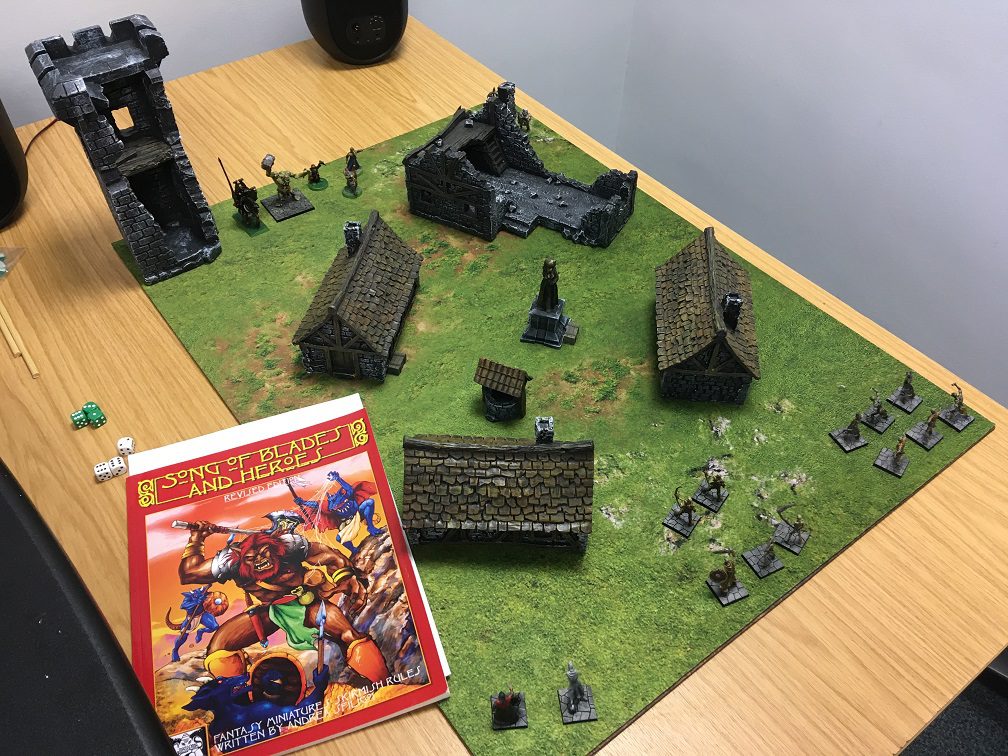
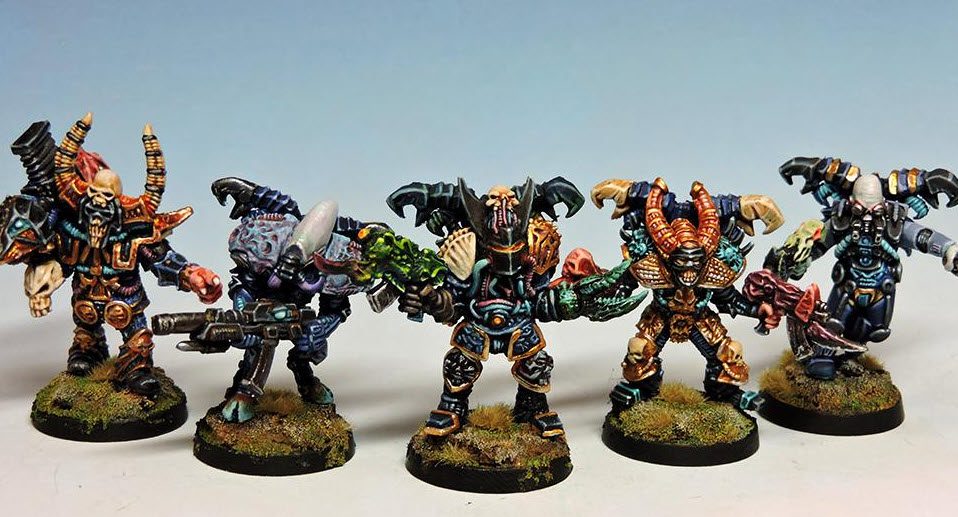
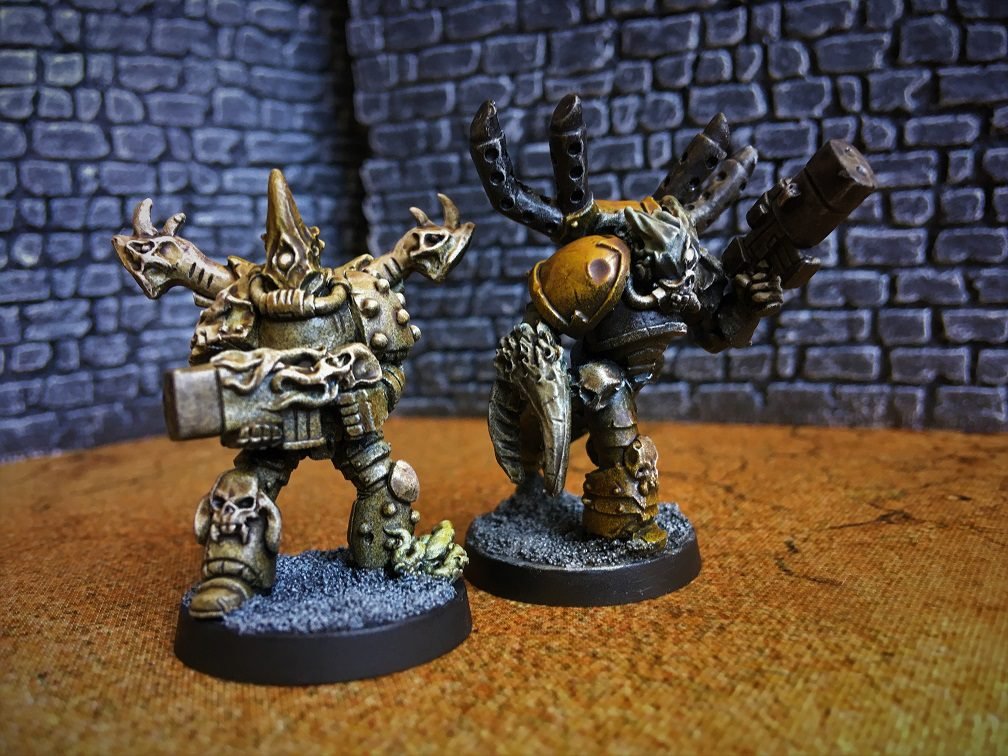
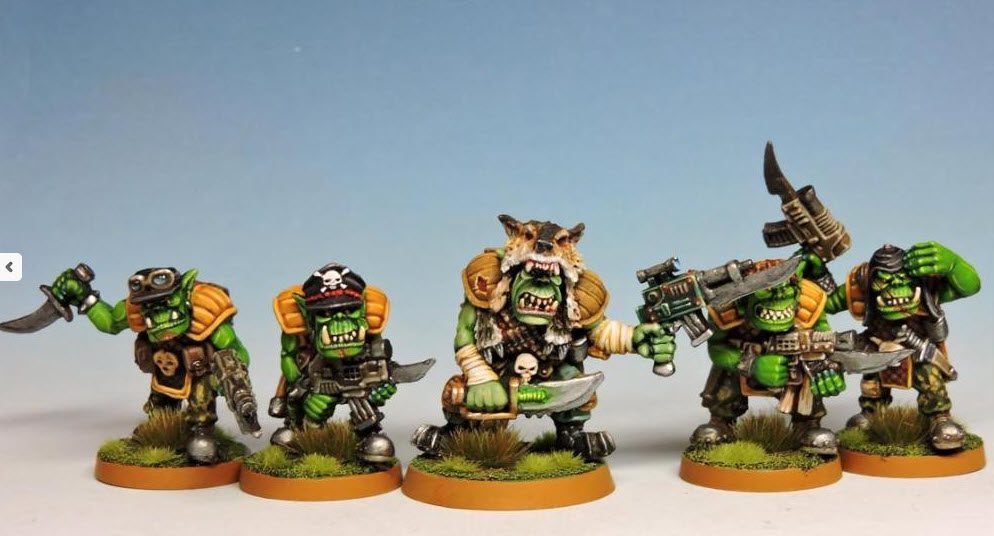
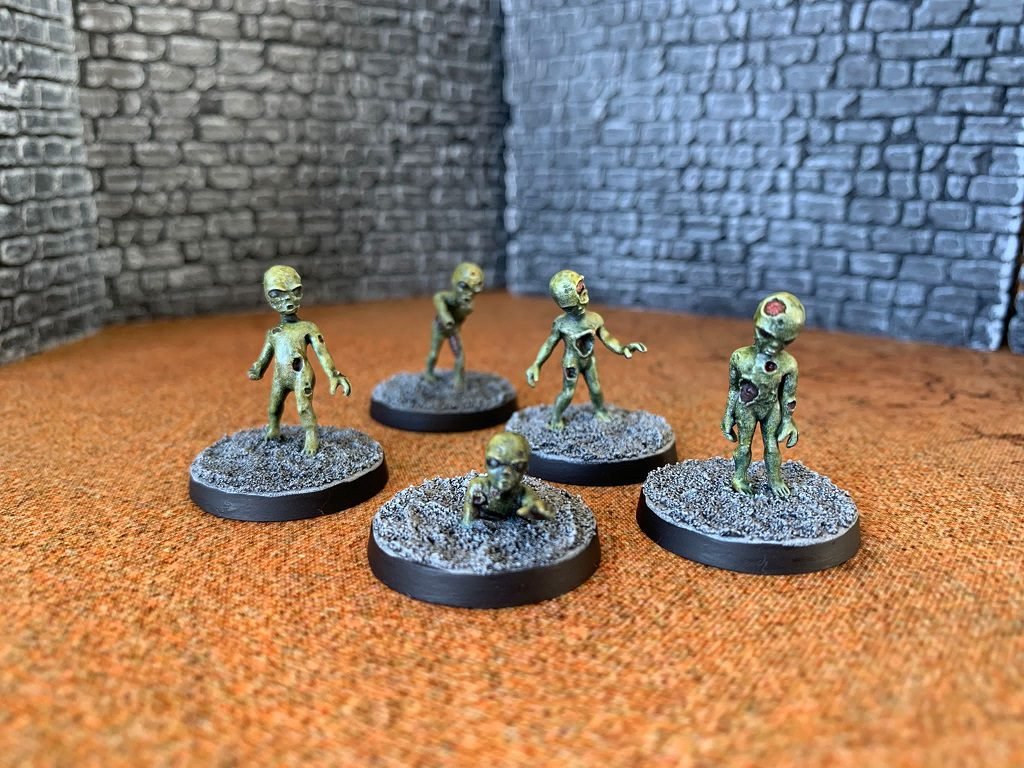
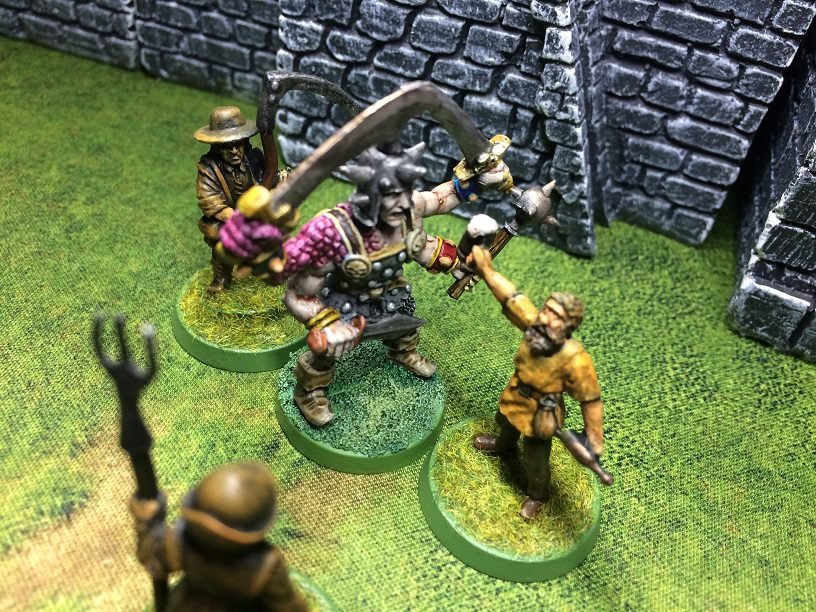
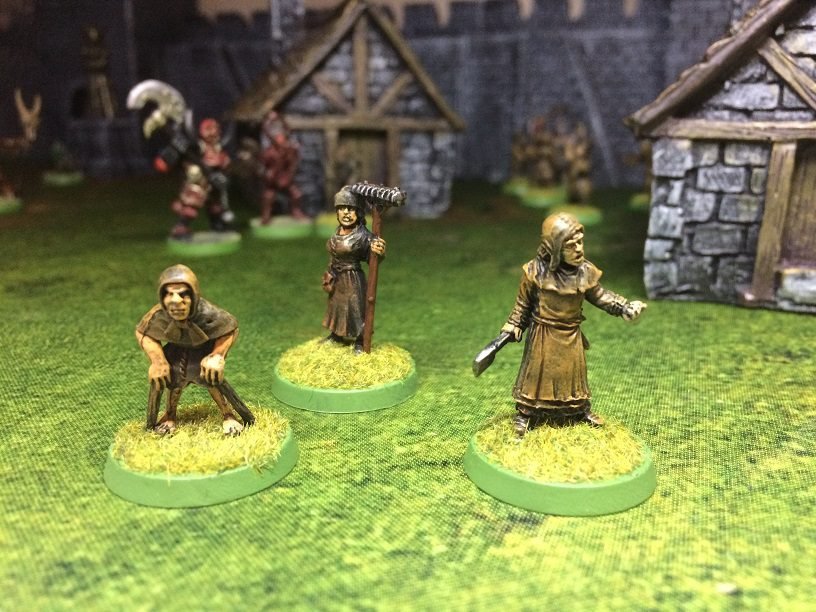
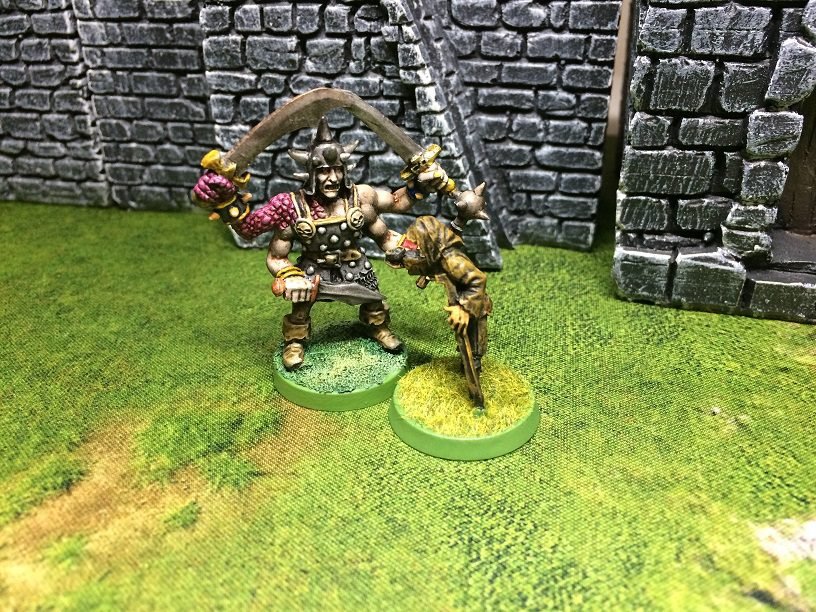
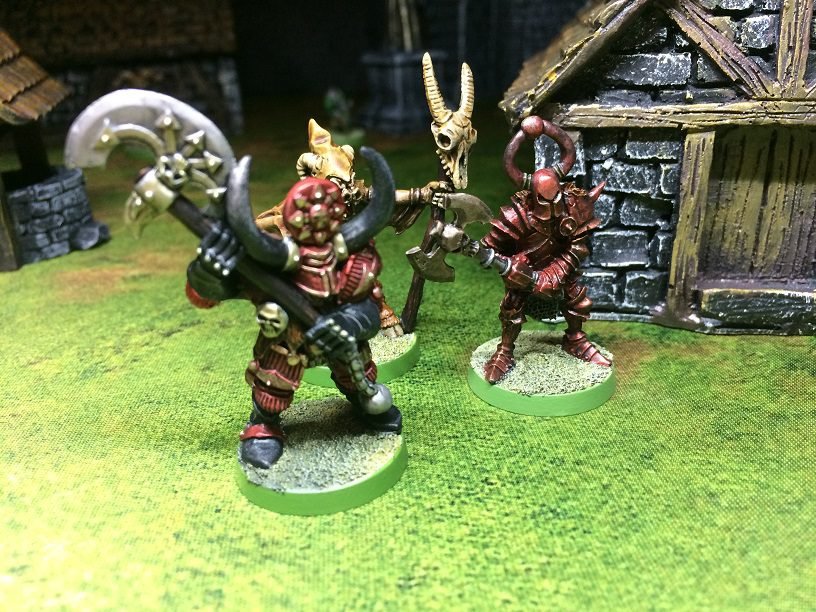
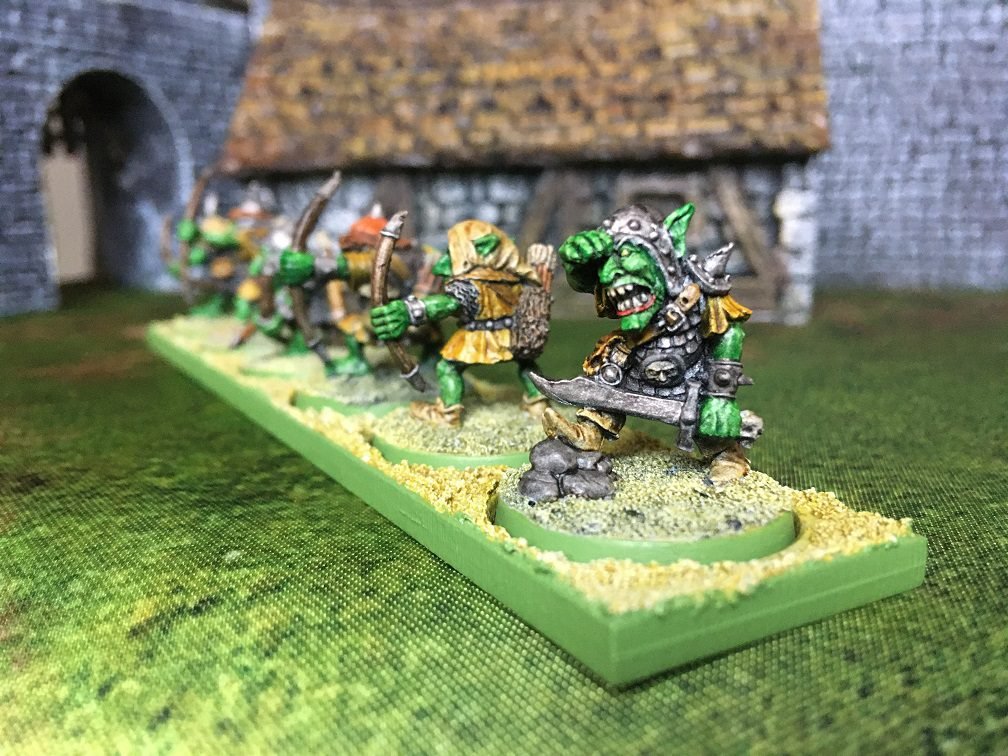
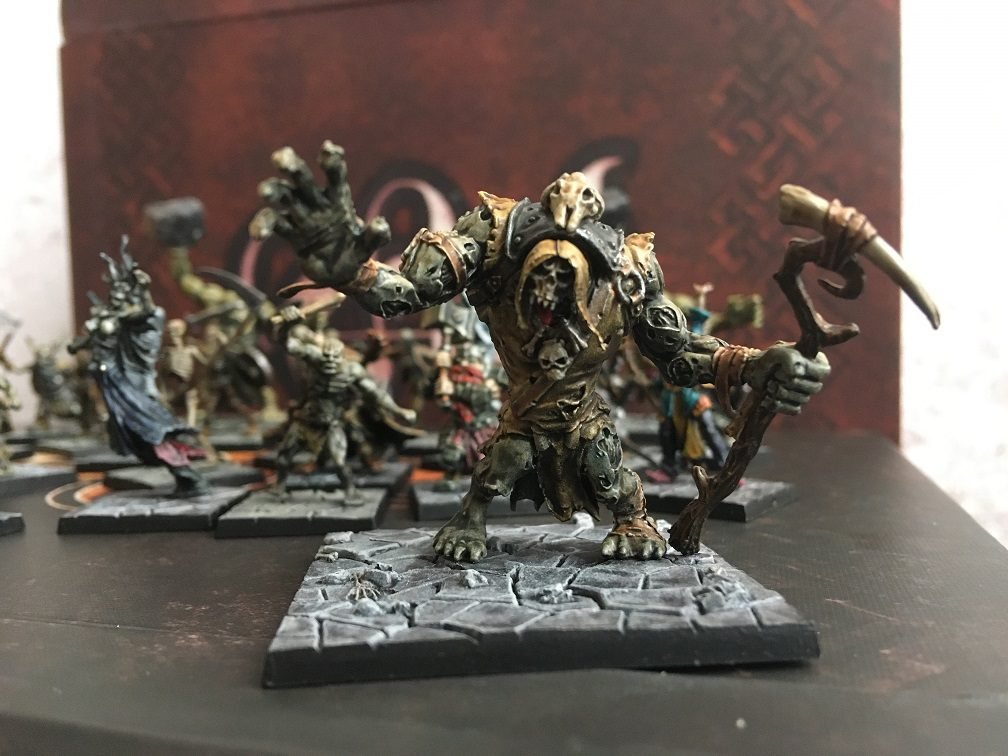
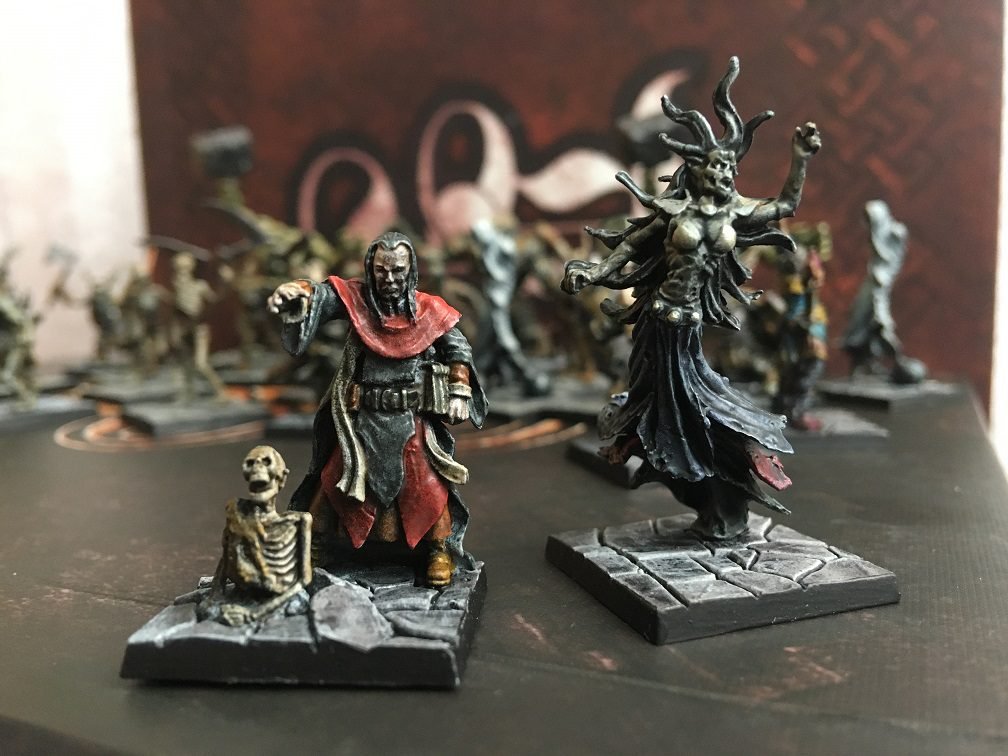
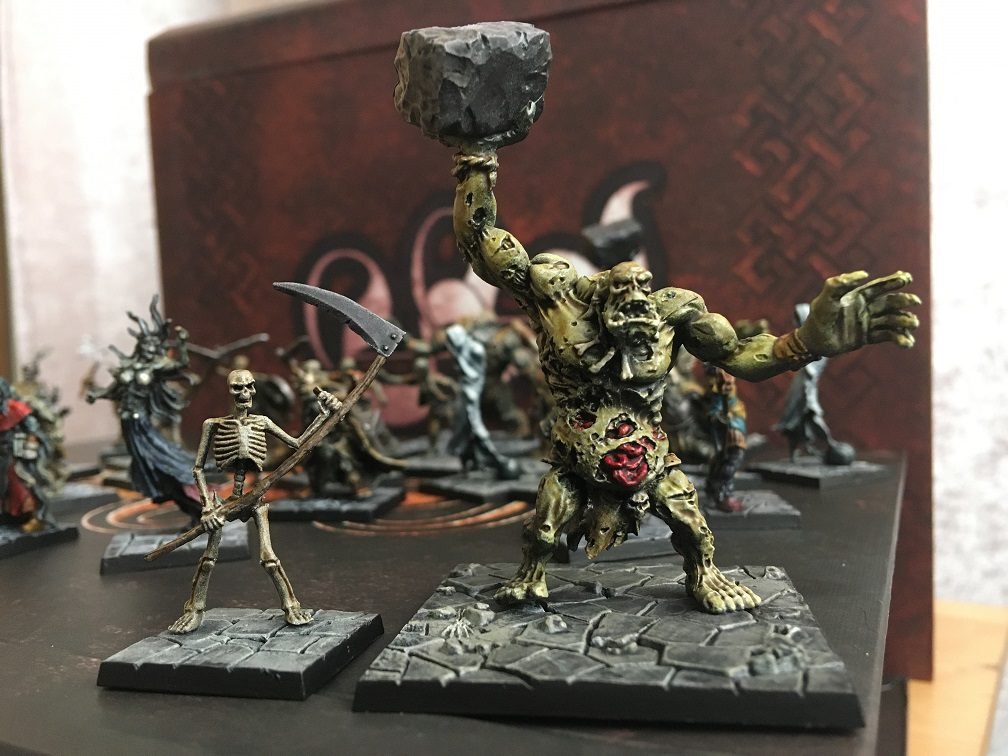
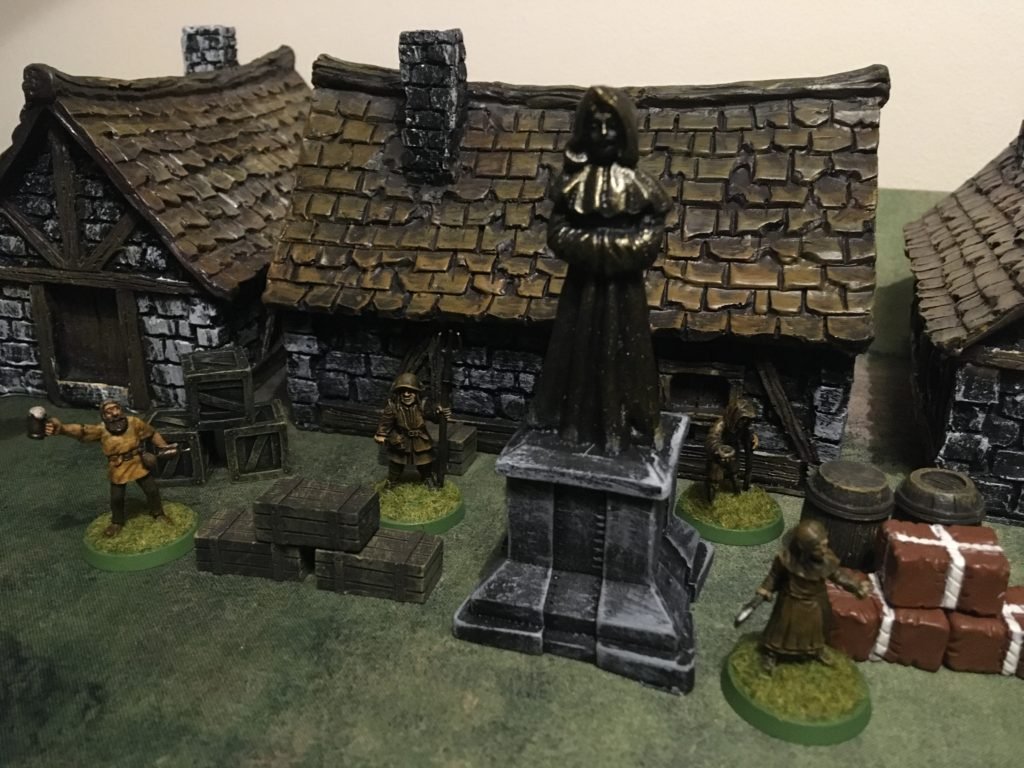
We talk a bit about a game we played recently (pictured above) where a classic Chaos alliance (the Oldhammer type where Orcs and Goblins got in on the act) took on an undead “force”. The undead were actually far from what you might call a force and generally hung about in their deployment zone doing not very much at all. In any case, it was a fun afternoon and lessons were learned.
In our next game of Song of Blades and Heroes, we’ll be finding out if one Ancient Dragon can come out on top against 85 zombies. The answer is probably yes.
How many beginners are attracted to the hobby because of the miniatures, lore, painting, not to mention the scenery covered tabletops, only to be put off the minute they get a look at a set of rules? Sure, there’s definitely a place for complex and ultra-deep rulesets, but if you’re just starting out then chances are you’re going to be seeking out simple tabletop wargames. With that in mind, let’s take a look at some of the best miniature games for beginners.
Simple Tabletop Wargames
When we use the term “simple” it comes with a few caveats. A game of coin-toss is simple, but it’ll get boring pretty fast. In miniature wargaming, the phrase “easy to learn, hard to master” gets used a lot. Most beginners are looking for a ruleset they can quickly grasp, and then spend the rest of their brainpower working out things like tactics and strategies to outfox their opponents.
When weighing up the best miniature games for beginners we also need to consider a ruleset’s “replayability”. There’s little point in investing in a tabletop game if you’re only going to play it once, so we’ll bear that in mind here, too.
To kick us off, I’d like to shine a light on a company that does a fantastic job of creating simple tabletop games…
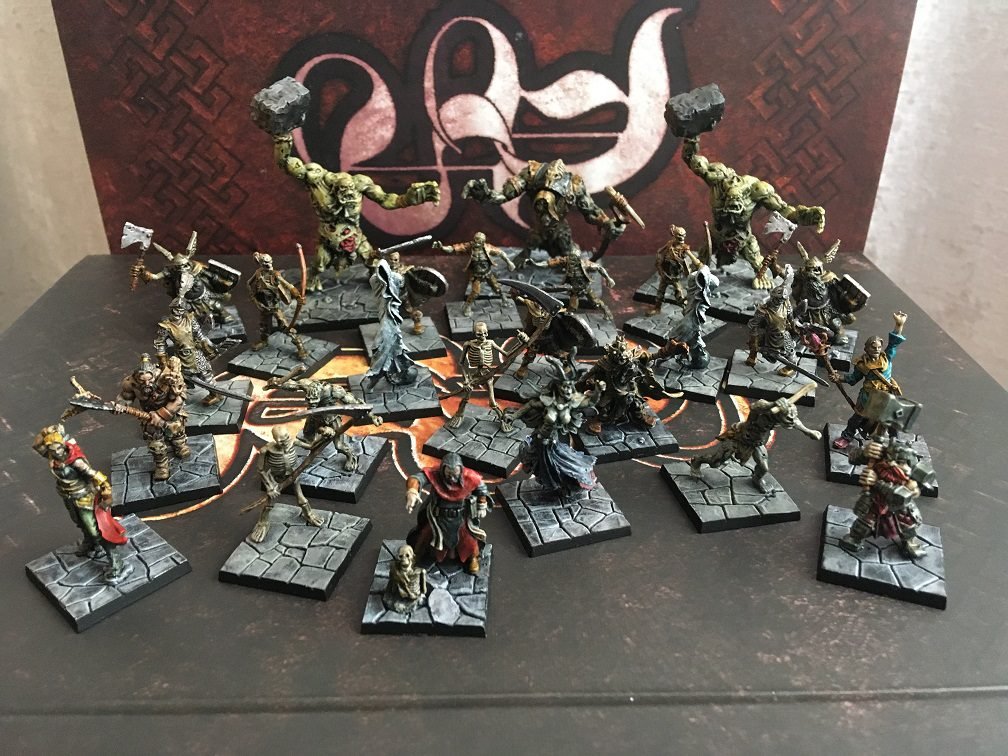
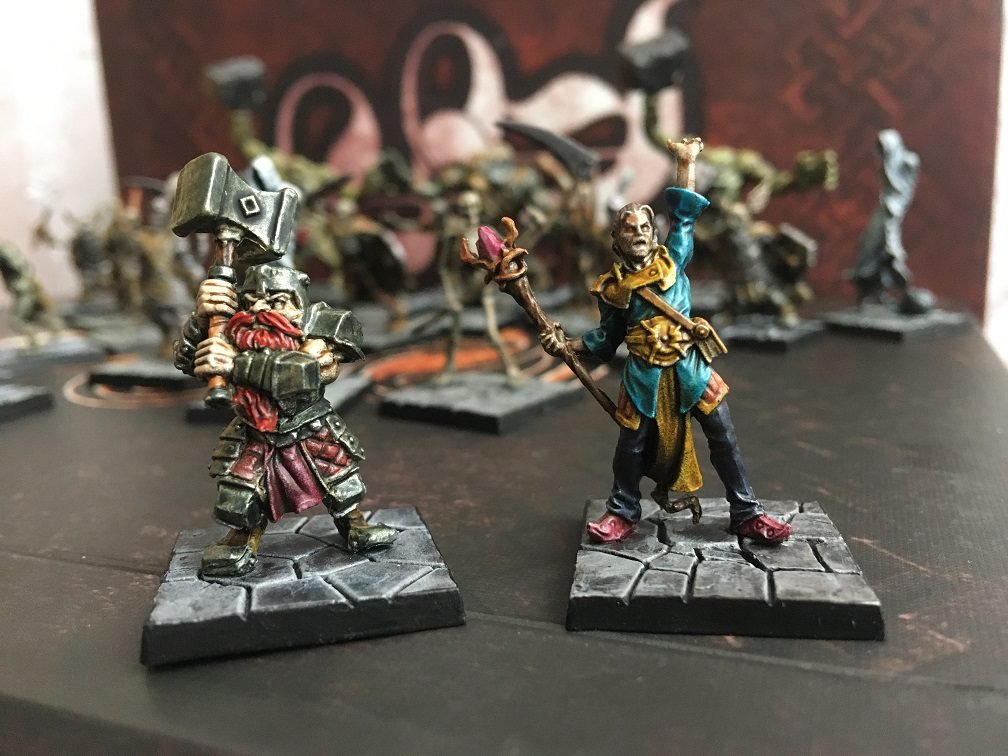
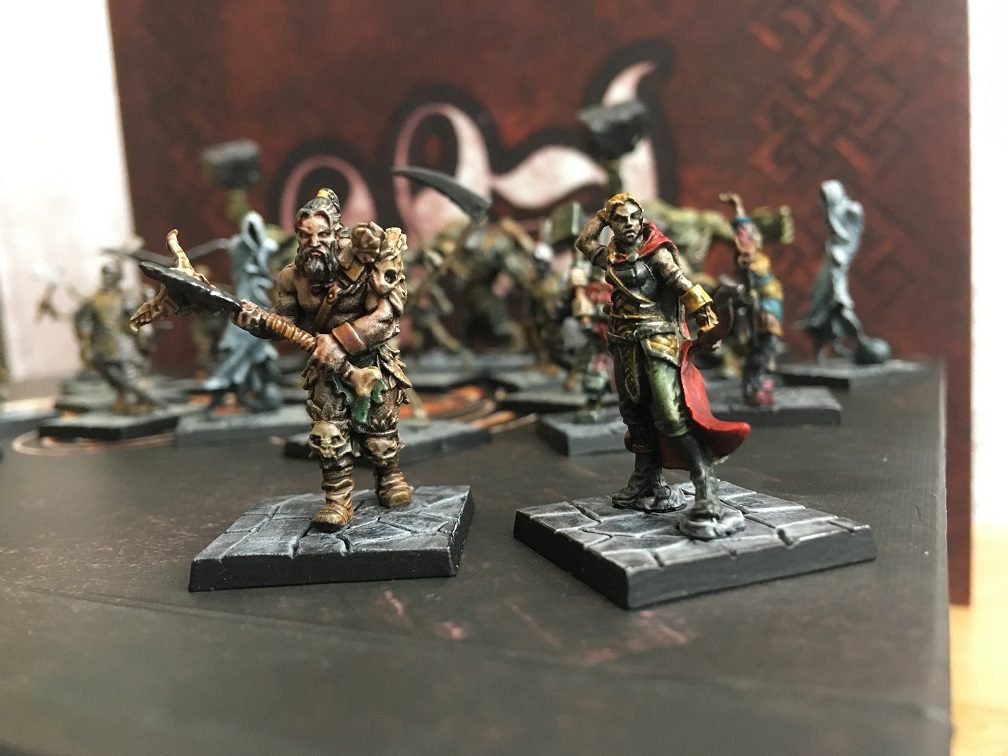
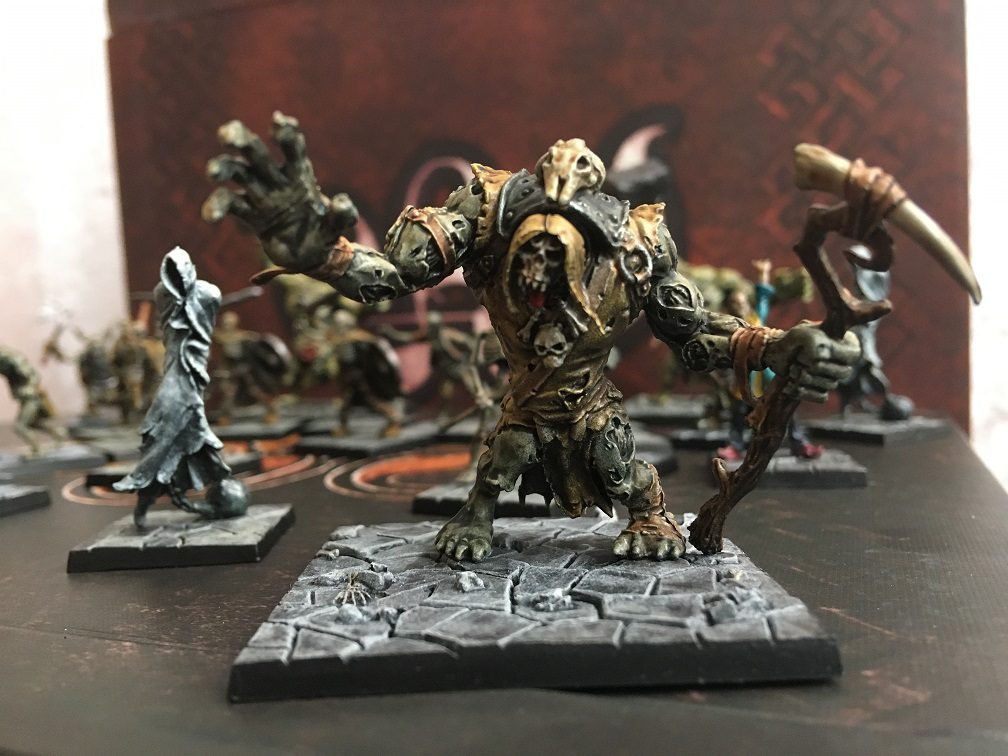
My heroes and villains from Mantic’s Dungeon Saga
This roundup contains a few affiliate links which mean the site may earn a small commission, should you choose to buy through them. This helps support what we do and is never at any extra cost to you!
Mantic Games
Mantic are a company with a great ethos around making their games enjoyable and accessible for beginners. Any game you buy from them is going to be easy to get into and offer a lot of replay value to boot.
I’m a big fan of their mass fantasy rank and flank game Kings of War. KoW was designed by Alessio Cavatore, who’s also well known for his work on Games Workshop titles like Warmaster, Warhammer 40,000 and Mordheim. It’s arguably the best modern alternative to Warhammer Fantasy Battles.
If sci-fi is your jam, then look no further than the futuristic Warpath. On the other hand, if you’re up for a bit of fantasy naval warfare then Armada might well float your boat. Or, enable you to sink some.
Dungeon Saga is another favourite of mines and is as close to a modern and supported version of the legendary dungeon crawler HeroQuest as you’re likely to find.
Finally, Mantic offers some licensed boxed miniature games in the form of The Walking Dead: All Out War and Hellboy. These are perfect “gateway drugs” for pals and partners who might otherwise baulk at the very thought of playing with toy soldiers 😉
One Page Wonders
I want to give a nod to the One Page Rules project which offers some of the best miniature games for beginners. Their name is slightly deceptive as you’ll find few games there that are literally one-page rules, but they are all easy to understand and look like a lot of fun.
There’s no shortage of sandboxes to play in here, from Grimdark Future to Age of Fantasy, as well as some cracking one-offs that will explore every setting and scratch every itch.
As an added bonus, these rulesets are all available for free. That said though, they do run a Patreon, so if you enjoy their games it’s nice to chuck them a wee tip to say thanks!
Building a warband for a skirmish-level game makes miniature wargaming accessible for beginners
Simple Skirmish Games
I’d couldn’t write a simple tabletop games roundup and not mention two of my favourite skirmish games, Song of Blades & Heroes, and Open Combat. I can’t speak highly enough about these two titles, which both cater to medieval and fantasy miniatures.
If you’re a complete beginner or plan to play with one, I’d start with SoBH. With this game, the stat lines and bookkeeping are kept to an absolute minimum, and you don’t even need a tape measure to play. The game has been re-skinned to fit many settings too, from Mutants & Death Ray Guns to Fur & Buttons, and everything in between.
Open Combat will give you slightly more depth when it comes to the stats of your warband, as well as their weapons and armour. That said, a complete beginner will have no problem at all picking the rules up. An added bonus is that the game’s hardback rulebook is beautifully put together.
Simple Tabletop Wargames
Hopefully this roundup of some of the best miniature games for beginners has helped you find something that suits your needs, wants, and tastes.
I personally struggle to learn new rulesets and get intimidated by chunky rule tomes. There’s no game I’ve mentioned here though that I wouldn’t have the confidence to pick up for the first time and have an enjoyable playing experience with.
If you’re aware of any more simple tabletop wargames not mentioned here too, then I’d love to hear about them in the comments section.
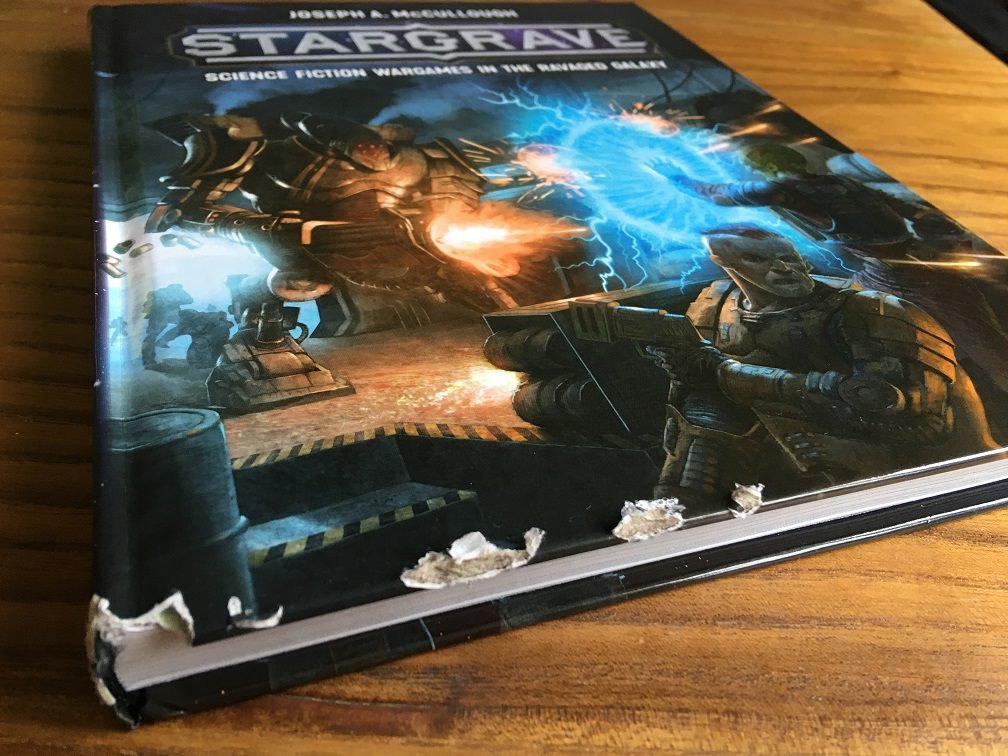
I recently picked up my own copy of Stargrave, and I’ve barely put it down since (in fact, the one time I did put it down, my pet rabbit seemed to take a liking to it). Stargrave is a much anticipated miniature agnostic sci-fi skirmish game. Brought to us by the creator of the legendary Frostgrave, it’s tempting to refer to it simply as “Frostgrave in space”, though I don’t think that quite does it justice. In any case, I’m not here to dive into the rules, but rather, the Stargrave minis (or miniature options, as it were).
I mentioned that the game – just like Frostgrave – is miniature agnostic. Miniature agnostic games take the approach of “use whatever you own”, which is interpreted by many hobbyists (myself included) as “use whatever you would like to own”.
Knightmare’s Chaos Space Mari… I, er, mean Chaos Space Raiders
There’s actually an official range of Stargrave minis by North Star Military Figures. Here, you’ll find some nice looking soldiers and characters, and you can pick up some dice and tokens for the game whilst you’re at it, too.
Stargrave. A rather tasty ruleset… apparently…
For my own tastes, I was looking for an aesthetic that was slightly more “retro”. Though Rogue Trader was before my time (I came into the hobby in the early 90s) I’ve always loved the look of that game and the 40k universe as it was in those hazy days.
Stargrave Minis With a Rogue Trader (or Early 40k) Feel
I did a roundup of Oldhammer miniature companies with that classic 80s Citadel vibe a while back. A lot of these companies I hadn’t heard of before. After doing the writeup, I felt obliged to buy quite a lot of miniatures from most of them. Strictly for the purposes of research, you must understand.
Leafing through my Stargrave book, my imagination started to conjure up images of how I’d like my crews to look. As usual, these are a far cry from anything you’d buy out of GW in the year of our Emperor that is 2021. So it was time to get the long-suffering wallet out once again.
And now, here we are with a rundown of the Stargrave minis that I’ve either already bought or are on my “next to buy” list.
When it comes to Stargrave minis, Knightmare has a lot of great options, too. Immerse yourself in their Space Raiders range and brace yourself to spend some money. Chaos and Orcs (I don’t think we’re allowed to use a K in Orc, are we?) make up the bulk of the offerings here, and they look fantastic.
Space Orcs by Knightmare Miniatures
My final stop – at least, for now anyway – is onwards to Checkpoint Miniatures. Checkpoint has a wide and diverse range of miniatures at multiple scales. But it was their 28mm sci-fi range I was interested in for my Stargrave minis project.
These fit with the Stargrave ethos really well, and there are some nice nods to IPs like Mass Effect and Fallout there too.
Checkpoint’s undead aliens
Checkpoint’s Grey Aliens range are – and I don’t think I’ve ever used this word in my life before – adorable. Those tiny zombie aliens fill my black heart with joy, they really do.
I’m going to wrap this up now because I already feel another spending spree coming on, and that’s before my first batch of Stargrave minis has even dropped through the letterbox. As always, I’ll be posting updates of my fledgling paintwork as and when I get them finished, so be sure to subscribe to the blog to stay tuned.
The residents of the small village of Middensbury had all heard the rumours. A vile and depraved band of Chaos worshipers had been slaughtering their way through neighbouring settlements. Middensbury would surely be next, and what chance would they stand?
Hope arrived in the form of a bounty hunter known as Red Kate. She too had heard the rumours, and was keen to profit from them. The leader of this band of fiends’ head would fetch a fine price from the local Duke, and she intended to deliver it.
Red Kate was backed up by two of her own comrades. Greybeards, well past their prime, but with long years of experience in the field. This rallied the villagers, and soon they had assembled a sizeable force. Confidence began to grow, and when a young boy returned, breathless, to tell them he’d spotted the enemy, a grim determination swept over this makeshift militia.
Confidence and determination turned to fear for much of the villagers when they finally caught a glimpse of their foe. From cruel and lethal goblins, to warped mutants and hulking Chaos Warriors, they began to realise the odds that were stacked against them. Yes, they had the numbers. But could they really defeat these monsters? And if so, at what cost?
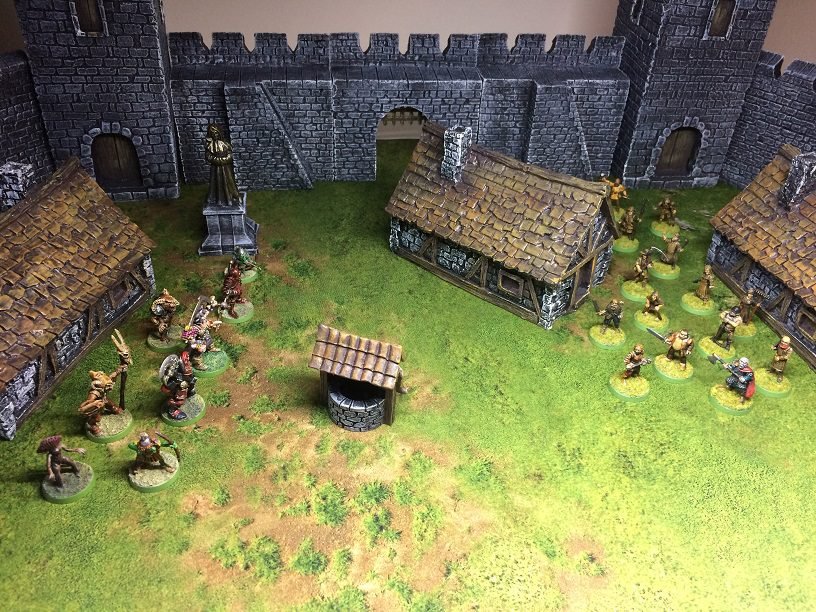
Red Kate and her two hired helps rally the townsfolk of Middensbury
This is the first battle in my Song of Chaos & Vengeance campaign, using the Song of Blades & Heroes system. Playing solo, I’ve not yet nailed down any one way to optimise this, so I’ll be testing and tweaking as I go. For this battle, I aimed to simply do my best with both sides. This means there would be no real surprises or randomness in any of the movement or tactics (something I’ll look to introduce in the next game).
The battle lines are drawn
My activation strategy would generally be to opt for the best ‘Quality’ characters first when attacking, and aiming to deal with the most imminent danger whilst defending.
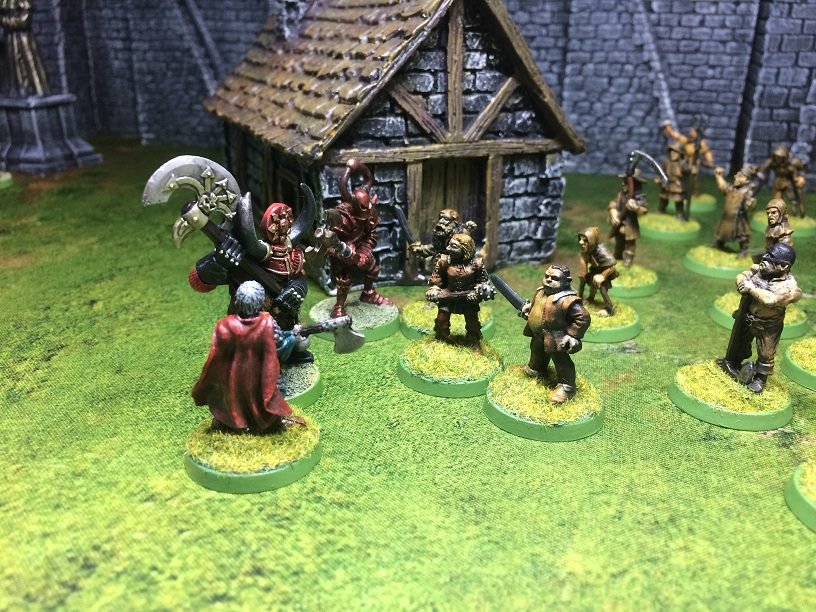
Kate and her men step up to earn their pay
The early part of the battle saw Tebaud the Butcher and his deputy Mallüs Bloodaxe getting stuck right into the Middensbury vanguard. To be fair to Red Kate and co, they held well for several turns. There was a lot of jostling, parrying, and dodging, and it looked like the forces of Chaos might not have it all their own way after all.
Then, disaster struck for the villagers as Tebaud dispatched of one of Kate’s veterans. His body had barely hit the ground before the bounty hunter herself was brutally slain by Mallüs Bloodaxe. Even though the Chaos Warrior was outnumbered, his 6 roll to her 1 ensured that she wouldn’t be collecting any gold this day. Or, on any other for that matter.
Thorburn the blacksmith leads by example
With only one mercenary warrior remaining, it seemed like the two Chaos Warriors would now be free to cleave a bloody path through the rest of the villagers. That wasn’t to be. A humble blacksmith by the name of Thorburn had seen enough of this needless butchery, and he intended to put a stop to it.
The old metalworker charged Tebaud, smashing his giant hammer into the Chaos Champion’s helm. This blow was enough to knock Tebaud over, but a re-roll via his Hero perk meant he somehow stayed on his feet. Tavern landlord Portly Alf, inspired by his friends bravery, charged as they doubled up on Tebaud. Unfortunately, the pair couldn’t make their advantage count, and the overweight swordsman became the next villager to decorate the floor with his guts.
Enraged, Thorburn again launched himself at the Chaos Champion. Incredibly, he bested him for a second time. The Dark Gods were clearly smiling on Tebaud this day though, who was saved by his Heavy Armour perk. Would the blacksmith get another chance?
Amos the Executioner tried to take advantage of Thorburn’s heroism by attacking Tebaud. He was no match for the big champion though, and was only saved by the blacksmith fighting at his side, which meant a -1 deduction to Tebaud’s combat rating. His luck didn’t hold out much longer though, he was knocked over and murdered without another thought. The Butcher, armour coated in blood, turned his eyes back to that pesky blacksmith…
On the other side of the battlefield, Jakub Daemonhands arrived in a furious frenzy of whirling limbs and blades. He’d grown tired of watching those armoured idiots huffing and puffing against a bunch of peasants. It was time to show them how the real work was done.
“Cheers to you, my four-armed friend!”
The mutant’s first “opponent” came in the form of Middensbury’s favourite down-and-out, Drunken Dudley. Dudley was oblivious to the attack and had interpreted the afternoon’s events as some sort of street celebration. He was promptly dispatched and sent off to that big tavern in the sky, where his landlord was already setting a jug on the table for him. Rest in Peace, Dudley.
Back down at the box-office event, Thorburn the blacksmith lands a power blow on Tebaud the Butcher. This time, he’s a mere 1 point away from killing the Chaos Champion. Sadly, it was to be his last act of heroism, and the beginning of the end for the Middensbury defence. The Butcher replied with a power blow of his own, and this time, he trebles his score for a gruesome kill.
It’s morale checks all round for the horrified villagers who witnessed this brutal slaughter, many of them scattering towards the edge of the table, their spirits broken.
Bloodaxe was kept busy by Red Kate’s last remaining warrior
One defender who wasn’t turning tail to run was Old Nicholas the mercenary swordsman. A former army man, he’d fought in more battles than he cared to remember. If this was to be his last, he’d make sure he died on the front foot. Perhaps he’d even take one of these loathsome creatures with him?
And he nearly did, too. Knocking Mallüs Bloodaxe right onto his arse, laughing and taunting the bested Chaos Warrior who scrambled to regain his feet, as well as his pride.
“Run for your lives!”
Unfortunately, the villagers who could’ve provided some much-needed backup to Old Nic had already fled, running for their lives after the brutal killing of Thorburn the blacksmith. Isolated and alone, Nicholas smiled grimly to himself as Bloodaxe charged, roaring to some black-hearted God. There were no more heroics for the veteran swordsman who suffered the second gruesome kill of the afternoon.
This prompted more morale checks all round, as the dead now outnumbered the living on the Middensbury side. Tebaud’s warband hadn’t even activated half of their forces, and victory was now within touching distance.
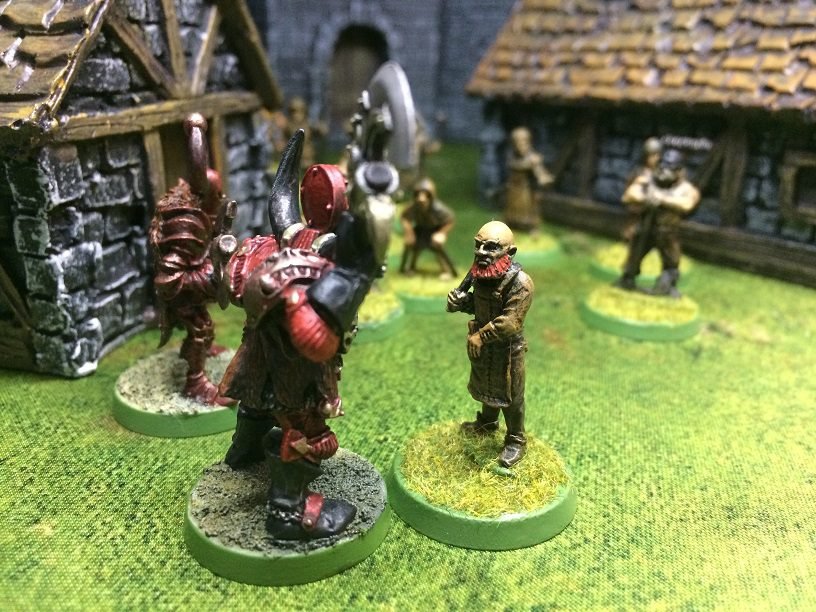
Middensbury’s last hope – an ancient beggar
Any dying embers of fight were knocked out of the remaining survivors, who turned and fled for their lives. All except one. An old beggar, leaning heavily on a crutch and upon two wooden legs, rolled three 5s to pass his Morale test.
Perhaps this harmless-looking old man was once a great solder, who’d lost his legs fighting heroically in a long-ago war. He turned towards Jakub Daemonhands and advanced, holding out his begging bowl. The big mutant rolled his eyes at yet another idiot who’d mistaken this massacre for some sort of festivity. But as the beggar got close enough, he threw the contents of his cup into Jakub’s face, following it up with a blow from his crutch.
There was to be no blood spilt against Tebaud’s warband this day though. The attack was easily swatted aside, and the old man’s belly was opened by another of Jakub’s knives.
The massacre of Middensbury was emphatic. And it was over.
Khongor “Did I miss anything?”
As the Dust Settles
And so it was the two Chaos Warriors, Mallüs Bloodaxe and Tebaud the Butcher, who were at the centre of the carnage in this battle. They spilled a lot of blood, but both were matched for a period of time by brave and determined opponents. On another day, one of them could’ve easily fallen to one of the many blows landed upon them.
Jakub Daemonhands was the only other member of the party who really saw any action. Khongor the shaman made his way over to witness the final few exchanges, but didn’t have any real part to play. The others were stuck in their deployment positions, poor quality activation rolls keeping them there for the duration of the battle.
Kills & Casualties
Tebaud the Butcher – 4 kills
Mallüs Bloodaxe – 2 kills
Jakub Daemonhands – 2 kills
Casualties – 0
As for their next battle, I’ll have more details on that pretty soon. In the meantime, be sure to read about this gruesome warband’s background and history in Song of Chaos & Vengeance.
I recently wrote about solo wargaming, and running some sort of narrative campaign has been on my mind for a while now.
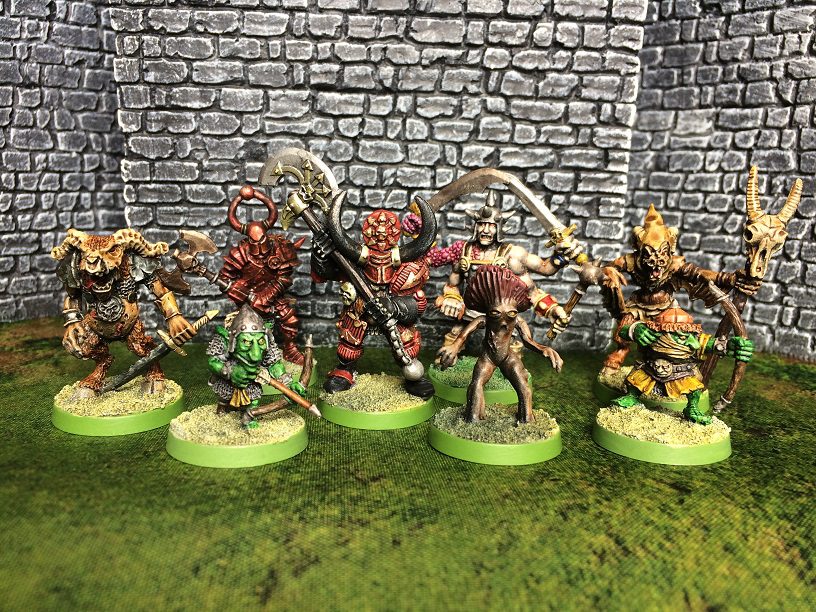
I’d been looking at the miniatures I’ve bought and painted over the past year. I’ve got a few chaos warriors, beastmen, and goblins, along with a few other chaos-y types. Mainly from the excellent Knightmare miniatures range.
I began to come up with the idea for an eclectic and dysfunctional warband of outcasts, misfits, and disgraced heroes. Admittedly, I’ve not come across greenskins allying with chaos since the days of Battlemasters, but if it’s good enough for Battlemasters, it’s good enough for me.
As well as playing through the telling of a story, this was also an opportunity to make some nice cards on MTG Cardsmith. Okay, so my efforts aren’t quite that of the legendary 1980s Citadel Combat Cards standard, but you can see the influence here. Incidentally, the cards have been created for Song of Blades & Heroes, which you can read more about in my miniature agnostic games roundup.
So let’s dive in and meet my anti-heroes, starting off with their leader, Tebaud the Butcher…
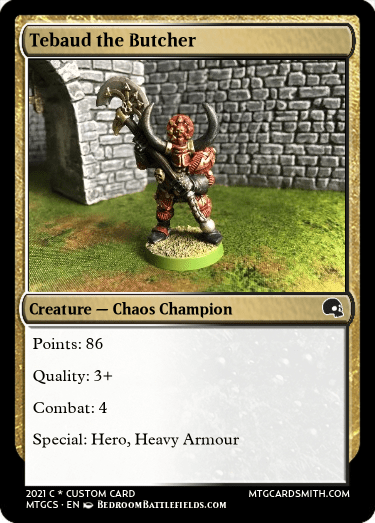
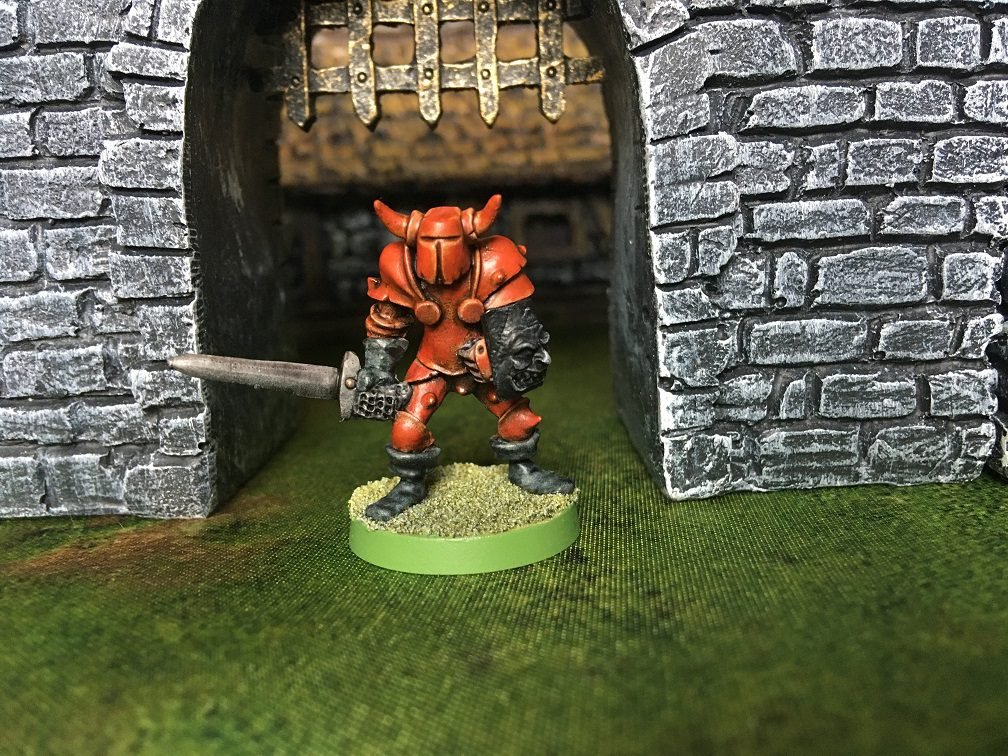
Tebaud the Butcher: Chaos Champion
A fearsome and brutal champion, Tebaud was once at the speartip of a mighty regiment of chaos warriors.
Following the death of their leader in battle, Tebaud put himself forward as the unit’s natural successor. Unfortunately for him, he was challenged by his old friend Jötum Redmane. The two fought to the death for the right to lead their brothers into a new era. Redmane came out on top leaving Tebaud for dead, with wounds that would’ve finished off any mortal man.
But Tebaud did not die. He made his way south to seek refuge, healing, and strength. Tebaud would bide his time, rebuild his forces, and one day return to take what was rightfully his.
Points: 86
Quality: 3+
Combat: 4
Special: Hero, Heavy Armour
Purchased from: Ebay – Old Citadel miniature
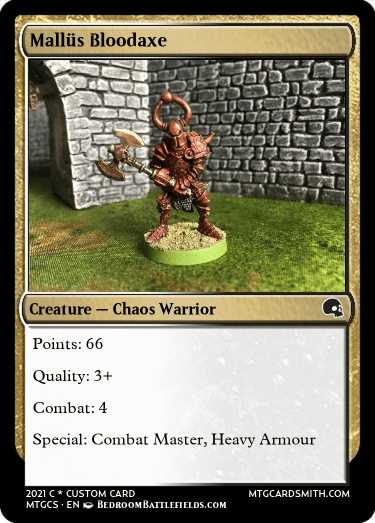
Mallüs Bloodaxe: Chaos Warrior
Altdorf-born Bloodaxe was once one of the finest warriors in the imperial army. That was many centuries ago.
How this talented soldier fell victim to the ruinous powers, nobody knows. But fell he did. The Empire’s loss was the Dark Gods’ gain, as Bloodaxe slaughtered untold numbers in their name.
The veteran warrior was loyal to Tebaud the Butcher during his failed leadership challenge and had been poised to become his second in command.
The pair travelled south together, with Bloodaxe defending his wounded master on many occasions. They would go on to assemble and lead this small band of misfits and outcasts, with the longer-term aim of returning north to seize control of their former regiment.
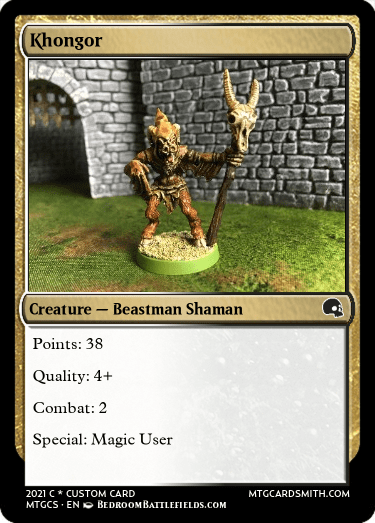
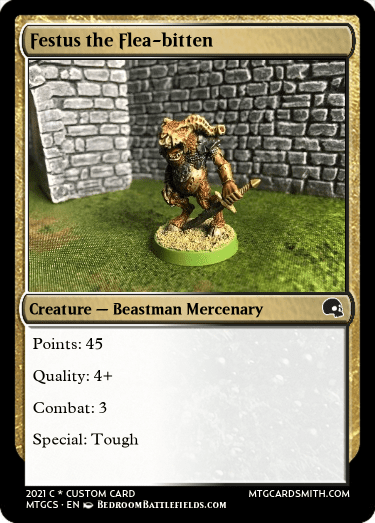
Little is known about this sinister beastman shaman, other than the fact that he is ancient beyond comprehension, not to mention ruthless and deadly.
Even Tebaud himself is wary of the dark and malevolent powers possessed by Khongor. Whether he is blessed or cursed by the Dark Gods, who can really say. Perhaps they are one and the same?
It seems like Khongor is driven by a desire to destroy and despoil everything in his path, and joining forces with Tebaud gave him ample opportunity to do just that. There’s no loyalty or trust here, just a shared love of violence and vengeance on a weak world and its petty inhabitants.
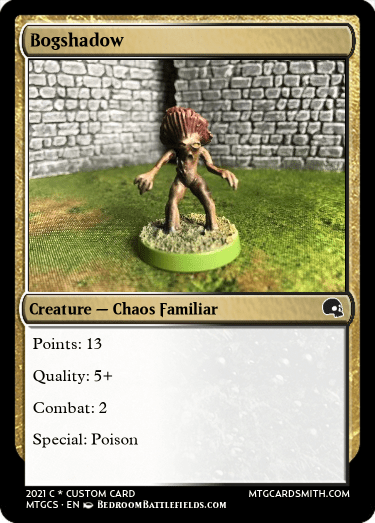
When Khongor joined Tebaud’s warband, he didn’t do so alone. The creature known as Bogshadow appears to act as some sort of familiar to the shaman.
This disturbing walking mushroom is said to have grown on a rocky plateau of warpstone, high up in the Realm of Chaos. A small, gibbering, and likely insane creature, its lack of size and fighting prowess is made up for by the fact that it can be highly poisonous to anyone in its vicinity.
Bogshadow does not leave its master’s side, so any foe wishing to pick it out as an easy target will also have Khongor’s magic staff to contend with.
The fungi also seems to be invincible, having once been hacked to pieces in a battle on the outskirts of Kislev. By the time the fighting was over, Bogshadow had completely repaired and regenerated itself, continuing on as though nothing had happened.
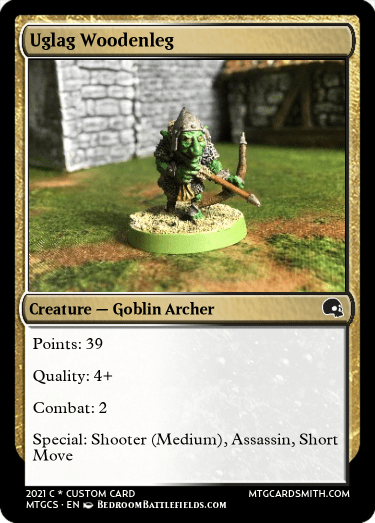
A once legendary goblin archer. Uglag was famed for the amount of dwarves he’d slain at range during long campaigns under the World’s Edge Mountains.
But as his renown grew, his guard lowered, and he was caught by surprise and nearly killed by a particularly angry Slayer. Uglag escaped from the frenzied axe-swinging minus one of his legs.
The impairment didn’t affect Uglag’s skills with a bow and arrow, but his inability to keep up with the rest of his raiding party made him a liability. A drunken has-been, he was relegated to training young and unruly goblins to take up the bow.
Dreams of fame and glory never left Uglag, though, and he slinked off into the darkness one night, never to return. He found an unlikely kindred spirit in Tebaud the Butcher, a fellow fallen hero who invited him to join his fledgeling warband. Uglag was only too glad to accept, and to get back to doing what he does best.
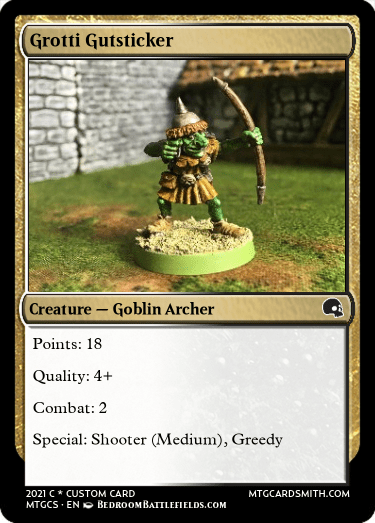
A former pupil of Uglug’s, Grotti Gutsticker is an unremarkable archer with a remarkable appetite for gold.
When his old mentor drunkenly announced that he was off to chase the deeds and glories of his past, Gutsticker begged to tag along.
After a few years of working in-tow with his mentor, Gutsticker can shoot an arrow where it needs to go – most of the time. However, his real passion is in the looting of bodies once the dust has settled. Sometimes even before the dust has settled.
This greedy goblin is barely tolerated by those he’d call his comrades. Aside from Uglag, who relies heavily on him to keep his supply of alcohol flowing.
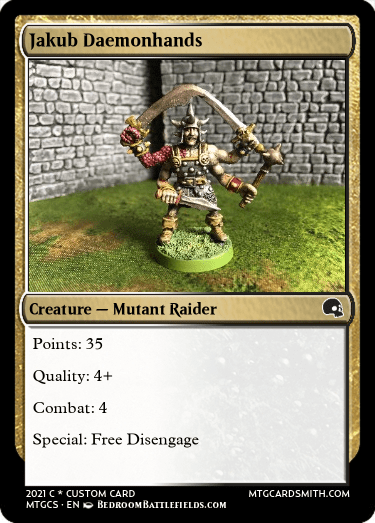
Born to God-fearing peasants who left him in the woods to die, it was clear that little Jakub had the attention of somewhat darker Gods than those of his parents.
But this four-armed mutant was discovered and raised by a herd of beastmen, who worshipped him like some sort of diety.
Daemonhands was bigger and stronger than most men by the time he reached his thirteenth summer. His temper was explosive, and he murdered most of the herd that had raised him during one particularly violent tantrum.
The mutant became a loner and raider, ambushing and slaughtering everyone from travelling merchants, to entire warbands.
Tebaud’s party were one such warband to be targetted by Daemonhands. And, although he was defeated, the Butcher was so impressed with the fight put up that he spared his life in exchange for his oath.
In my next post I’ll be talking more about the campaign story – where they’ll be fighting, who they’ll be fighting, and why. The aim is for each battle to reveal a bit more about each character’s backstory too, as well as spin the web of their fate going forward. SoBaH campaign rules mean that some of them might not make it all the way to the end…
For someone who’s sat alone playing Elder Scrolls: Skyrim for 1500+ hours, I still found the idea of solo wargaming “a bit weird”.
“Oh yeah? You and who’s army?”
That was a limiting opinion, given that I’d only recently returned to the hobby. I didn’t exactly have a wealth of playing partner options, so I’d be buying and painting miniatures and terrain, pouring over rulebooks, and then… well, not very much, really. I took the “someday, I’ll have a really good game of this” approach.
Then 2020 hit, and I realised that any difficulties I had in finding someone to play with had just gotten a whole lot harder.
I’d been reading the rulebook of Song of Blades & Heroes (find out more about it in my Miniature Agnostic Games roundup), and I’d also recently picked up Dungeon Saga. The latter actually came with a solo-play element and I thought I’d give it a shot (there are also some great adaptations available out there). I’d painted up all the in-box miniatures and created an Oathsworn Miniatures party to delve these dungeons with.
I also started playing out some warband skirmishes with the Sellswords and Spellslingers rules. During some of these early games, it began to click that solo wargaming came with a whole host of benefits that I’d been missing out on before.
No solo wargaming article is complete without mentioning Rangers of Shadow Deep either. This is one of the genre’s elite games, penned by the creator of the legendary Frostrgrave.
Do you work strange shift patterns and find yourself free between 2 am and 4 am most mornings? Playing solo only means you have to suit one person’s availability, and that’s you.
There’s no back and forth arranging dates and times, not to mention last minute cancellations. If you’ve got time, then you’ve got time to get a game in.
You might also save a lot of time in the setting up and tidying up, if you have the luxury of a play area that doesn’t need to resume its role as dinning table that evening. Your opponent won’t need to take their miniatures home, so games can be set up and played over days, or even weeks.
2. You Can Learn at Your Own Pace
Few people like to admit that they are a slow learner, but I definitely am. It takes a while for rules to sink in. I can pour over a rulebook for weeks, and think that I know the game inside out. Then, when I put it into practice on the tabletop, I start forgetting everything and it all goes to pieces.
I’m someone who learns best by doing. The problem was that I could seldom “do” because I rarely had anyone to play against. Solo wargaming has allowed me to gradually soak up the rules and quirks of the main game systems that interest me. When I make mistakes or need to spend 5mins looking through a rulebook, I’ve no paranoia that I’m ruining anyone else’s experience.
This relaxed “at your own pace” approach has given me a deeper understanding of how everything works in practice.
“Yep, he really is playing with himself, lads”
3. You Can Tell Better Stories
If someone is going to the trouble of meeting you for a game, there are usually certain expectations. One of those is that we’re going to face off with two forces similar in strength, and we’ll both have a realistic shot of winning.
I’ve always been more into the storytelling than the winning. I know that many wargamers do have great narrative-play experiences with their gaming pals. But it’s a tough sell to say to someone “here’s 4 halfling skirmishers, let’s see how long you can hold this hamlet against my minotaur horde.”
With solo wargaming, no setup or scenario is too unfair, or even, too silly. A single giant can take on hundreds of goblins and it doesn’t matter than one turn takes 30 seconds whilst the other takes 5 minutes. It’s often in these games that the most dramatic, cinematic, and downright hilarious moments occur, too.
4. You Can Test, Test, Test
Whether it’s a new army list, some home-brewed rules to a flawed but otherwise favourite ruleset, or the layout of some new terrain pieces, solo wargaming is the perfect testing ground.
Troubleshooting whilst playing solo means a smoother and more enjoyable game next time you’re able to get together with someone. It’s not just about fixing flaws though – you can optimise too. After a few solo games with your new medieval village terrain, you might come up with a layout that’s just perfect for kicking off your next campaign. So set up some solo games to answer the questions of “does this work?” and “how can this be even better?”.
Summary: Solo Wargaming
The purpose of this article isn’t to convince you that solo wargaming is better than playing against (or with) a friend. It’s just yet another layer of the hobby that many of us miss out on because it can initially seem “a bit weird”. But so can collecting and painting tiny toy soldiers, to be honest. You quickly get over other people’s perceptions – sometimes it’s harder to get over your own.
So why not try being an army of one (or would that be two armies of one?) and see what you think? If it doesn’t work out for you, it’s not like you’ve got far to go to get home 🙂
My quest for a dungeon crawler miniatures game recently led me to pick up Dungeon Saga, by Mantic Games. I’m a big fan of Mantic’s rulesets, in particular, Kings of War. The clincher for me was seeing that it was written by Jake Thornton, a name I saw frequently as a kid leafing through the pages of White Dwarf.
Like anyone else of my generation, HeroQuest was one of the first games to really draw me into this hobby. Obviously, this is a heavy influence behind Dungeon Saga, but we have here a game in its own rights. I’ve played some of the early scenarios and it’s a lot of fun.
I also bought the Adventurers Companion expansion which lets you create your own heroes, design your own campaigns, and play co-op mode.
The miniatures look really good, especially for a boxed game. I painted them all up in a couple of weeks using a quick contrast, wash, and drybrush technique.
Some of the miniatures are an obvious homage to HeroQuest, whilst others – like the zombie trolls – are totally unique.
The heroes have been good to learn the ropes with, but I’m currently working on creating my own unique party. I’ll be talking about that in a future post.
I heard recently that HeroQuest was coming back. However, with Dungeon Saga and the Adventurers Companion I feel I’ve got all the tools I need to scratch those dungeon crawl itches.
These are my ‘work in progress’ football (soccer, for you Americans) dice game rules. They’re very simple, but hopefully good fun. I thought I’d share them on here for others to enjoy. I’d also be glad to hear any thoughts, feedback, of suggestions toward potential improvements.
You Will Need
2 players
2 D6 dice
A pen & paper
A token or marker (like a coin)
The Basics
Each player takes control of a football team. They have 8 points to build their team with.
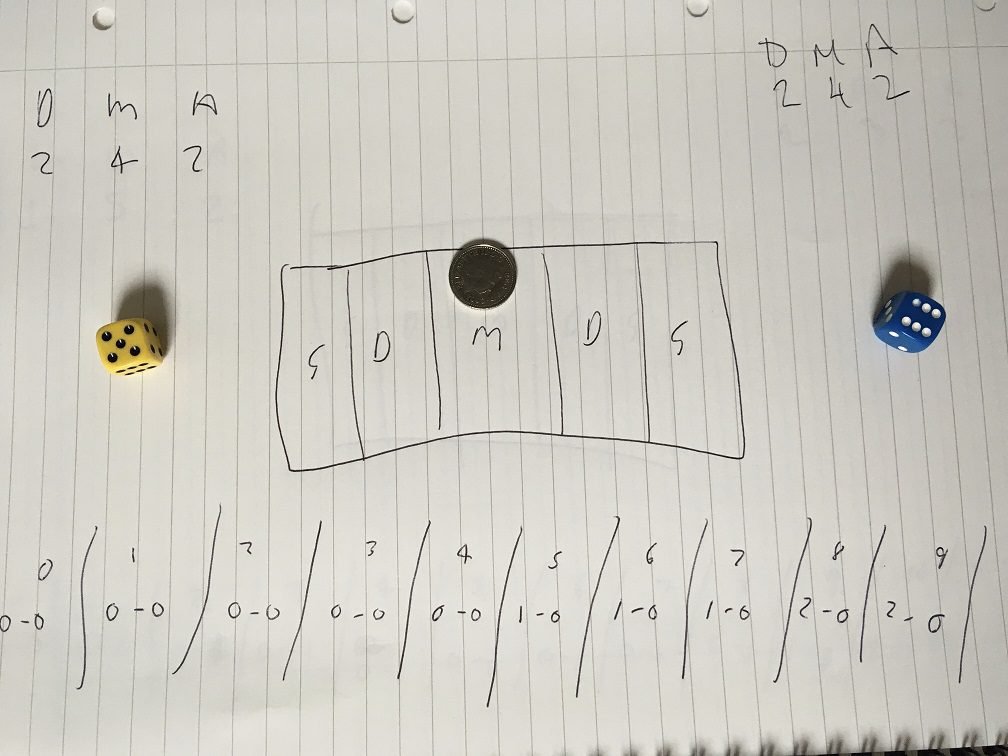
These 8 points are distributed to 3 areas of the team, the Defence (D), Midfield (M), and Attack (A). This represents each side’s strengths, weaknesses, tactics, gameplan, and formation.
For example, a team may choose to line up with an overly defensive lineup of D5-M2-A1. This team would be difficult to beat, but would find it equally hard to score goals.
The opposite might be a cavalier all-out attacking side playing D1-M3-A4. They would concede a lot of goals, but would score a lot too.
A team’s D, M, and A ratings represent the modifiers they’ll add to dice rolls when competing in this area of the field.
Both players write down their points distribution (their “tactics”) in secret prior to kick off. They are revealed prior to the first roll of the game.
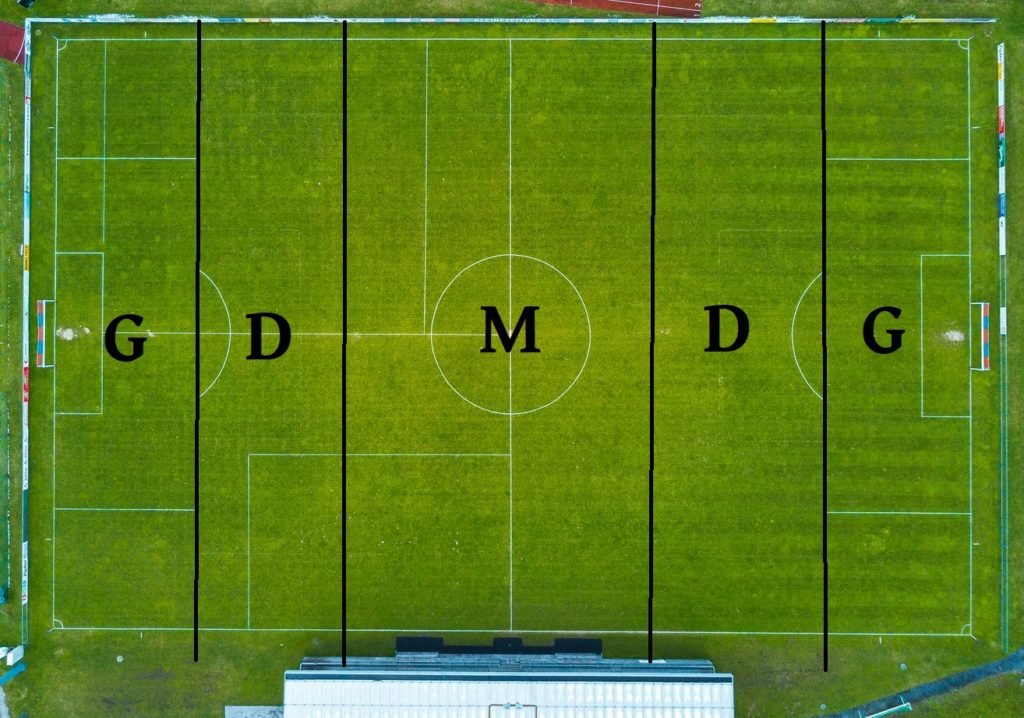
Here’s how the pitch is divided up into areas of play. Draw a rough copy of this on your piece of paper. Place a marker (like a coin) on it to keep track of where the play is taking place.
Playing a Match
Both players roll their D6 to kick off. Each player takes their score, and adds their M rating to it. The player who wins this midfield battle is now able to launch an attack.
Both players again roll their D6, but this time the attacking player adds their A rating, whilst the defending player adds their D rating as modifiers. If the defending player comes out on top, the ball is cleared and returns to midfield. However, if the attacking player is victorious, their striker is presented with a goalscoring opportunity.
Aftermath of a game between two evenly-matched sides
Scoring a Goal
When an attacking player wins a roll-off against a defending player, we imagine their striker going clean through, or the ball dropping to him right in front of goal.
Both players make a single unmodified roll (unless there are special rules in play – these will be covered later on). If the attacker wins the roll, the ball is in the net. If the defending player wins, however, the goalkeeper pounces on the ball. It is kicked back to the midfield area and the process begins once more.
What Happens When Dice Rolls Tie?
If at any point a roll-off is a tie, play simply resumes in that area of the field.
For example, if both midfields tie, they will go at it again right away.
If the attack of one team ties with the defence of the other, we imagine the ball is temporarily blocked or cleared. However, the attacking side remains in possession and on the front foot.
If players are rolling to decide the outcome of a goalscoring opportunity, and there is a tie, we imagine the goalkeeper making a save. However, the ball is still in open play and the striker may pounce on the rebound.
In each of these cases, both players simply re-roll their dice after a tie.
Phases of Play
A normal football match lasts 90 minutes. To represent this, we break the game up into 9 phases.
Each time the ball is returned to midfield – either as the result of a goal, a defence coming out on top, or a goalkeeper kicking it out after making a save – we move to the next phase of play.
So when we kick off, it’s phase 0 (0-10mins). The first time The ball returns to midfield, we move to phase 1 (10-20mins), then phase 3 (20-30mins) and so on until we reach phase 9 (90 minutes plus stoppage time).
The player who has scored the most goals over the 9 phases, is the winner.
Special Rules
The core rules should be enough to let you play out a couple of fun games. You might then look to add an extra layer of depth by adding these special rules.
Both players should roll 2 D6 prior to kick off to see which perk (or hindrance) they’ll be playing with throughout the match.
2 = Dodgy Keeper – Player suffers modifier of -1 when making a roll to save against a goalscoring opportunity.
3 = Big Donkey – Player suffers modifier of -1 when making a roll to attack a goalscoring opportunity.
4 = Long Punt – When player wins a roll to save against a goalscoring opportunity, they can immediately launch an attack. Their attack should now roll off against the opposition player’s defence, as opposed to the ball being returned to midfield.
5 = Offside Trap – When player loses a midfield roll-off by 1, the opposition does not launch an attack. Play remains in midfield.
6 = Scout – Player can look at opponents tactics prior to kick-off, and adjust their own, if they wish to do so.
7 = Prolific Goalscorer – Player gains modifier of +1 when making a roll to attack a goalscoring opportunity.
8 = The Cat – Player can re-roll when making a roll to save against a goalscoring opportunity. This can only be used once per game.
9 = Athletes – Player can add 1 additional point to their defence, midfield, or attack when play enters the 7th phase.
10 = World Cup Pass – If player rolls a 6 during a midfield roll-off, it creates an immediate goalscoring opportunity.
11 = Tactician – Player can change tactics at any point during the game. This can only be used once per game.
12 = Big Team – Player can add 1 more point to their defence, midfield, or attack prior to kick-off.
I managed to play out a few entertaining games with my dad at the weekend. If you like the look of it, please try it out yourself. Let me know your thoughts, feedback, comments, and suggestions in the comments section below 🙂
November 2021 Update!
I’ve been working with a friend on this game for the past year and a bit, and we’ve done a lot to (we’d like to think) make it better. It’s now much more developed, polished, and fluid. If you’d like to keep up to speed on the new version when it eventually goes public then please subscribe to our newsletter or podcast!
For some miniature wargamers, it’s all about the winning. But I’ve noticed that the vast majority of hobbyists I’ve interacted with are in it for different reasons. One of those reasons – something that pops up again and again – is storytelling.
You need a sandbox or setting for your games, after all. And the difference between a tabeltop wargame and a game of Chess is that each piece on the table has the ability to represent a character.
We invest in these characters. We buy and paint them. We throw them into situations on the table and we see what happens to them. Sometimes it’s glorious victory, and sometimes it’s gruesome death. That’s all part of the fun.
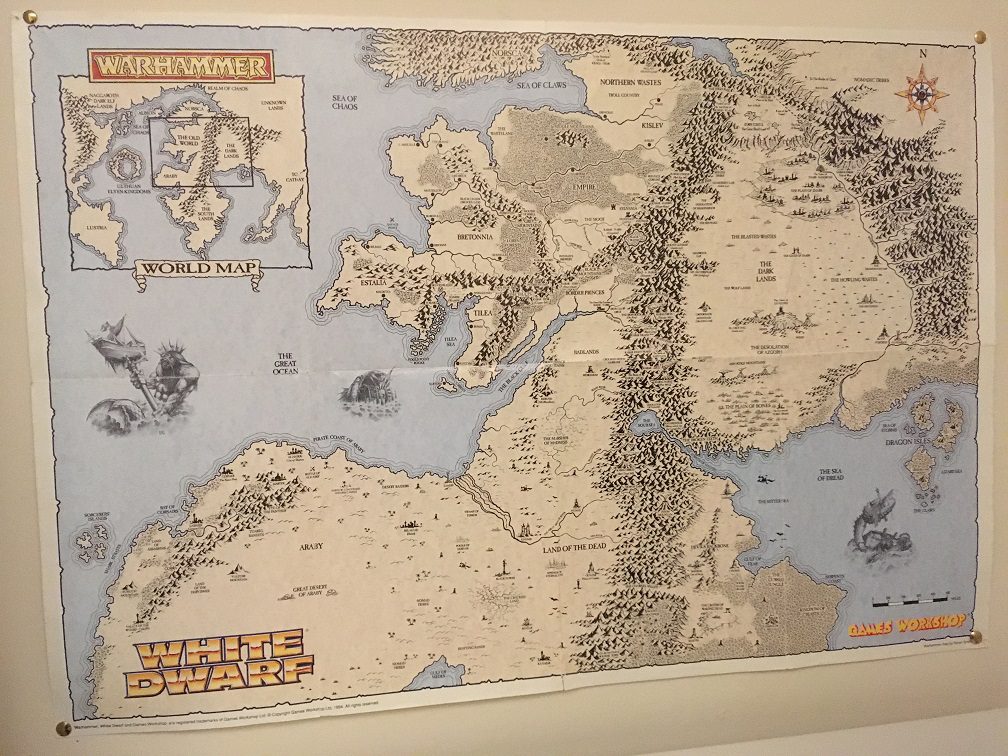
Your characters will depend on your setting, of course. You might opt to play in a pre-designed sandbox like the Warhammer Old World. As a kid, this place drew me in from the day I discovered it, and it’ll always be my favourite lore within the hobby.
I’m not a huge fan of GW games or miniatures these days though. They are world-class at what they do, but they’re simply not for me. I’ll still play games in the Old World, and I’m naturally curious to follow what happens with this IP in the next few years. But I’ve started to collect a lot of miniatures that don’t quite fit into this setting (for example, the Oathsworn range).
In fact, I build all of my warbands and armies around miniatures I like the look of, regardless of the company or their intended game. That’s why I’ve gotten so into games that let you use any miniatures.
This has led to me creating my own settings for games and mini-campaigns. The beauty of worldbuilding is that you don’t literally need to build a world. You just need to build a place, and that place can be very small. It could simply be a village or hamlet, or a single farmhouse, or even a well.
Then, you need two opposing forces, a bit of background, and a reason for them to be clashing in this particular place and time.
That’s a lot more fun than lining up two forces on either side of a table and having at it, for no reason other than hoping you win.
Here are a couple of the sandboxes I’ve created recently.
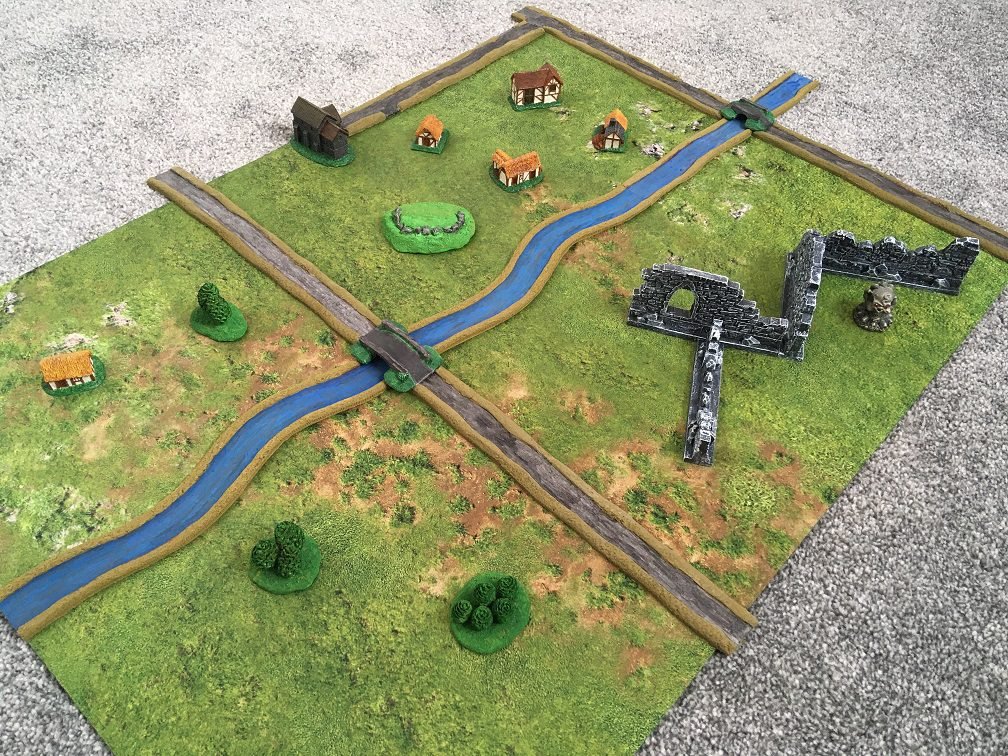
Riversbrook
This one’s a 6mm-scale which is perfect for cinematic rank and file battles.
The village of Riversbrook is situated between two main trade roads. There’s woodlands to the East, and a mysterious ancient ruin to the South.
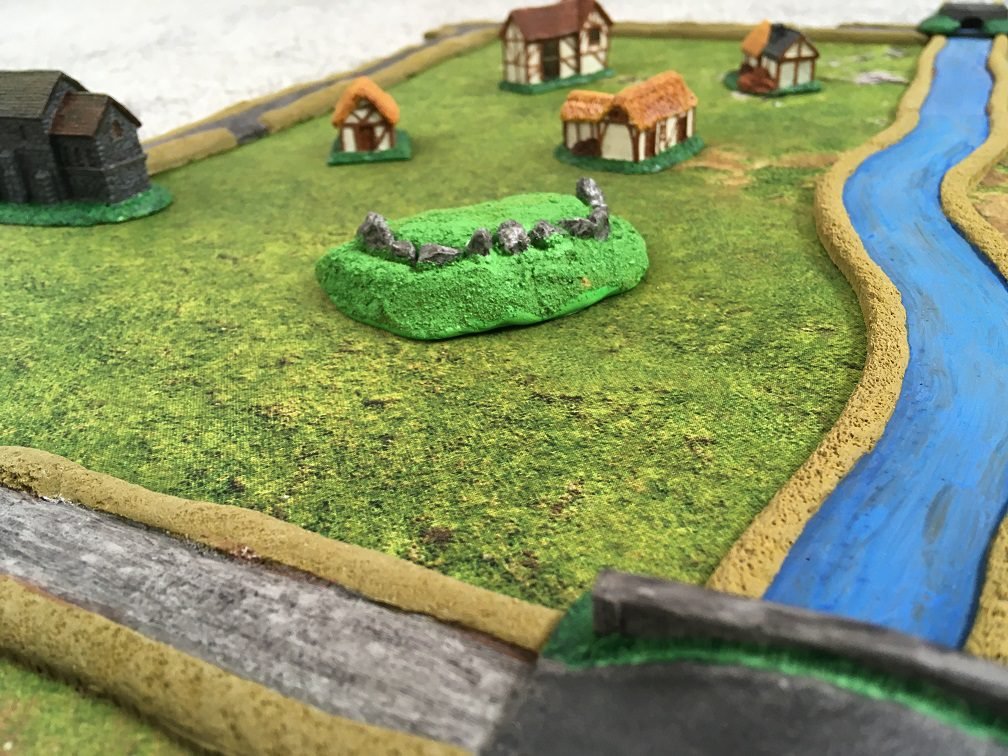
Here’s a view from the Western bridge, looking into the village of Riversbrook. Broken Tooth Hill is a key vantage point for defending the town against invaders.
Riversbrook priory, and view to the South-West.
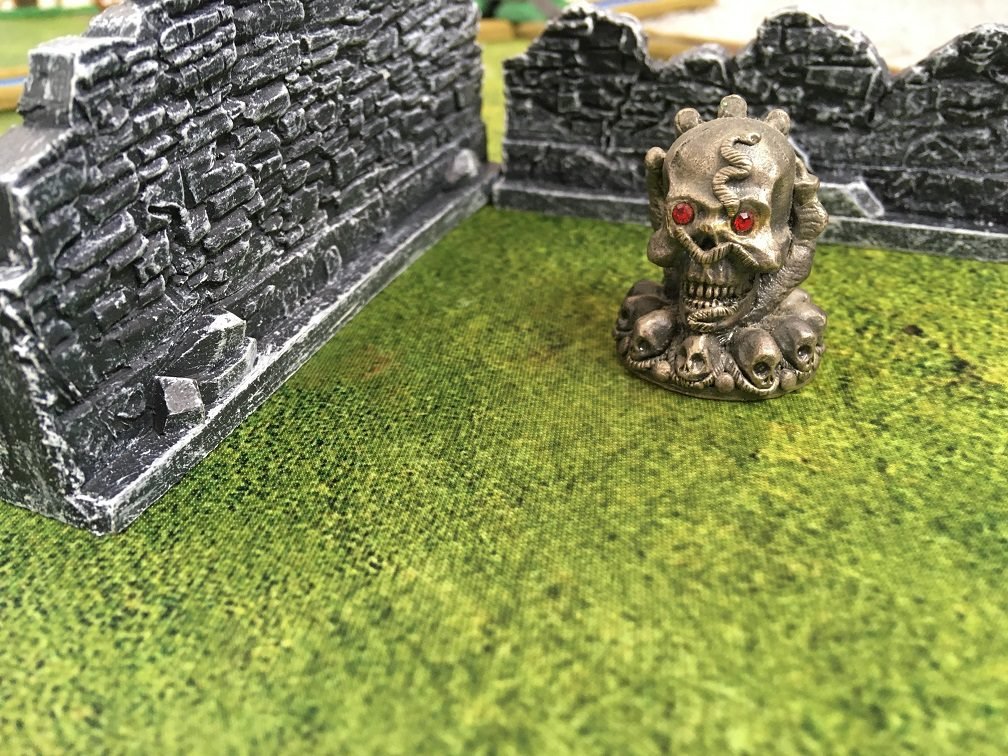
There are dark legends surrounding the evil-looking altar in the ruins to the South.
The Eastern bridge, crossing the river into the village.
View to the South-West from the Riversbrook Tavern.
Here’s more on my 6mm terrain endeavours, if you’re interested in finding more about the buildings, trees, etc.
Middensbury
Next up is my 28mm-scale village of Middensbury.
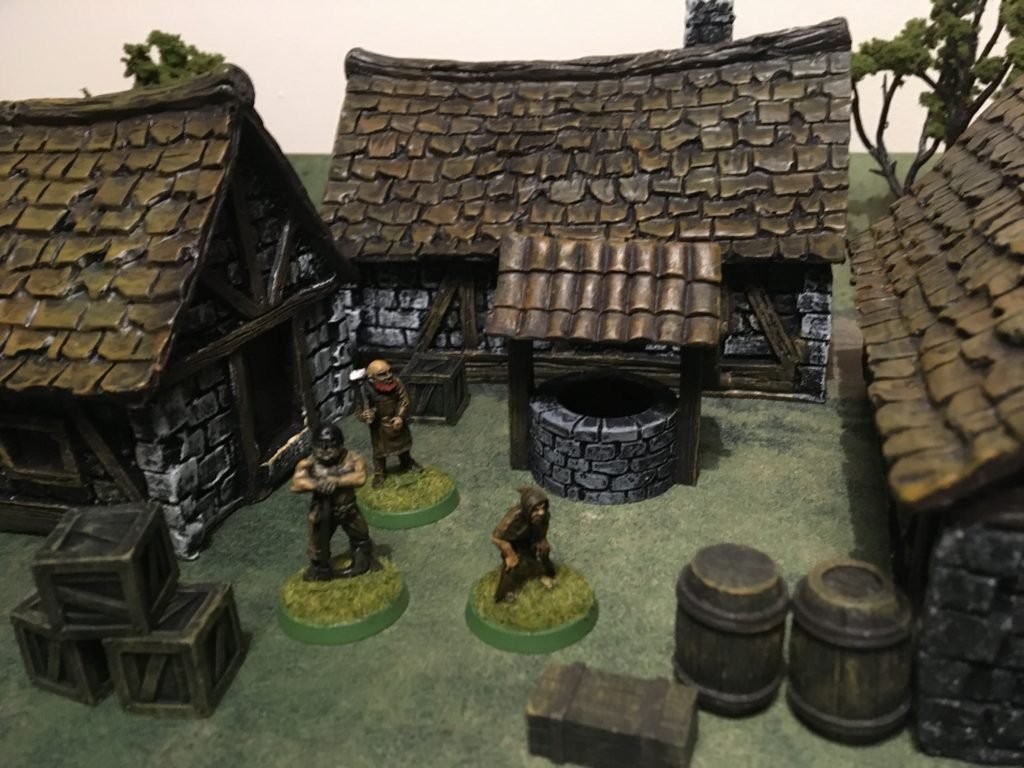
It’s a rustic little settlement with some quirky and interesting inhabitants.
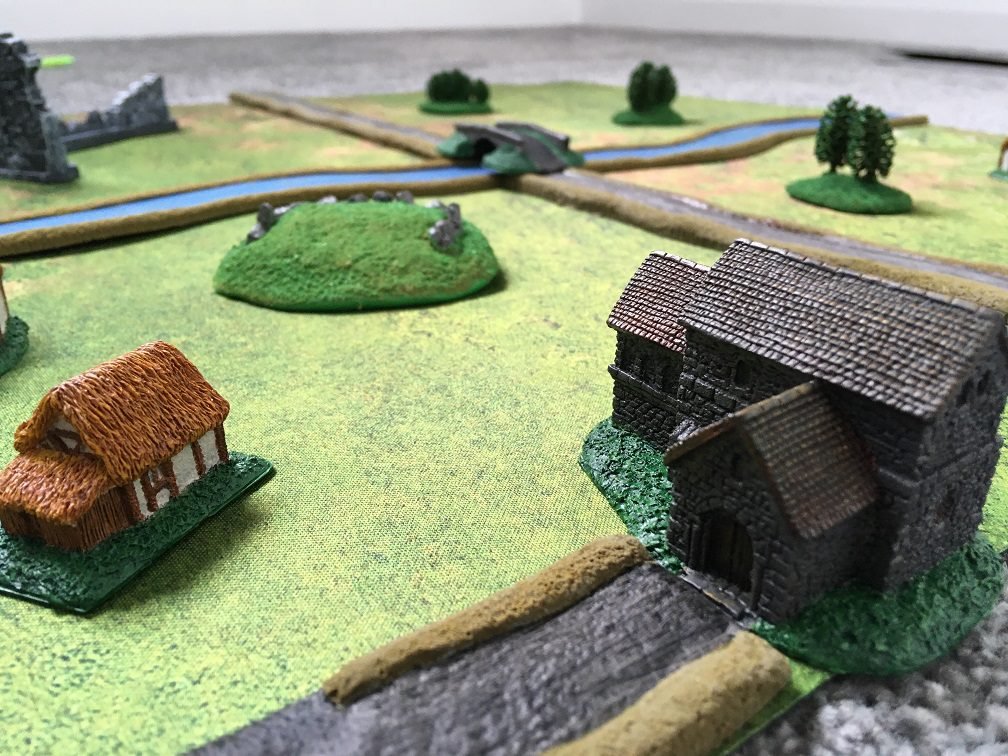
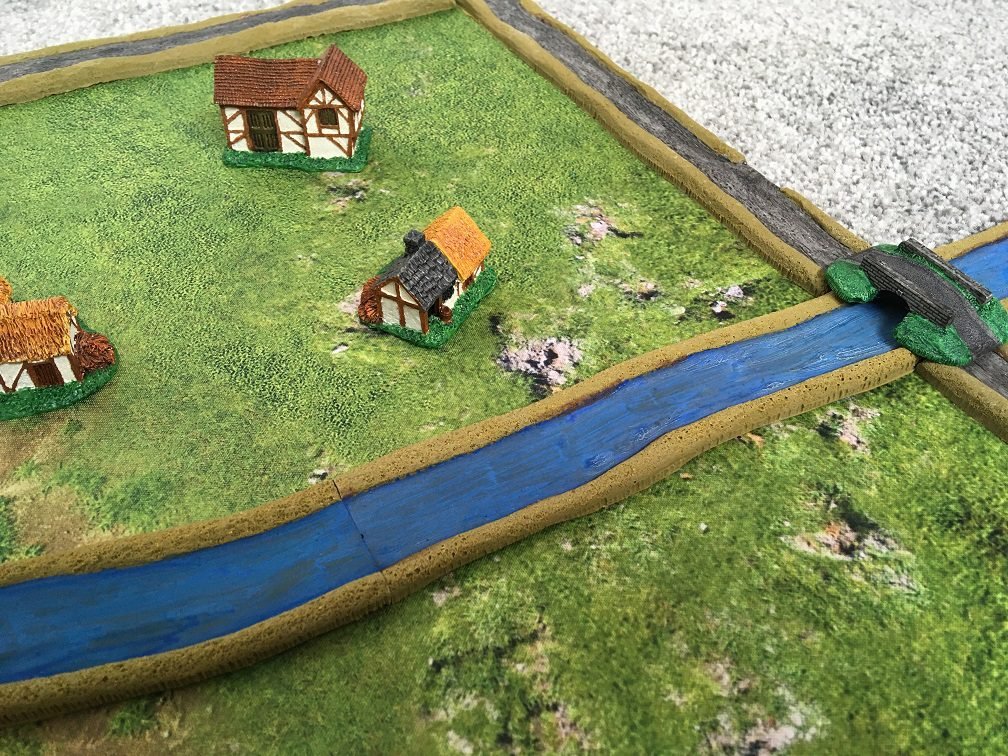
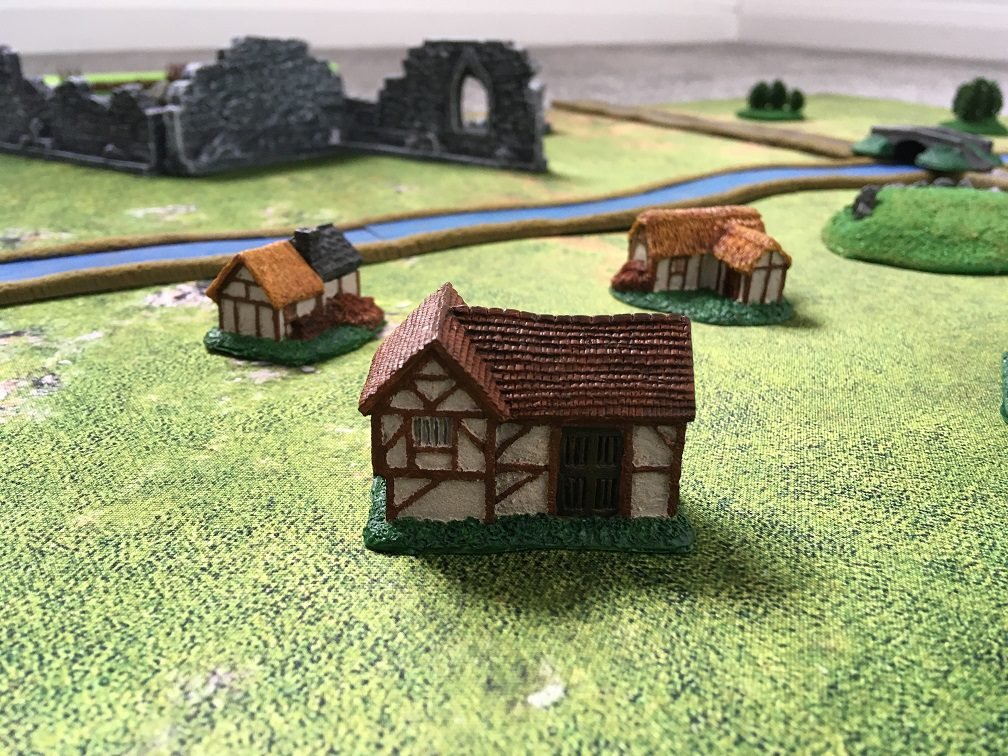
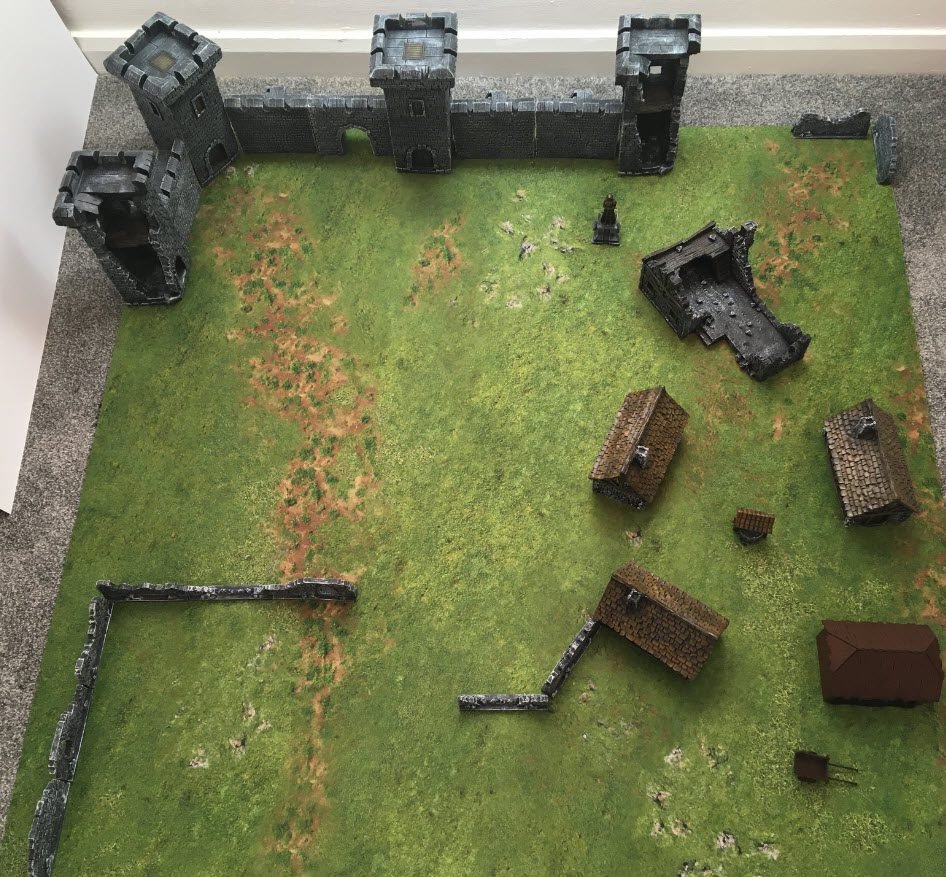
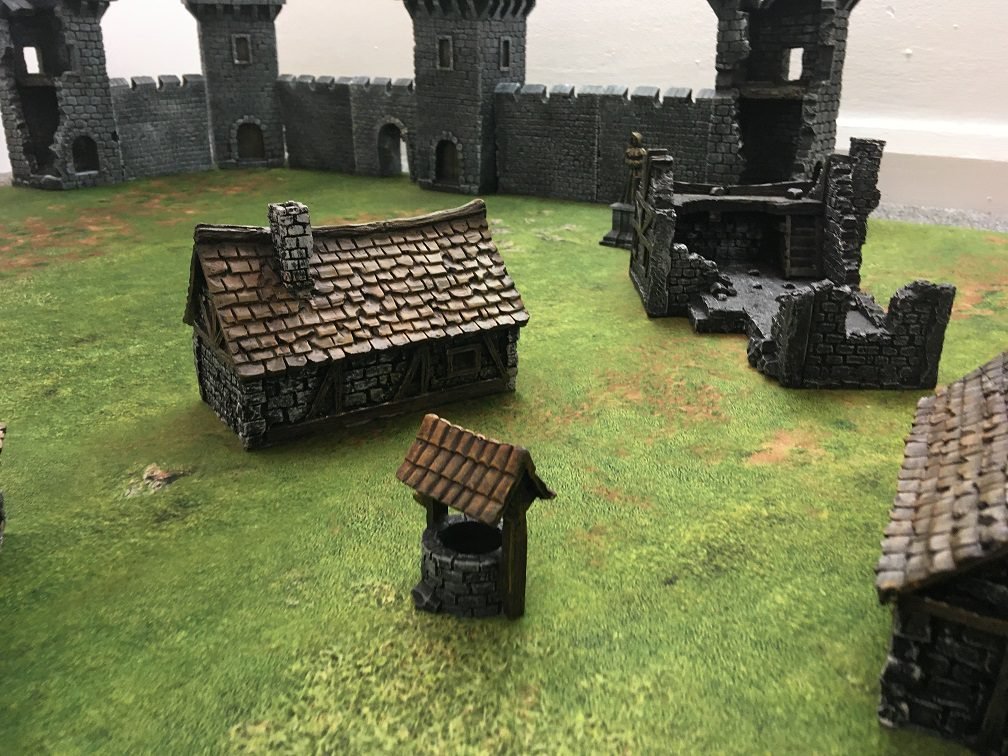
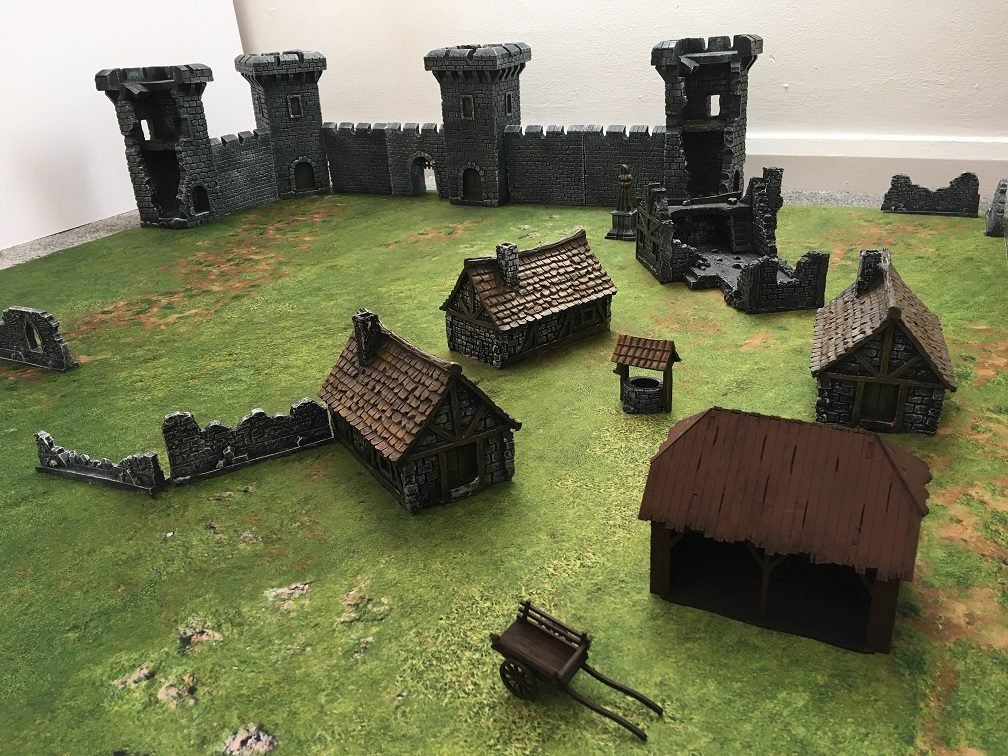
This layout is on a 4×4 mat (again, by GameMat) and I play with the Kings of War ruleset.
The village has seen better days. The castle was once home to a large and proud garrison of soldiers. Now, there are only a handful of jaded veterans remaining, and the building is partially derelict.
So that’s a whirlwind tour of a couple of settings I’ve built for my tabletop (or more accurately, bedroom floor) battles.
What about you? Which settings do you like to host your games in? Do you prefer fully-fledged pre-built worlds, or do you like to create somewhere from scratch? Be sure to let me know in the comments, below!
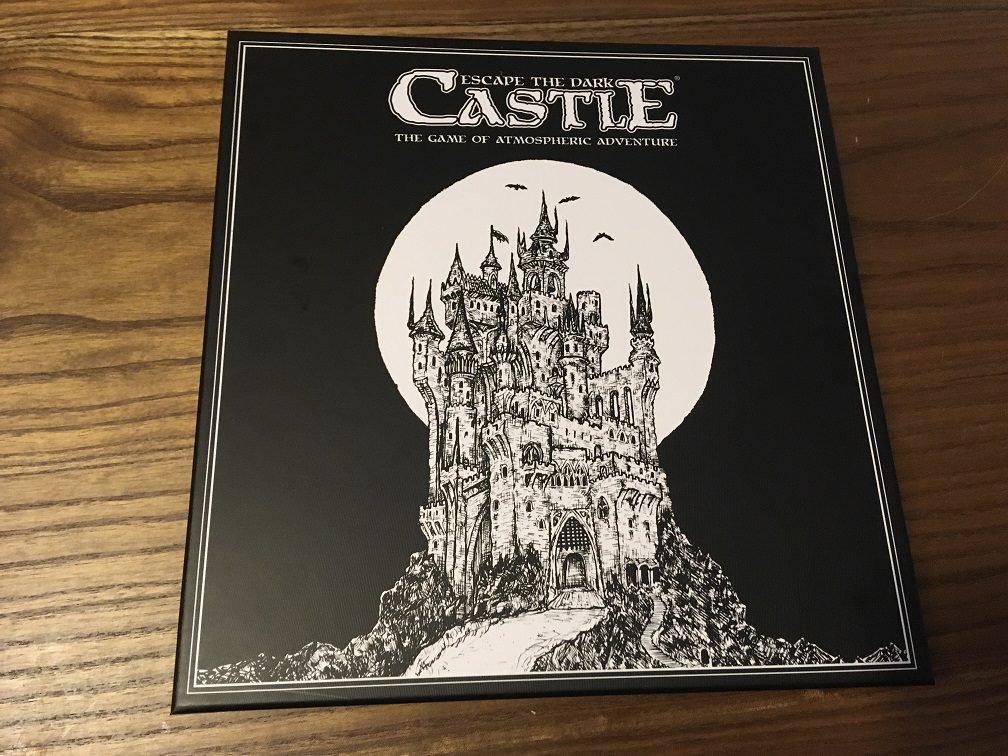
Escape the Dark Castle by Themeborne is a little gem of a game. I’ve been having a lot of fun playing it with my wife recently. I decided to do a quick write-up on it to help spread the love. There’s a number of reasons you might want to pick it up yourself.
First up though, I know it’s cool to say you’ve unearthed this amazing new game by overhearing a drunken dwarf in a tavern mention an obscure podcast that then tips you on to a barely-known Kickstarter, and… etc etc
Well, the reality is a bit less exciting. I found Escape the Dark Castle in Waterstones. I’m really glad I did too, because shortly afterwards, the big ol’ lockdown thing happened.
Artwork & Visuals
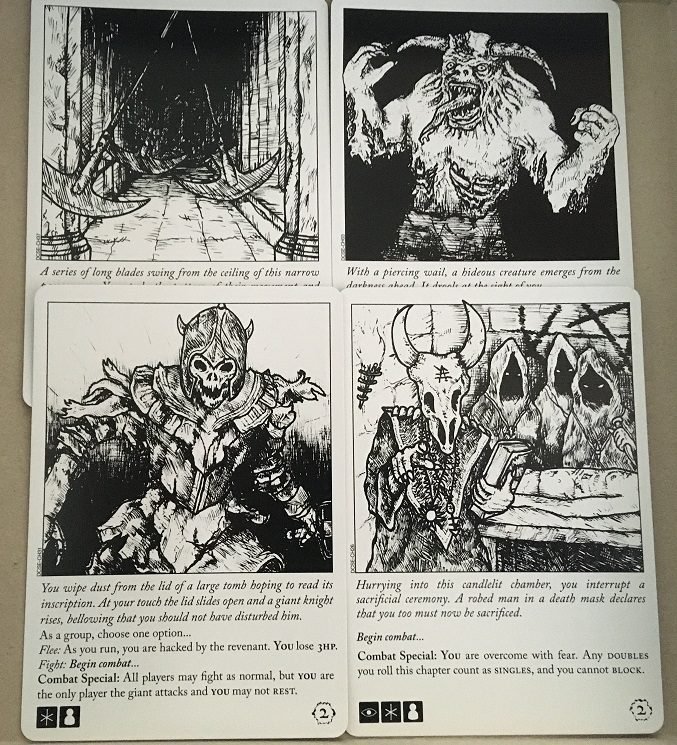
What drew me to the game, sitting there on the shelf, was the artwork. The picture on the front looked a bit like a grimdark Castle Duckula (I mean this as a total compliment) and I was intrigued to find out more. The in-game artwork shown on the back of the box turned me into that “You had my curiosity, now you have my attention” meme.
I’m pretty good about not just buying new hobby stuff on impulse, but as this isn’t a miniature game, I saw wouldn’t be adding to my unpainted “pile of shame”. This made it easy for me to part with the £30 and take the game home. I was really excited to try it out.
Who Is Escape the Dark Castle For?
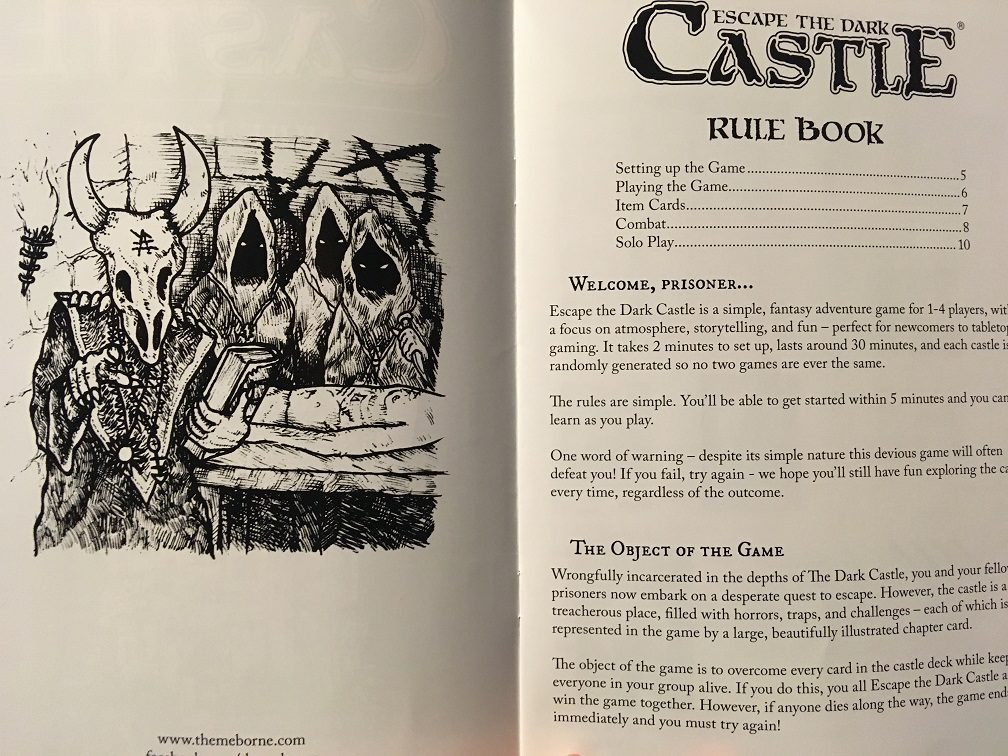
You can play with 1-4 players. It’s a co-op game, so you’re all working together to escape the castle. It only takes a couple of minutes to set up. The rules are simple to pick up, which makes it perfect for playing with kids, or if you have friends round for a few beers (when such things are allowed again!).
Because you can set up and get through a game in about half an hour, the barrier to getting started is really low too. It’ll satisfy your thirst for adventure whilst you’re waiting on your takeaway to arrive, then it can be tidied away as quickly as it was set up.
How Does Escape the Dark Castle Work?
It’s almost like a book. In fact, it reminds me a bit of the old Fighting Fantasy titles of my childhood. In particular, House of Hell. I wonder if that was an inspiration for the game’s creators?
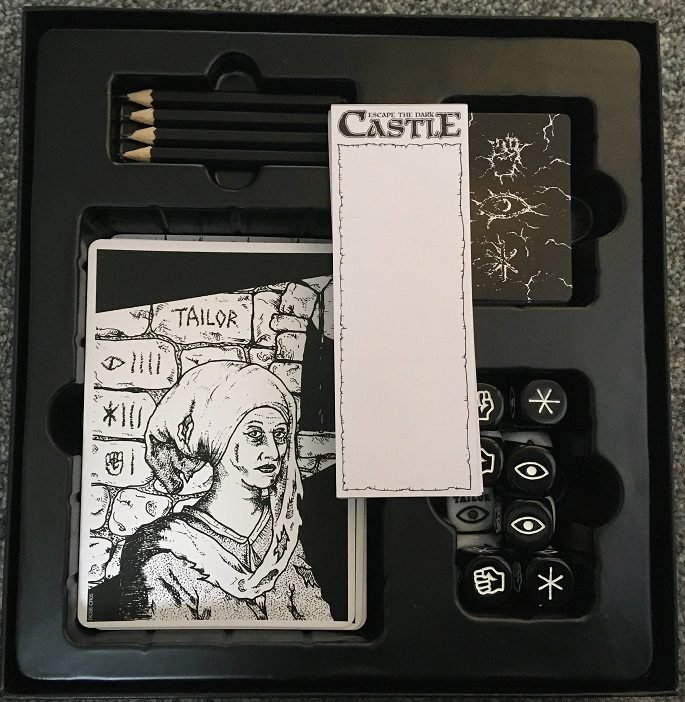
You play the role of a character attempting to escape the castle. These characters are selected from a deck of cards, and each one has their own strengths and weaknesses.
The castle is “built” from a deck of chapter cards. You draw 15 cards to create your castle, so no two adventures are the same.
You turn these cards over like the pages of a book to reveal each chapter. The chapter presents a scenario to you – usually a gristly one. You and your comrades must decide on the best course of action, and will usually end up in a fight to the death with some grotesque undead fiend.
You pick up item cards along the way to aid you on your quest. Combat is a fun and simple dice-based system, with the strength of your opponents weighted, based on how many you have in your party.
If you manage to negotiate your way through all 15 chapters without anyone dying, you’ll then fight a Castle Boss. There’s 3 of them, and you’ll draw 1 at random to wait for you at the end of your journey.
So, Is It Worth Buying?
100% yes. If you’re looking for a game that’s quick to set up, easy to learn, yet still presents you with a challenge and endless variety, then Escape the Dark Castle is well worth your consideration.
I’m really grateful to the creators for putting it together, and a quick Google search shows there’s expansion packs available too. Scourge of the Undead Queen… Blight of the Plague Lord…