No serious hobby podcast could run for a couple of years without having Andy Chambers on it. And although isn’t a serious podcast, Andy was kind enough to dedicate some of his time to working his way through my list of questions. So, what’s he not very good at? What myths and misconceptions would he like to dispel? And what’s he working on right now? I’ll answer that last one up-front – it’s called Zeo Genesis and you should definitely sign up for playtesting access!
If this is your first time with the Tabletop Miniature Hobby Podcast, thanks for giving it a shot. I’m sure you’ll enjoy our back catalogue, too – you’ll find a full list of episodes right here.
Following my recent Q&A with Gav Thorpe, I had the pleasure of talking to another of my heroes: Tuomas Pirinen.
Famed for (but certainly not limited to) masterminding the cult game Mordheim, Tuomas has a wealth of experience and insights we can draw from. And though he now earns a living in video games, we certainly haven’t lost him from the hobby. I was excited to learn about Trench Crusade – a 32mm scale grimdark miniatures game he has designed. We talk about that and many other subjects in this week’s episode…
The game is set in an alternate timeline where the Crusades never ended, as the armed forces of Hell manifested themselves on Earth and begun a war against humanity as a whole. The mankind has rallied in a global holy war and halted the advance of the seemingly inexhaustible legions of the Damned, and now trench warfare rages across vast swathes of pockmarked Europe. It is the year of our Lord 1914, where the armies of World War I, bolstered by the divine powers wage endless battle to stop the Legions of the Arch-devils from overwhelming the Earth. Heroes arise on both sides: Heroes of Heaven, and Heroes of Hell. Welcome to theTrench Crusade!
If this is your first time with the Tabletop Miniature Hobby Podcast, thanks for giving it a shot. I’m sure you’ll enjoy our back catalogue, too – you’ll find a full list of episodes right here.
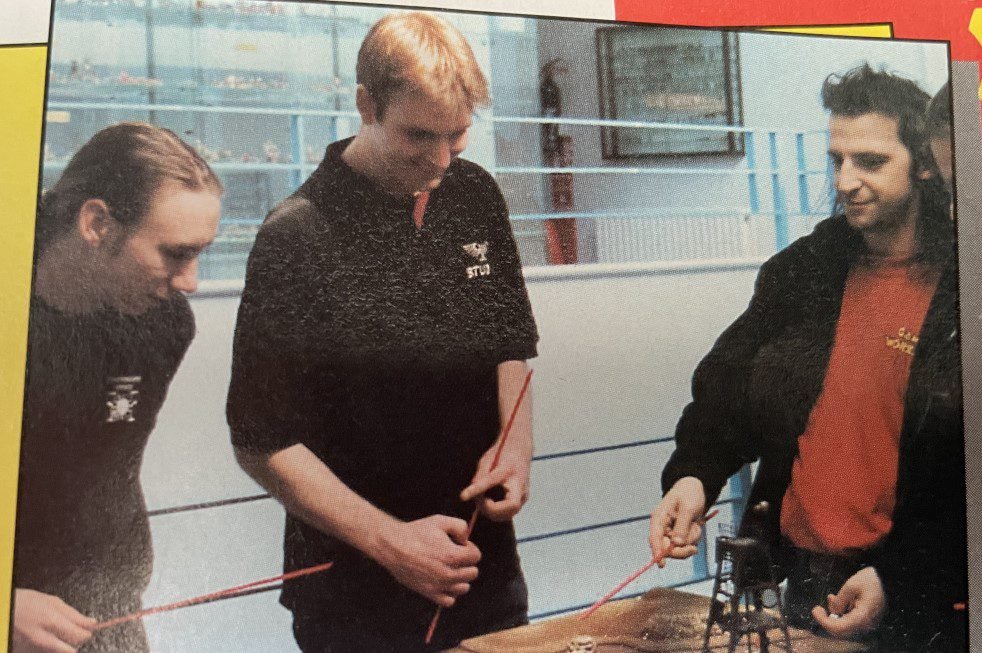
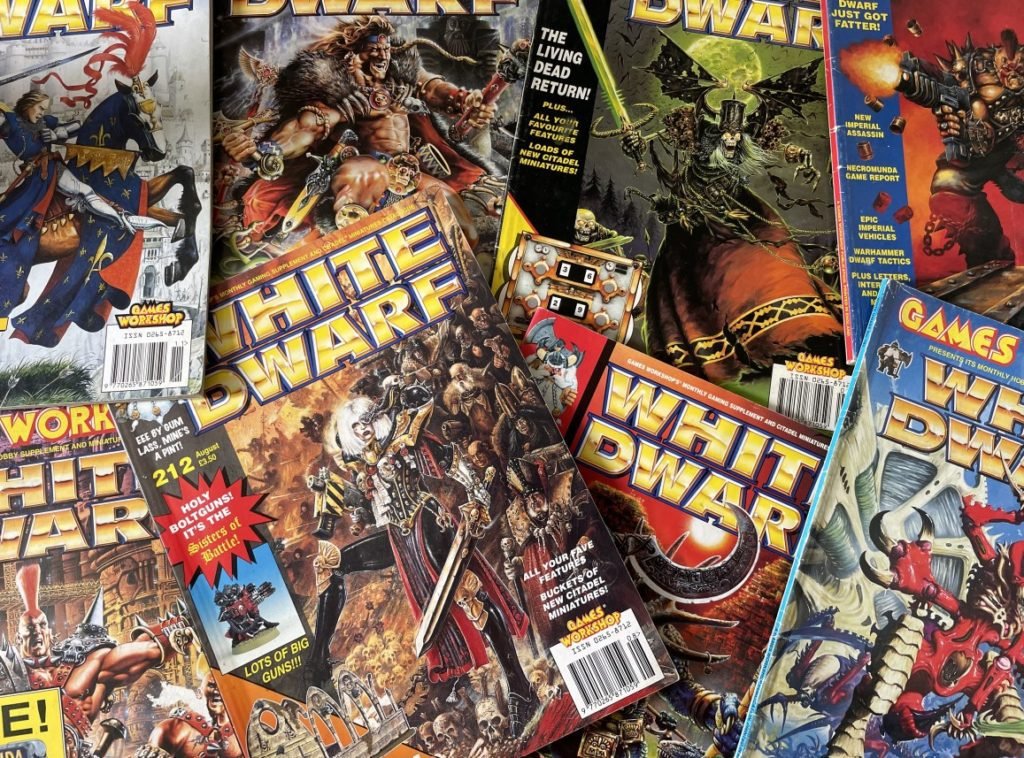
I’ve spoken to many great people in this hobby since I launched the Tabletop Miniature Hobby Podcast. But, until now, I’d never sought out any of the household names from White Dwarf/Games Workshop. There were a few reasons for this, but the main one was that I didn’t want to recreate the “talk me through your career” conversations available on many other channels.
Don’t get me wrong, I love listening to these, and have heard more than a few. But I’m always keen to explore alternative angles and seek out new insights. With that in mind, I came up with a list of recurring questions I could ask each of my hobby heroes – the plan being to edit them together in “themes” to create a type of audio documentary, as well as release them as individual podcast episodes (like this one).
I tentatively started to reach out to the people I had in mind, and was absolutely thrilled when Gav Thorpe agreed to have a chat. I’m sure Gav needs no introduction to any listener of this podcast, but you’ll find his website at gavthorpe.co.uk, and he runs a Patreon, too.
On this episode, I ask Gav questions about budget hobby purchases, common myths, and when he last changed his mind.
Famed in our Discord community for his ingenious DIY travel wargame boards, Alex of therecouldhavebeensnakes.com joins me to talk about the wonders of 15mm scale miniatures, as well as the aforementioned travel gaming.
One company mentioned in this episode is Alternative Armies. I was delighted to learn that they’re based here in Scotland, and have just received my first order from them (including a cool free gift, which was a lovely touch!).
I was leafing through the latest edition of Miniature Wargames magazine when I came across an advert for a new game called The Doomed, scheduled for release in early August 2023 by Osprey Publishing.
The Doomed immediately jumped out to me, and I wanted to learn more. It looks like another exciting miniature agnostic title to add to my collection. I tracked down author Chris McDowall (Into the Odd, Electric Bastionland), and he was kind enough to spend some time with me talking about the game, as well as his hobby history.
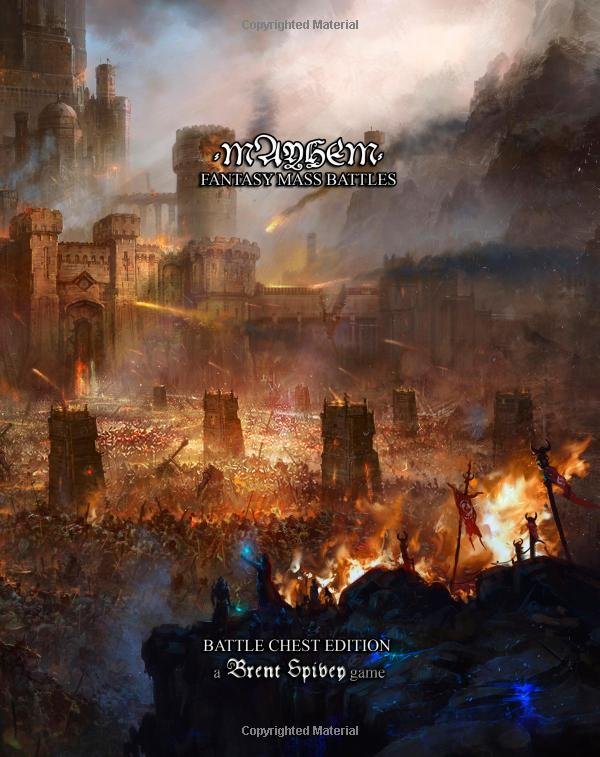
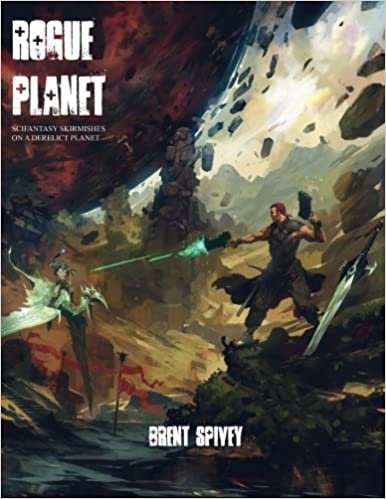
Both of these games are miniature agnostic systems with innovative designs and mechanics.
Rogue Planet is a sci-fantasy skirmish game ideally suited to folks seeking a bit of a 40k/Rogue Trader fix. Mayhem, on the other hand, works great as a mass-battle system for getting your 6mm or 10mm armies on the table. The book includes rules for sieges too, if you want to give your castle terrain a runout.
You can keep up with future updates from Brent by visiting his website Bombshell Games.
We make a return to playing Song of Blades & Heroes, one of the most simple and accessible skirmish games on the market. And, in this battle, we’re focusing on storytelling over points, fairness, and balance. The defenders can’t possibly win. But how well can they hold out against a huge Chaos force?
So why do many players prefer unbalanced, narrative scenarios over fair and competitive encounters?
After all, isn’t tabletop wargaming all about strategy, skill, and balance? Isn’t the whole point to test our tactical abilities against our opponents?
Sure, that’s definitely a big part of it. But it’s not the only part.
Unbalanced scenarios add a layer of excitement and unpredictability to the game. You never know what you might be up against in these scenarios. It could be a massive army against a small group of elite units, or it could be a guerrilla-style ambush on a convoy of tanks. These types of scenarios offer a unique challenge that can’t be replicated in a balanced game.
At its heart, tabletop wargaming is about storytelling. We create armies, paint models, and build terrain because we want to immerse ourselves in epic battles and heroic struggles. We want to feel like we’re part of a grand, sweeping narrative, with all the twists and turns and emotional highs and lows that come with it.
In a fair and balanced game, both players have equal opportunities to win, which means the game’s outcome is largely determined by skill and strategy. While that’s great, it can also become predictable and monotonous after a while. Unbalanced scenarios, on the other hand, keep the game fresh and exciting by forcing players to come up with creative solutions to overcome their disadvantage.
When we play a game that’s heavily weighted in favour of one side or the other, we’re not just trying to win. We’re also trying to tell a story. Maybe we’re playing out the final battle of a long and bitter war, with one side hopelessly outnumbered but fighting with desperate courage. Or maybe we’re staging a daring raid on an enemy stronghold, with the attackers outnumbered but relying on cunning and surprise to carry the day. Whatever the situation, it’s the narrative that drives us, not just the desire to win.
In an unbalanced scenario, the narrative becomes the driving force behind the game. Players can get lost in the story and become more invested in their army’s fate, which adds to the overall gaming experience.
Of course, this kind of approach isn’t for everyone. Some players prefer the purity of a perfectly balanced, competitive encounter, where victory is determined solely by skill and strategy. And that’s totally fine! There’s nothing wrong with wanting a fair fight.
But for those of us who crave a bit more drama and excitement, unbalanced scenarios are where it’s at. We get to take risks, try crazy tactics, and see our armies perform feats of heroism and bravery that would be impossible in a strictly balanced game. We get to tell stories that are full of tension, surprise, and drama – stories that stick with us long after the game is over.
Finally, unbalanced scenarios can be a great leveller. They allow newer players to compete against more experienced players on a more level playing field. When a scenario is unbalanced, the outcome is not determined solely by the players’ skill level. Instead, it’s about how well they can adapt to the challenges presented by the scenario. This can give newer players a fighting chance and motivate them to keep playing.
In 2005, a dusty collection of papers were discovered in a cellar in Dublin. Untouched since 1860, the papers told the story of Otaro, a Japanese fencing teacher, and Captain Robert Hood, a discharged American soldier. It was a tale of duels, suspense and adventure in a Japan struggling to come to terms with the realities of the steam-powered 19th century.
When the two friends discover a samurai lord murdered on the road and his only son and heir kidnapped, they find themselves drawn into a mystery as baffling as it is deadly.
They will need sharp wits, sharp swords and stout hearts to survive the enigma that is “The Fox Wife’s Tail.”
Fans of Sir Arthur Conan Doyle, Patrick O’Brian and Agatha Christie will love this old fashioned adventure story.
Can Artificial Intelligence be used to complement the tabletop miniature hobby? Let’s ask it. Take it away, OpenAI…
Recently, artificial intelligence (AI) has become an increasingly popular tool in the gaming industry. From driving game simulations to virtual reality (VR) experiences, AI is being used to create immersive and realistic gaming experiences. But one area where AI has been slow to gain traction is in the realm of role-playing games (RPGs).
RPGs are a unique type of game that is driven by narrative and character development. Players control a character, oftentimes with a unique set of skills, as they progress through a story-driven adventure. As the player progresses, they make choices that affect the story and character development. But with the introduction of AI, this type of game could potentially be taken to the next level.
AI could be used to generate unique stories and characters that can then be customized based on the player’s choices. AI could also be used to create unique and dynamic NPCs (non-player characters) that can interact with the player in a realistic manner.
AI could be used to create dynamic and interactive environments that can react to the player’s actions. This could include enemy AI that can adapt to the player’s strategy, resulting in a more challenging and rewarding experience. Overall, the potential use of AI in RPG games could lead to an even more immersive and realistic gaming experience. With AI, games could become more dynamic, responsive, and engaging. It could also result in more believable characters and storylines, making the game even more enjoyable.
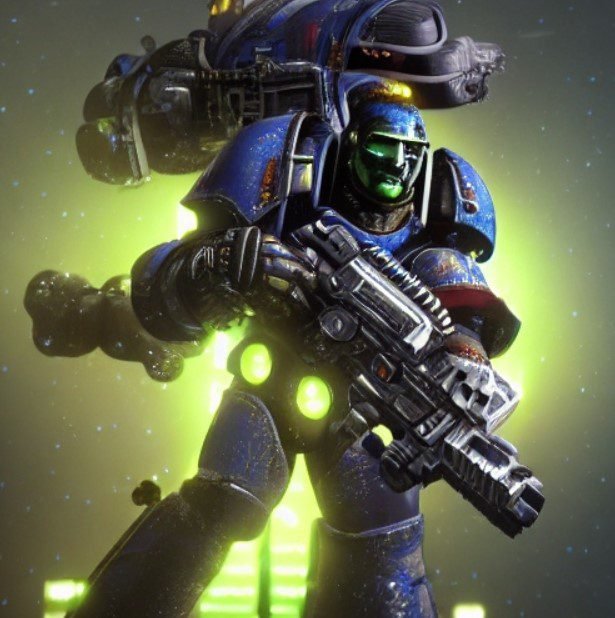
AI-generated tabletop miniature hobby artwork
AI & the RPG Hobby
AI can be used to benefit the RPG hobby in a variety of ways.
Dungeon Master-Generated Encounters
AI can be used to generate dynamic and challenging encounters for players, based on the game’s current state. This could include customizing the difficulty of the encounter, as well as adding unique elements such as powerful monsters or traps.
AI-Driven NPCs
AI can be used to create believable and dynamic NPCs. These NPCs could interact with players in a realistic manner, responding to the players’ words and actions.
AI-Controlled Monsters
AI can be used to control the monsters in the game, making them more unpredictable and challenging. This could include monsters that can adapt to the players’ tactics and strategies, making for a more dynamic and engaging experience.
AI-Generated Quests
AI can be used to generate unique and interesting quests for players to complete. These quests could include various objectives and enemies, as well as unique rewards and storylines.
AI-Controlled World Events
AI can be used to create and control random world events. These events could range from natural disasters to political turmoil, and could have a profound impact on the game’s world and characters.
AI & Miniature Wargames
AI can also be used to benefit miniature wargames in a variety of ways.
AI-Generated Scenarios
AI can be used to generate unique and dynamic scenarios for players to play out. This could include customizing the battlefield, terrain, objectives, and enemies.
AI-Generated Units
AI can be used to generate units for players to command. This could include customizing the units’ stats, equipment, and abilities.
AI-Controlled Enemies
AI can be used to control enemy units, making them more unpredictable and challenging. This could include enemy units that can adapt to the players’ tactics and strategies.
AI-Generated Strategies
AI can be used to generate strategies for players to follow. This could include customizing the tactics, objectives, and resources available.
AI-Controlled Events
AI can be used to generate and control various events on the battlefield. This could include weather, terrain, and even random events that could affect the game.
Summary: How AI Can Complement the Tabletop Miniature Hobby
The potential benefits of AI in the tabletop miniature hobby are numerous. AI can be used to generate a more immersive and dynamic experience for players. It can also provide an extra layer of complexity and challenge to the game.
AI can be used to generate unique scenarios and objectives for players to complete. This could include customizing the battlefield, terrain, objectives, and enemies. AI can also be used to generate units for players to command. This could include customizing the units’ stats, equipment, and abilities.
AI-controlled enemies can be used to make the game more unpredictable and challenging. AI can also be used to generate strategies for players to follow. This could include customizing the tactics, objectives, and resources available. Finally, AI can be used to control various events on the battlefield, such as weather, terrain, and random events.
Thanks for these hot takes, you clever big robot. Oh, and please, don’t annihilate us humans as soon as you have the capability to do so.Which probably won’t be that long, will it?
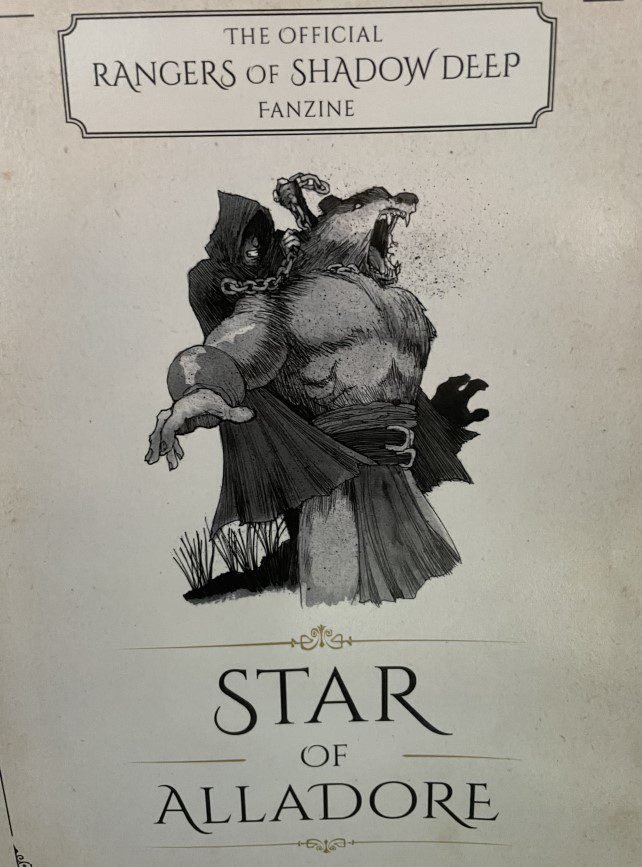
Unfortunately, after a positive start, we misinterpreted a vital rule and botched the entire thing. We were keeping investigation scores for each auxiliary companion as opposed to one single collective score. Now that we know what we did wrong, it makes perfect sense. It isn’t the clearest when you read it in the book, though, and we aren’t the brightest of chaps, so it was the perfect storm.
Lesson learned, though. We’ll definitely be arranging a rematch in the very near future.
We did get to fight some giant rats before it all went wrong.
As well as some giant flies.
But not really any wolves. This certainly never happened.
Nor did this.
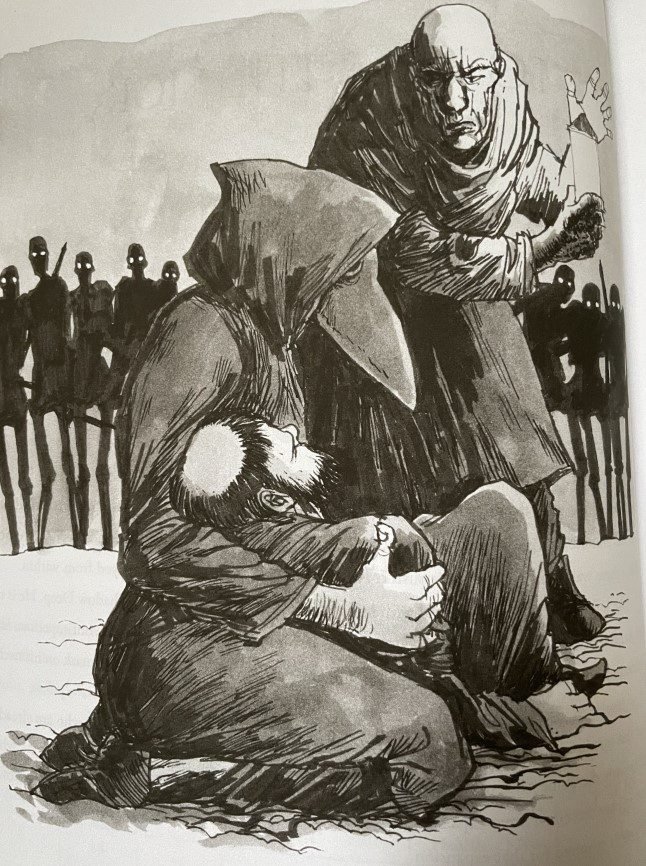
Our auxiliary companions, Seb, Orla, Nicolan, and Covin. None of them were the werewolf, so in some ways, this game was a tremendous success.
The Manor House. Built with some kids wooden blocks, and furniture from Dungeon Saga.
Range-ers of Shadow Deep.
Dangers of Shadow Deep. We did get to fight and kill this werewolf. Eventually. Is it acceptable to skin it and wear its fur? Or would it turn back into mouldy human skin once the moon went away?