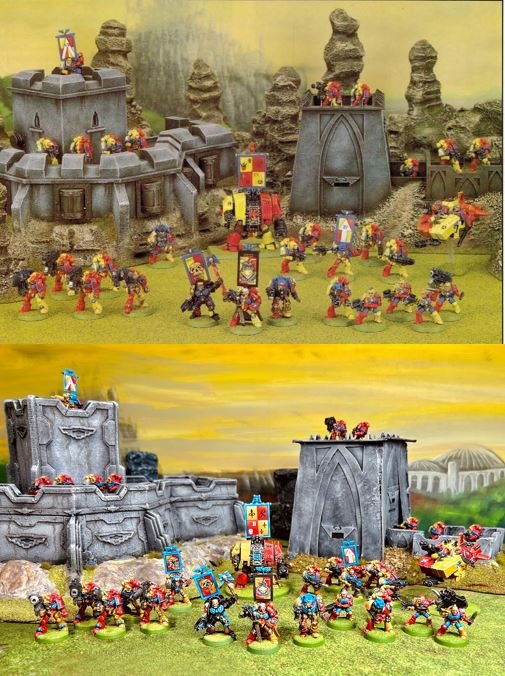
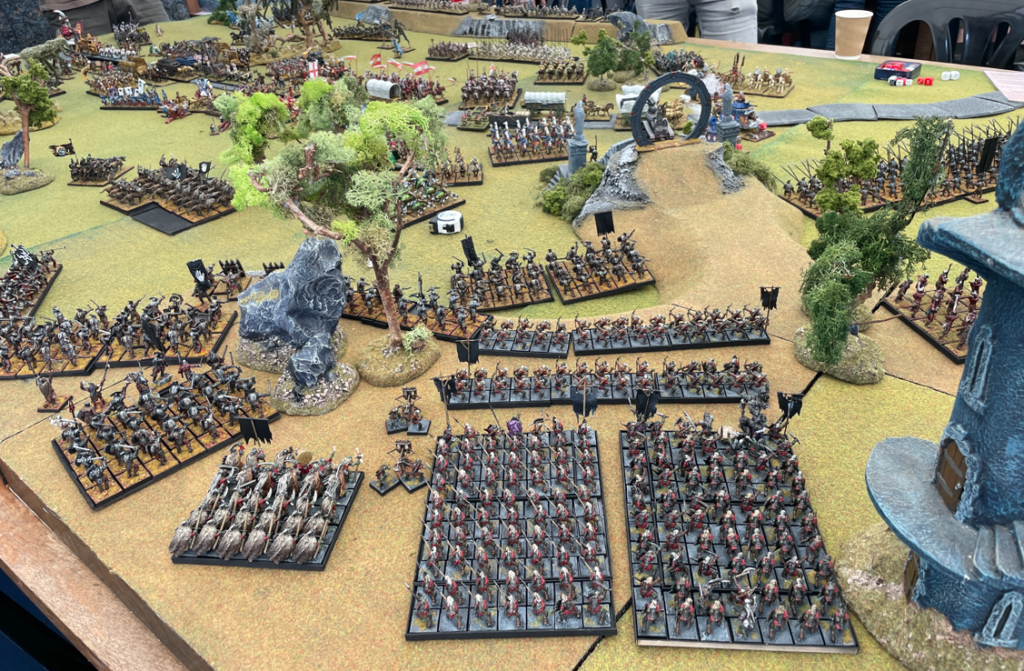
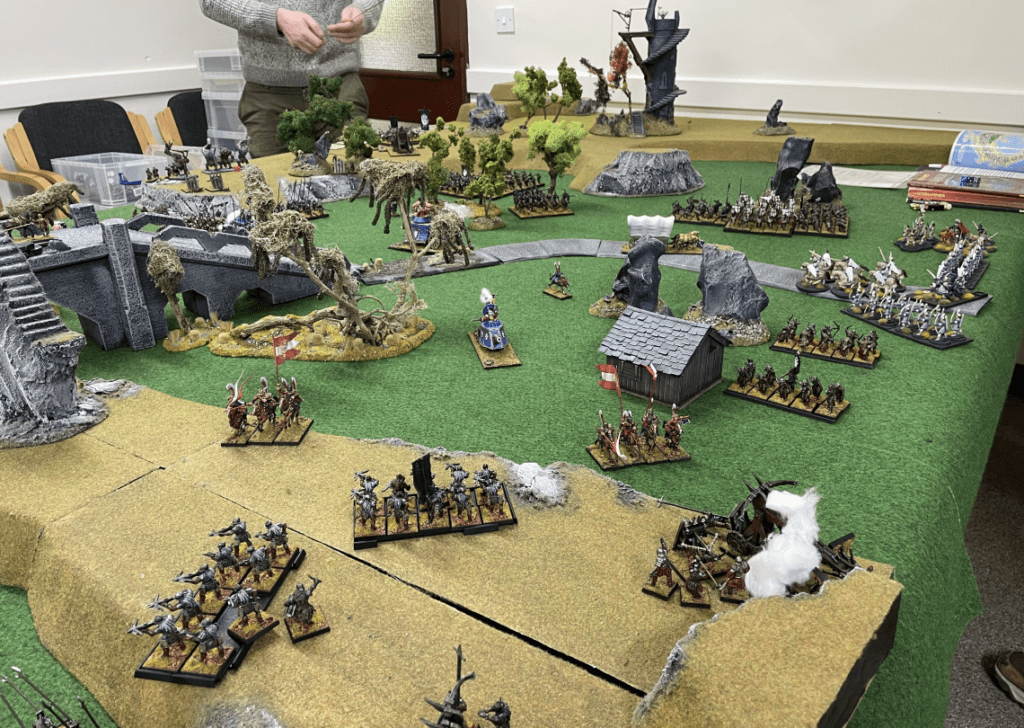
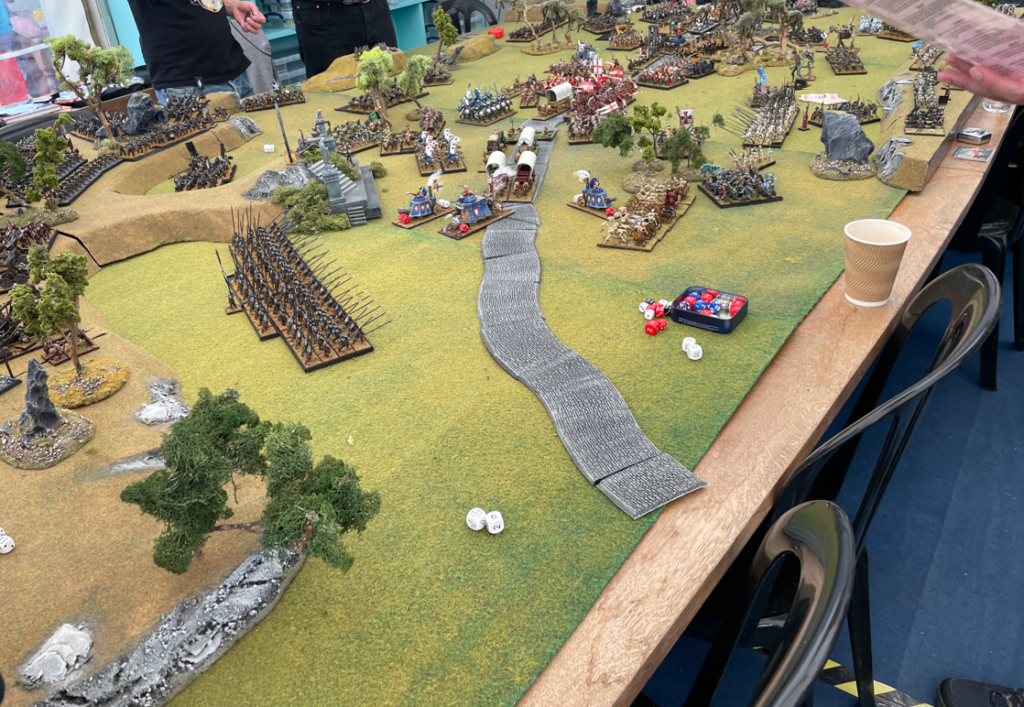
One of the best things about getting back into the hobby was reading back through my old White Dwarf magazines.
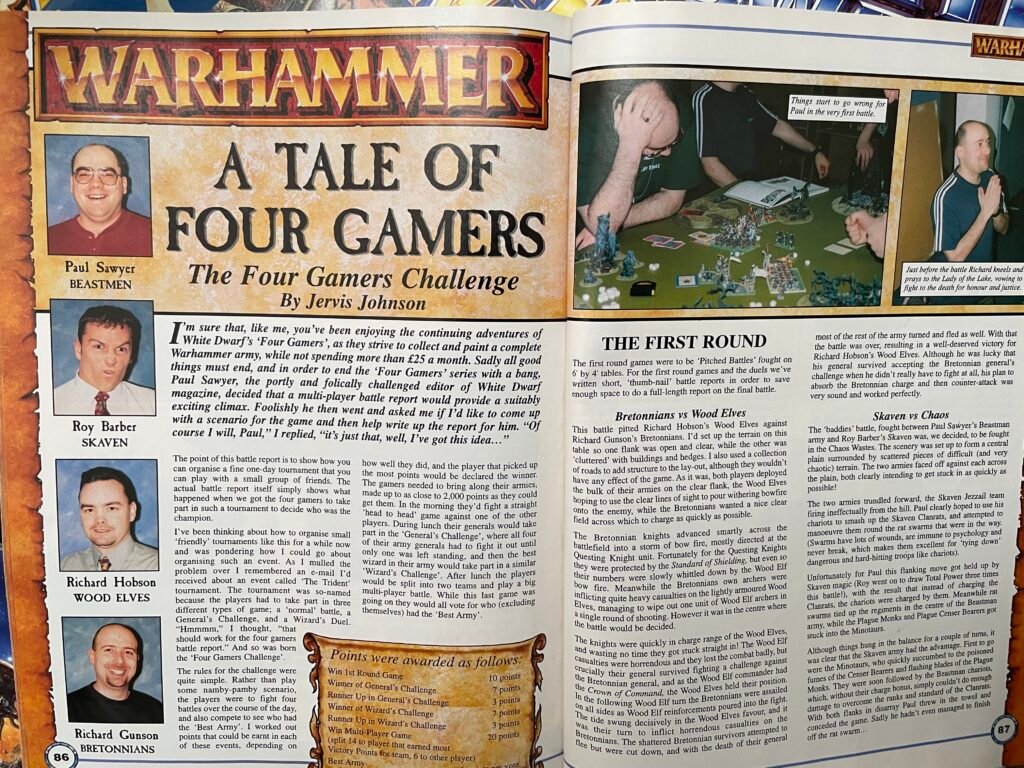
My collection spans from late 1993 to mid-1998, and one of the most loved and fondly remembered features of this period was “A Tale of Four Gamers”.
The concept of A Tale of Four Gamers was simple but effective. White Dwarf took four Games Workshop staff (Paul Sawyer, Richard Hobson, Roy Barber, and Richard Gunson) from different parts of the company, gave each of them a small monthly budget, and had them build, paint and eventually battle with a Warhammer army entirely in public view through the magazine.
It ran for five months in 1998. Fifty quid to start, then twenty-five a month after that, working out at £150 total by the end*.
Nobody was told what to buy or how to paint it, so all four ended up going in completely different directions: Roy Barber built Skaven, Richard Hobson did Wood Elves modelled on Robin Hood, Richard Gunson went Bretonnian, and Paul Sawyer (AKA Fat Bloke) painted Beastmen almost entirely in metallics.
The whole point was showing the process honestly, budgets, mistakes and all, rather than just presenting a finished army under studio lighting. That’s what made it feel achievable to readers in a way most hobby features at the time didn’t.
Sean recently reached out to say he was running a series of deep-dive videos on A Tale of Four Gamers, the first of which earned him an enthusiastic YouTube comment from none other than Richard Hobson.
Sean took the opportunity to reach out to Richard, which led him to get in touch with Richard Gunson and Roy Barber as well. Tragically, Paul Sawyer passed away last year – he was only 59.
The trio were keen to talk to Sean about A Tale of Four Gamers, and he jumped at the opportunity to get them together for an interview that he could use for the final video in his series. He was looking for a little backup on the tech/recording side, and I was only too happy to help. It was a fascinating conversation to sit and listen to, and I’m delighted that Sean has allowed me to play it in full now on this episode of the Tabletop Miniature Hobby Podcast.
*Sean reckons that £150 budget is roughly £300 in today’s money.
My plan to celebrate the Tabletop Miniature Hobby Podcast’s fifth birthday was simple. Create an open recording session and invite a handful of legendary former guests to drop in for a chat. Then, when nobody turns up, just sit there and paint a second edition Space Marine in peace.
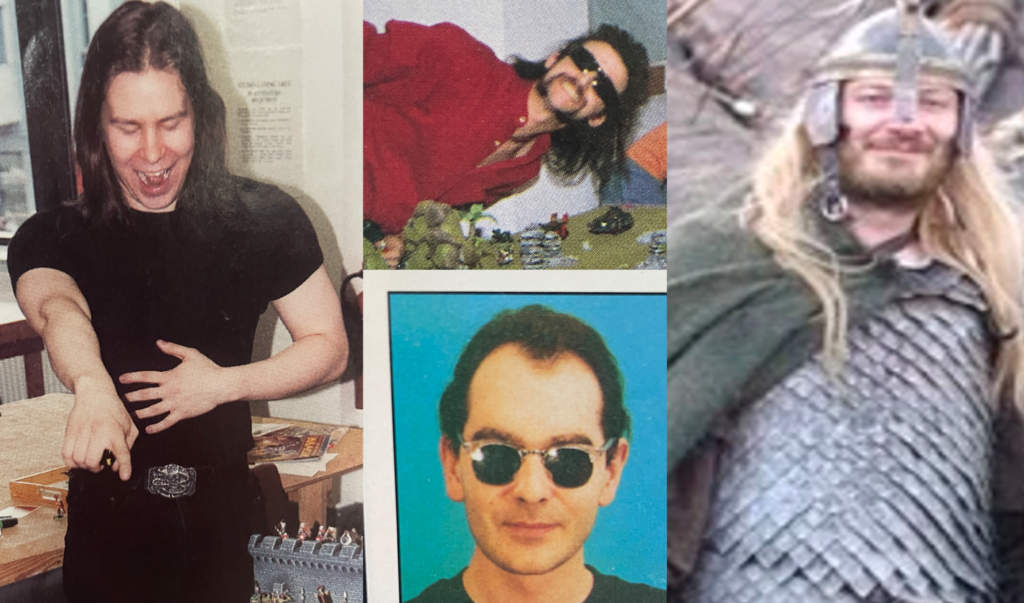
But my plans were scuppered when Jervis Johnson actually went and turned up. I was about to tell him I had a monopose Space Marine to paint when Andy Chambers dropped in, too. By the time Tuomas Pirinen arrived, my painting ambitions were in tatters. And when Alessio Cavatore pinged up on the screen, I threw my crusty old pot of Goblin Green against the wall in a fit of rage.
Still, there was nothing else for it but to listen to the guys chat and make sure I kept my foot pressed firmly on the ‘record’ pedal. With the recording now cut into a wax cylinder (and made available as an RSS-distributed digital audio file), I’m delighted to present it to you.
In all seriousness, this was a fantastic experience and truly surreal to sit on the digital wall like a large pink fly. I’m unbelievably grateful to Tuomas, Alessio, Jervis, and Andy for giving up some of their valuable time for this humble podcast, and I’ll never tire of listening to any of them. Thanks for everything, chaps!
Subscribe or Follow on Your Podcast App of Choice
The Tabletop Miniature Hobby Podcast is available everywhere podcasts are found.
Back in March, I was delighted to welcome Orlygg of the legendary Realm of Chaos 80s blog onto the show. The episode was very popular and gathered a ton of great feedback. If you missed it first time around, here it is.
Due to popular demand, I invited Orlygg back on for part two, and this time, solicited questions for him from the Bedroom Battlefields community.
Spend five minutes talking to Ronnie Renton, and one thing becomes clear. He is still, by his own admission, “mentally… only 12 years old.”
That enthusiasm has carried him from the earliest days of Warhammer through to founding Mantic Games, and into a modern hobby that looks very different to the one he started in.
A recurring theme in Renton’s thinking is simple. People still love the hobby, but their lives have changed.
“I don’t have time to spend ages finessing loads of things if I just want to play on a Tuesday night,” he explains.
That shift has shaped Mantic’s recent output. Where once the answer to everything was a large-scale game like Kings of War, the company now builds across a wider spread. Smaller, faster experiences sit alongside the traditional long-form hobby projects.
Renton describes it as two types of game.
“I think there’s the Forever Game and then there’s the Now Game,” he says.
The former is the classic army-building commitment. The latter is something you can pick up, play for a few months, then move on from without guilt.
Most players, he suggests, now live somewhere between the two.
Bringing in a legend
That shift in thinking is also reflected in who Mantic chooses to work with. One of the more notable recent moves has been bringing in Jervis Johnson, a designer whose influence stretches back decades.
For Renton, the decision was straightforward once the idea took hold.
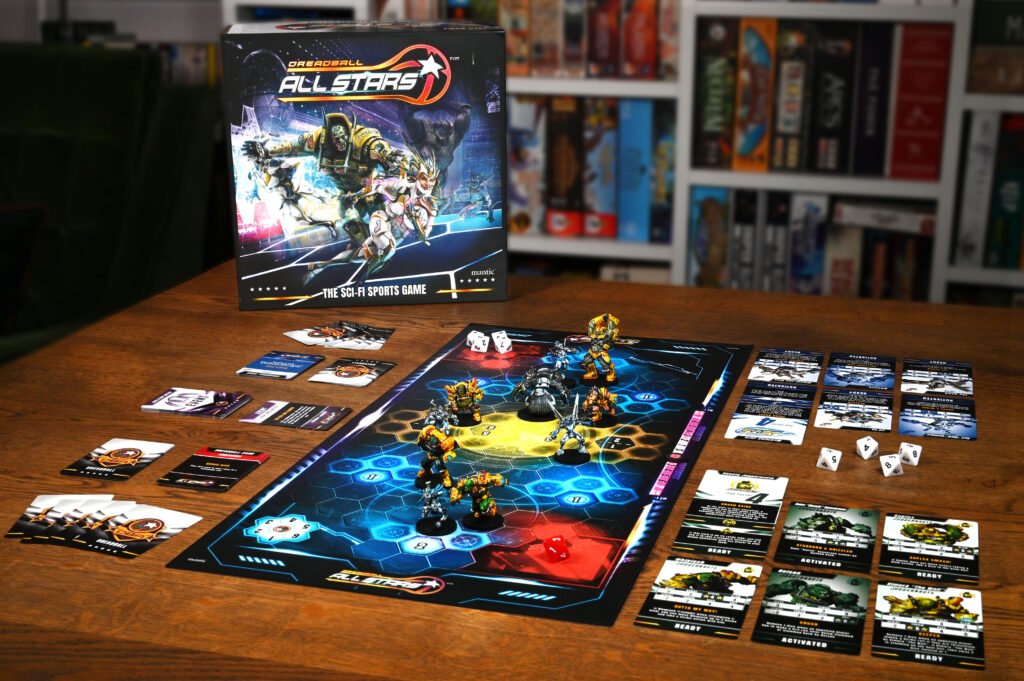
The opportunity came while rethinking DreadBall. Rather than revisiting the existing game, the aim was to relaunch it in a way that felt fresh, faster, and easier to pick up.
“It had to pay homage to what came before, but it mustn’t be a rehash,” Renton explains.
Johnson’s approach reflects that brief. The focus is on clarity and pace, with rules that quickly become second nature.
“Once you know it, everything you need is on the card,” Renton says.
For Mantic, it is part of a broader direction. Bring in experienced designers, give them room to work, and build games that players can return to easily.
“He just knows how to do it from beginning to end,” Renton adds.
The danger of listening too much
For all the talk of community engagement, Renton is wary of letting players design the game.
“If you give the keys to the asylum to the loonies, they’ll make the game that they think they want,” he says.
The problem is not bad intent. It’s focus. Players tend to fixate on edge cases and small frustrations, often at the expense of what makes a game welcoming in the first place.
“You must stay true to it, but you must clean it up and make it welcoming to new players,” he explains.
Fail to do that, and even a well-loved system slowly fades.
Solving the real problems
Renton now starts design from a different place than he once did.
“What problem am I going to solve?”
Sometimes that problem is practical. Terrain that looks good but is also clear to play on. Games that can be set up quickly and packed away without taking over the house.
Other times, it’s social. Making it easier for players to actually get games in.
“I want to come together, have fun, roll dice, and not have to spend all night remembering rules,” he says.
That thinking runs through everything from quick-play sports games to simplified army formats.
Not instead of, but alongside
One of Renton’s more telling observations is that new games are rarely replacements.
“It’s an as well as game, not an instead of game,” he says.
Players are not abandoning their main systems. They are adding to them. A fast, one-hour game sits alongside a larger project rather than competing with it.
That shift has consequences. It means games need to be easier to revisit, easier to teach, and easier to enjoy without long preparation.
Keeping the hobby alive
For all the changes, Renton does not think players themselves have become harder to please. The challenge is different.
“There’s more choice,” he says.
That makes it harder to reach critical mass. A great game still fails if no one nearby is playing it.
Which brings him back to the same core idea. Remove friction. Help players get from buying a game to actually playing it.
Because in the end, nothing else matters if the miniatures never reach the table.
And for someone who has been there since the very beginning, that still seems like a goal worth chasing.
Few designers have influenced narrative miniature gaming as much as Tuomas Pirinen. From Mordheim in the late 1990s to the recent breakout success of Trench Crusade, his games have always leaned heavily toward story, character and campaign play.
What surprises him most is that the latest one worked as well as it did.
“We were totally prepared to lose our shirts and be happy about it,” Pirinen says of launching Trench Crusade. “But it didn’t go that way.”
The project was essentially a gamble between friends. Pirinen and collaborator Mike Franchina funded sculpting and development themselves, assuming the Kickstarter would be a passion project rather than a runaway hit.
Part of the reason was the concept itself.
“On the surface, it’s very counterintuitive,” Pirinen explains. “You go into a space where there is a totally dominant player. Then you narrow your audience because the game is clearly aimed at a mature audience. And the theme is religion and its role in war, which no major games company would touch with a barge pole.”
By the logic of spreadsheets and market analysis, it should not have worked.
“But creative work doesn’t always follow the Excel sheet,” he says. “The Excel doesn’t always determine the fate of creative endeavour.”
From Mordheim to Trench Crusade
For many hobbyists, Pirinen’s name is still inseparable from Mordheim. Released in 1999, the skirmish game focused on small warbands exploring the ruins of a cursed city, gaining injuries, experience and grudges along the way.
“Mordheim was very narrative driven,” Pirinen says. “It wasn’t about perfectly balanced competitive play. It was about creating a story with your friends as the campaign unfolds.”
That philosophy has never really left his design work. Trench Crusade follows the same broad idea, although updated for modern players.
“In many ways, it takes that high-level idea and brings it forward,” he says. “Mordheim came out in 1999, so a lot of water has flowed in the river since then.”
Interestingly, Pirinen himself used to approach games very differently.
“When I was younger, I was very competitive,” he admits. “Winning mattered a lot to me. These days I’m much more focused on the narrative side.”
That competitive background still informs his design work. Even narrative games need solid rules.
“If the rules don’t work, you just end up arguing every two minutes. In a miniature game, there’s no dungeon master to smooth things over.”
Why campaigns fall apart
Despite their popularity, narrative campaigns often struggle to survive beyond the first few games. Pirinen believes the reason is mostly practical.
Campaign play demands commitment. Players need to keep turning up, track experience and equipment, and maintain armies that grow over time.
“It’s simply more work,” he says.
There is also a more subtle problem. Campaigns can collapse if one player falls too far behind early on.
“A very common reason campaigns fall apart is that one player gets beaten badly in the first few games,” Pirinen explains. “They feel like nothing they do matters anymore, so they stop playing. Then the campaign falls apart.”
The solution is something designers call catch-up mechanics. These systems help struggling players remain competitive without removing the reward for winning.
It is a delicate balance. Too much help, and victory feels meaningless. Too little and the narrative ends early.
The balance paradox
Balance is often treated as the holy grail of wargame design. Pirinen is more sceptical.
“Perfect balance is possible,” he says. “But it probably isn’t that much fun.”
The reason is simple. True balance usually means forces become increasingly similar. Yet variety and asymmetry are where the excitement lies.
“A huge part of the fun is encountering something new,” he says. “A new warband, a new character, some new piece of equipment. Those things create interesting situations.”
They also create imbalance.
Rather than chasing perfection, Pirinen relies on extensive playtesting and data. If factions win roughly equal numbers of games over time, the design is probably healthy even if players argue otherwise.
“You shouldn’t always listen to what people say,” he notes. “Look at the results.”
Designing the ending first
One of Pirinen’s most practical design tricks is starting from the end of a campaign rather than the beginning.
“If you know the final battle, you can work backwards,” he says.
That approach helps identify problems early. If a key character dying in game three would break the narrative climax, the designer can adjust the scenario before the campaign ever reaches the table.
It is a method Pirinen uses not only for tabletop design but also for roleplaying campaigns and video games.
“At the end of the day, it usually comes down to the final battle,” he says. “If everyone arrives there feeling they still have a chance, you’ve probably done well.”
History and the darker side of heroism
Many of Pirinen’s settings feel unusually grounded compared to typical fantasy wargames. That comes from his reading habits.
“I read a lot of history,” he says. “Academic history, historical novels, everything.”
What interests him most are turning points where events suddenly shift direction. The fall of Constantinople. The later stages of the Hundred Years War, when artillery changed siege warfare. Moments where a seemingly unstoppable trend suddenly breaks.
Those moments also shape the tone of his games.
“My sympathies are usually with the ordinary people,” he says. “Men and women fighting for their homes even though they had nothing to do with causing the war.”
That perspective helps explain the bleak worlds found in both Mordheim and Trench Crusade. The darker the circumstances, the brighter the heroism appears.
“If the situation isn’t grim and challenging, you lessen the heroism,” he says.
The moment that mattered
For all the discussion of rules and systems, Pirinen insists the most powerful moments in gaming rarely come from mechanics.
He recalls one roleplaying campaign where the players were pursued by an enemy far beyond their ability to defeat. A beloved companion stayed behind to hold them off while the party escaped.
“My players were in tears,” he says simply.
No rulebook can guarantee that kind of experience.
“That’s something between human beings,” Pirinen explains. “It takes time for players to trust each other enough to open up like that.”
A campaign worth the journey
So how long should a campaign last?
Pirinen often recommends around six games. It feels like a journey without becoming overwhelming.
For groups with more time, a monthly game over a year can feel truly epic. Roleplaying campaigns may stretch even longer. One of his own lasted six years.
The key ingredient is not complexity or balance but investment.
“You get more out if you put more of yourself into it,” he says.
In the end, that philosophy runs through everything Pirinen designs. Rules matter, but they exist to support something larger.
A good world. A group of friends. And the unpredictable stories that emerge when the dice hit the table.
My first encounter with Oldhammer came via the incredible Realm of Chaos 80s blog. Since 2012, the site’s owner, Orlygg, has documented his hobby, shared pictures of beautiful old lead models, and interviewed legendary creators.
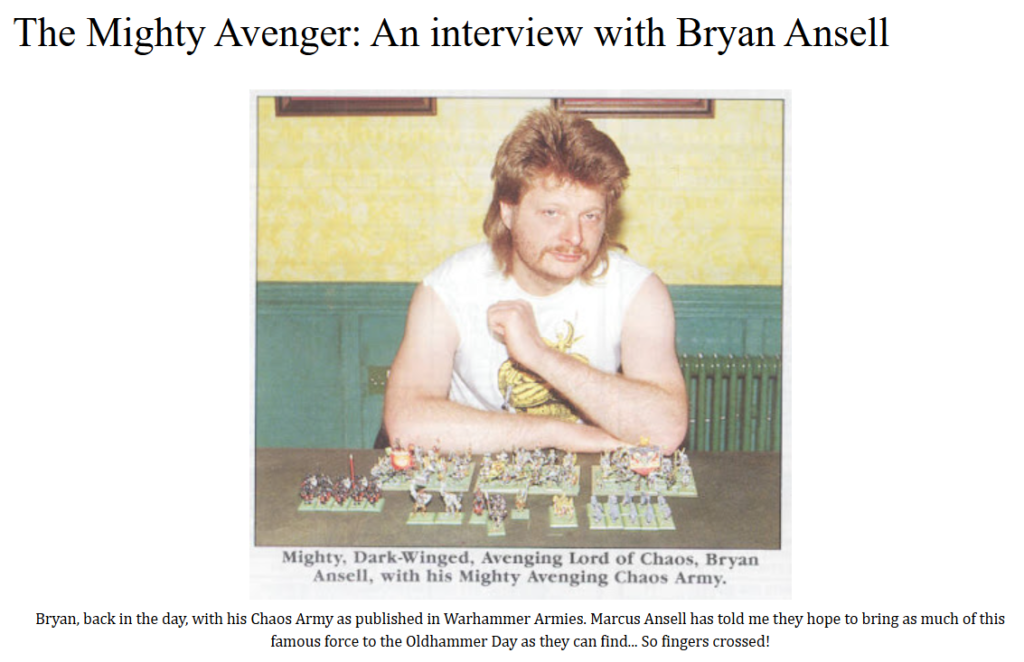
Bryan Ansell, Mike McVey, Tony Ackland, Rick Priestley, and Bill King are just a few of the hobby heavyweights you’ll find conversations with over there. It really is a treasure trove for anyone interested in Games Workshop during that uniquely special Ansell era.
On this episode of the Tabletop Miniature Hobby Podcast, Orlygg gets to sit in the guest chair for once. I thoroughly enjoyed this conversation, and I’ve no doubt that you will, too!
There was a time when you did not “build a list”. You turned up, someone at the head of the table set the scene, and the battle unfolded.
Halfway through the day, a storm rolled in. Cannon lost effectiveness. Cavalry bogged down. Infantry slogged through mud. You adapted.
No points. No balance patch. Just judgment.
Early historical games and the first wave of fantasy crossovers assumed something many players now struggle with: an umpire and a scenario. You declared intent rather than measuring movement to the millimetre. You tried things. Sometimes they worked. Sometimes they went wrong in spectacular fashion.
Warlord Games attempted to recapture that spirit with the first edition of Black Powder. No points values, just command rules and scenario play. Over time, points filtered back in because players demanded them. Many now find it difficult to play without a number telling them the game is fair before it begins.
That obsession with balance has reshaped the hobby. Tournament culture rewards predictability. Net lists circulate online. Optimised builds become standard. Players arrive already knowing what the “correct” army looks like. Surprise becomes an inconvenience rather than a thrill.
Historical gaming has not escaped it either. Systems such as the DBX family formalised army structures decades ago. Twelve elements a side. Prescribed ratios. Terrain determined in a controlled way. It creates parity, but it also flattens the unpredictability that defined the periods being represented. No one told the Mongols to rein it in for fairness.
Commercial reality plays its part. Games Workshop moved from broad hobby coverage to a tightly controlled ecosystem of its own products. Points systems standardise play and support organised events. They also make purchasing decisions clearer and repeatable. It is effective business. It narrows the lens through which many people first encounter the hobby.
The counter movement is not new. It is a rediscovery. Joe McCullough with Frostgrave and Oathmark leans heavily into narrative. Your warband grows. Your kingdom develops from the land you claim. Identity flows from story rather than a faction badge.
Moonstone goes further. Small model counts. Named characters. Rules freely available. The emphasis sits squarely on personality and evolving lore rather than efficiency.
The common thread is not the rule set. It’s attitude.
A good umpire or GM treats the table like a director treats a cast. Set the situation. Let the players act. Adapt when they go off script. Campaign play magnifies this. Commit too much force and lose it, and it stays lost. Your next game is shaped by that decision. Consequences generate tension far more effectively than a perfectly balanced 2,000-point reset.
Even historical refights benefit from this approach. Add character quirks drawn from film or memoir. Give officers a once-per-game ability tied to their personality. Let cavalry ignore the neat retreat clause if blood is up and history suggests they would. A little looseness often produces far more memorable moments than strict adherence.
Somewhere along the line, hobby time became serious time. Cost debates. Meta-analysis. Optimisation. Yet we are still pushing toy soldiers around a table. The value lies in the enjoyment and the stories that emerge, not the precision of the spreadsheet.
If you want to feel that older energy again, try removing the safety net. Run a scenario without points. Use an umpire. Allow imbalance. Accept uncertainty.
You may find the game breathes more easily without the numbers dictating every decision.
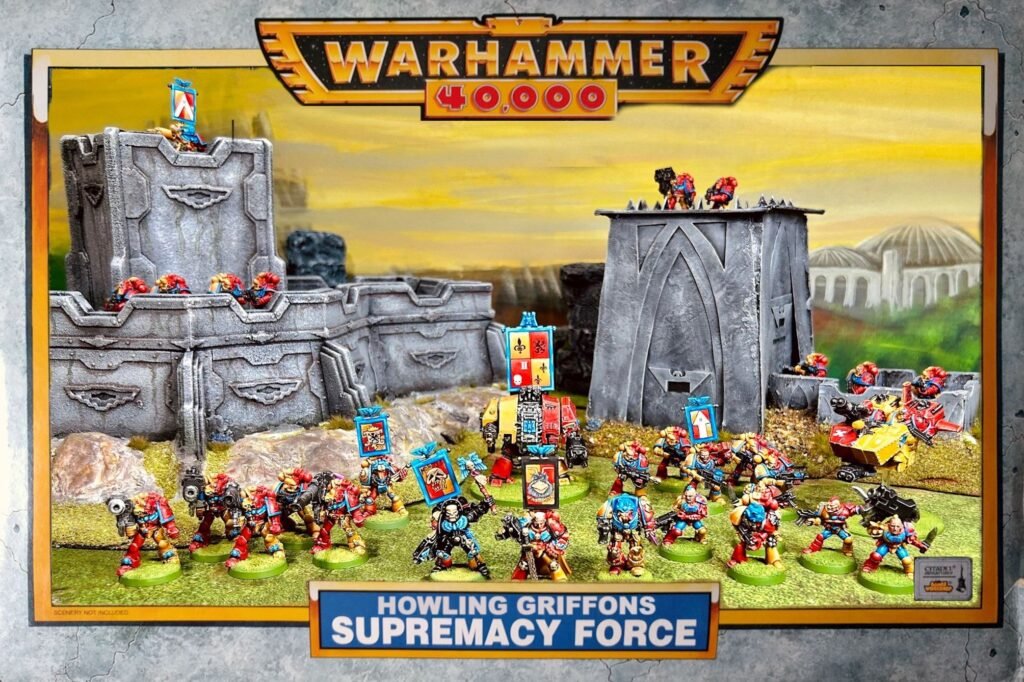
White Dwarf readers of a certain vintage will undoubtedly remember Fred Reed’s iconic Howling Griffons space marine army. Then-Games Workshop store worker Fred showcased the stunning force in issue 179 (November 94), and it had a runout in the mag’s battle report a month later.
Fred’s army was a source of inspiration to many young hobbyists in the mid-90s and is still talked about more than 30 years later. One man who’s gone above and beyond in his nostalgia, however, is Jonny Watson of the Jonny Watson Gaming YouTube channel. Jonny did the ultimate homage to Fred’s Howling Griffons by assembling and painting his own tribute act:
Jonny Watson’s Howling Griffons
I had the pleasure of chatting to Jonny about this project and the opportunities it brought him, from interviewing Fred Reed himself to being featured on the hallowed pages of White Dwarf. We covered his origin story, returning after the inevitable deep freeze, and how running a YouTube channel can supplement and enhance your hobby when you’re not playing the algorithm game.
When Rick Priestley casually says, “What you’re doing sounds entirely normal to me,” it becomes clear how strange modern wargaming culture has become.
On a recent two-part episode of the Tabletop Miniature Hobby Podcast, Priestley, co-creator of Warhammer and Warhammer 40,000, listens as Jason and Mark describe big tables, no points, Games Masters, imbalance by design, and campaigns driven by story rather than symmetry.
To him, none of this sounds radical. It sounds familiar.
Narrative wargaming is often framed as a niche revival or a reaction against competitive play. Priestley rejects that outright. Narrative play is not a rebellion. It is the foundation modern wargames were built on.
Before points values and mirrored tables, games were shaped by scenario and judgment. Sieges were unfair. Last stands were desperate. Balance was not calculated. It was agreed.
Early British designers such as Featherstone, Grant, and Young did not rely on points systems. They assumed good faith, shared imagination, and players who wanted the game to be interesting rather than optimal.
So what changed?
When Balance Became an Ideology
Points values began as a convenience. They helped players build collections and find games quickly. Over time, that convenience hardened into expectation.
Modern balance culture assumes that a properly designed game should resolve to a near-perfect 50/50 outcome between equally skilled players. The result is list optimisation, meta-chasing, and games whose outcome is often decided before the first dice roll.
Priestley does not condemn this approach. He simply questions what it produces. Efficiency, perhaps. Predictability, certainly. But not always joy.
The Games Master We Lost
One of the clearest casualties of this shift is the Games Master.
In the episode, Jason describes running vast multiplayer games overseen by a GM who introduces events, resolves disputes, and keeps the story moving. Priestley immediately recognises the model. This was early Warhammer. Early roleplaying games. Early wargaming.
The GM was never a workaround. They were the engine.
Attempts to replace that role with campaign books and flowcharts were understandable, but limited. You cannot automate trust or improvisation. A referee works because everyone agrees they are there to make the game better.
As Priestley puts it, the only rule is that the Games Master is always right. Not because they wield authority, but because the group has given them responsibility.
Another striking thread in the conversation is how casually the group ignores rules.
Forgotten mechanics are handwaved. Unclear outcomes are resolved with a roll and a decision. Priestley admits that even with systems he helped write, momentum matters more than correctness.
This is not carelessness. It is confidence.
Narrative players are not anti-rules. They simply refuse to let rules dominate the experience. Systems are scaffolding. If something blocks the flow of the game, it is removed.
In a hobby obsessed with precision and FAQs, this mindset feels quietly subversive.
Not a Rejection, a Reminder
Priestley is not calling for the end of competitive play. He is arguing for memory.
Narrative gaming never died. It was crowded out of the conversation. What groups like Jason’s are doing is not inventing something new. They are remembering how the hobby once worked and choosing to make space for it again.
The most radical idea in modern wargaming is not breaking the rules.