
Spend five minutes talking to Ronnie Renton, and one thing becomes clear. He is still, by his own admission, “mentally… only 12 years old.”
That enthusiasm has carried him from the earliest days of Warhammer through to founding Mantic Games, and into a modern hobby that looks very different to the one he started in.
Powered by RedCircle
“I had a pre-order for the very first edition,” he says. “So I’ve been on that journey from day one.”
Now, decades later, he is designing for players who have taken that same journey and no longer have the time they once did.
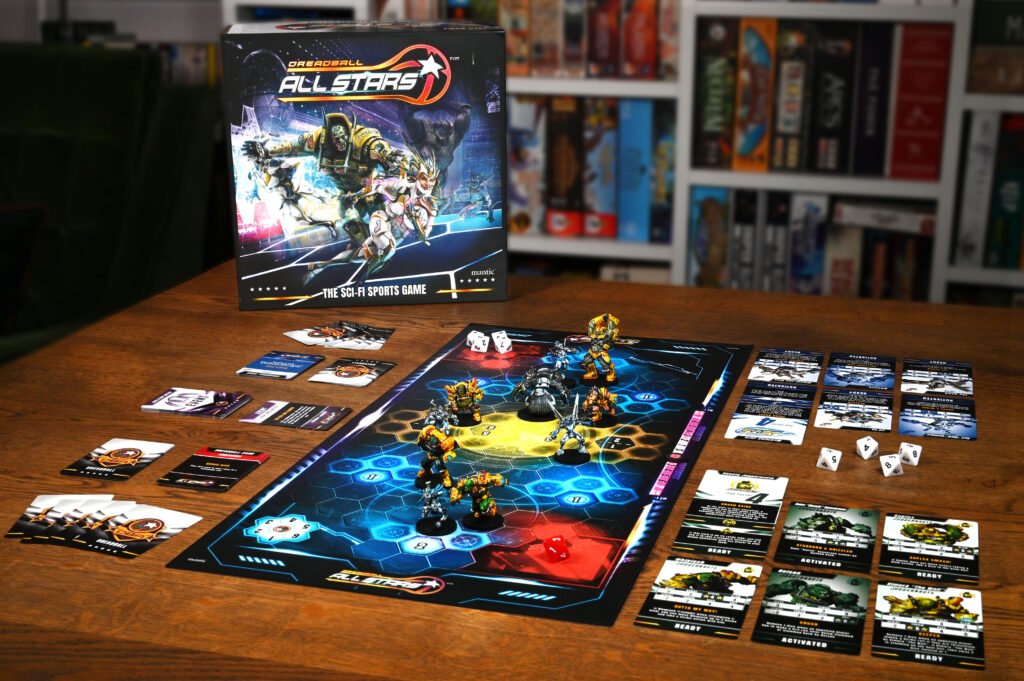
Mantic are currently Kickstarting DreadBall All Stars™: The Sci-Fi Sports Game
Making games that fit real lives
A recurring theme in Renton’s thinking is simple. People still love the hobby, but their lives have changed.
“I don’t have time to spend ages finessing loads of things if I just want to play on a Tuesday night,” he explains.
That shift has shaped Mantic’s recent output. Where once the answer to everything was a large-scale game like Kings of War, the company now builds across a wider spread. Smaller, faster experiences sit alongside the traditional long-form hobby projects.
Renton describes it as two types of game.
“I think there’s the Forever Game and then there’s the Now Game,” he says.
The former is the classic army-building commitment. The latter is something you can pick up, play for a few months, then move on from without guilt.
Most players, he suggests, now live somewhere between the two.
Bringing in a legend
That shift in thinking is also reflected in who Mantic chooses to work with. One of the more notable recent moves has been bringing in Jervis Johnson, a designer whose influence stretches back decades.
For Renton, the decision was straightforward once the idea took hold.
The opportunity came while rethinking DreadBall. Rather than revisiting the existing game, the aim was to relaunch it in a way that felt fresh, faster, and easier to pick up.
“It had to pay homage to what came before, but it mustn’t be a rehash,” Renton explains.
Johnson’s approach reflects that brief. The focus is on clarity and pace, with rules that quickly become second nature.
“Once you know it, everything you need is on the card,” Renton says.
For Mantic, it is part of a broader direction. Bring in experienced designers, give them room to work, and build games that players can return to easily.
“He just knows how to do it from beginning to end,” Renton adds.
The danger of listening too much
For all the talk of community engagement, Renton is wary of letting players design the game.
“If you give the keys to the asylum to the loonies, they’ll make the game that they think they want,” he says.
The problem is not bad intent. It’s focus. Players tend to fixate on edge cases and small frustrations, often at the expense of what makes a game welcoming in the first place.
“You must stay true to it, but you must clean it up and make it welcoming to new players,” he explains.
Fail to do that, and even a well-loved system slowly fades.
Solving the real problems
Renton now starts design from a different place than he once did.
“What problem am I going to solve?”
Sometimes that problem is practical. Terrain that looks good but is also clear to play on. Games that can be set up quickly and packed away without taking over the house.
Other times, it’s social. Making it easier for players to actually get games in.
“I want to come together, have fun, roll dice, and not have to spend all night remembering rules,” he says.
That thinking runs through everything from quick-play sports games to simplified army formats.
Not instead of, but alongside
One of Renton’s more telling observations is that new games are rarely replacements.
“It’s an as well as game, not an instead of game,” he says.
Players are not abandoning their main systems. They are adding to them. A fast, one-hour game sits alongside a larger project rather than competing with it.
That shift has consequences. It means games need to be easier to revisit, easier to teach, and easier to enjoy without long preparation.
Keeping the hobby alive
For all the changes, Renton does not think players themselves have become harder to please. The challenge is different.
“There’s more choice,” he says.
That makes it harder to reach critical mass. A great game still fails if no one nearby is playing it.
Which brings him back to the same core idea. Remove friction. Help players get from buying a game to actually playing it.
Because in the end, nothing else matters if the miniatures never reach the table.
And for someone who has been there since the very beginning, that still seems like a goal worth chasing.