
Few designers have influenced narrative miniature gaming as much as Tuomas Pirinen. From Mordheim in the late 1990s to the recent breakout success of Trench Crusade, his games have always leaned heavily toward story, character and campaign play.
What surprises him most is that the latest one worked as well as it did.
Powered by RedCircle
Listen wherever you get your podcasts
“We were totally prepared to lose our shirts and be happy about it,” Pirinen says of launching Trench Crusade. “But it didn’t go that way.”
The project was essentially a gamble between friends. Pirinen and collaborator Mike Franchina funded sculpting and development themselves, assuming the Kickstarter would be a passion project rather than a runaway hit.
Part of the reason was the concept itself.
“On the surface, it’s very counterintuitive,” Pirinen explains. “You go into a space where there is a totally dominant player. Then you narrow your audience because the game is clearly aimed at a mature audience. And the theme is religion and its role in war, which no major games company would touch with a barge pole.”

By the logic of spreadsheets and market analysis, it should not have worked.
“But creative work doesn’t always follow the Excel sheet,” he says. “The Excel doesn’t always determine the fate of creative endeavour.”
From Mordheim to Trench Crusade
For many hobbyists, Pirinen’s name is still inseparable from Mordheim. Released in 1999, the skirmish game focused on small warbands exploring the ruins of a cursed city, gaining injuries, experience and grudges along the way.
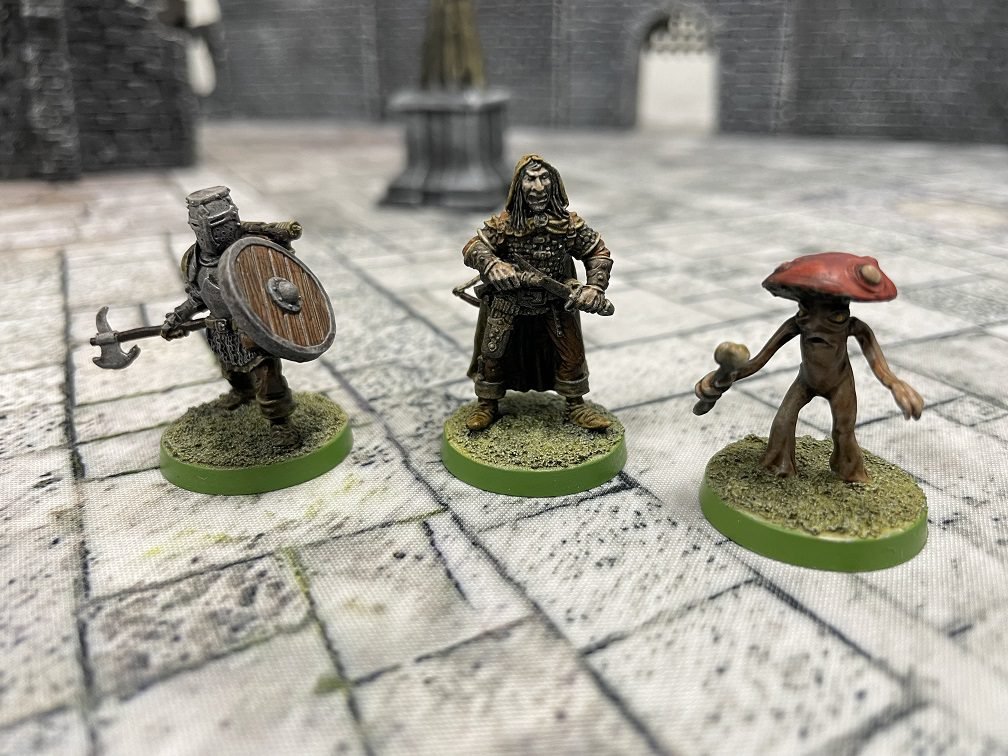
“Mordheim was very narrative driven,” Pirinen says. “It wasn’t about perfectly balanced competitive play. It was about creating a story with your friends as the campaign unfolds.”
That philosophy has never really left his design work. Trench Crusade follows the same broad idea, although updated for modern players.
“In many ways, it takes that high-level idea and brings it forward,” he says. “Mordheim came out in 1999, so a lot of water has flowed in the river since then.”
Interestingly, Pirinen himself used to approach games very differently.
“When I was younger, I was very competitive,” he admits. “Winning mattered a lot to me. These days I’m much more focused on the narrative side.”
That competitive background still informs his design work. Even narrative games need solid rules.
“If the rules don’t work, you just end up arguing every two minutes. In a miniature game, there’s no dungeon master to smooth things over.”
Why campaigns fall apart
Despite their popularity, narrative campaigns often struggle to survive beyond the first few games. Pirinen believes the reason is mostly practical.
Campaign play demands commitment. Players need to keep turning up, track experience and equipment, and maintain armies that grow over time.
“It’s simply more work,” he says.
There is also a more subtle problem. Campaigns can collapse if one player falls too far behind early on.
“A very common reason campaigns fall apart is that one player gets beaten badly in the first few games,” Pirinen explains. “They feel like nothing they do matters anymore, so they stop playing. Then the campaign falls apart.”
The solution is something designers call catch-up mechanics. These systems help struggling players remain competitive without removing the reward for winning.
It is a delicate balance. Too much help, and victory feels meaningless. Too little and the narrative ends early.
The balance paradox
Balance is often treated as the holy grail of wargame design. Pirinen is more sceptical.
“Perfect balance is possible,” he says. “But it probably isn’t that much fun.”
The reason is simple. True balance usually means forces become increasingly similar. Yet variety and asymmetry are where the excitement lies.
“A huge part of the fun is encountering something new,” he says. “A new warband, a new character, some new piece of equipment. Those things create interesting situations.”
They also create imbalance.
Rather than chasing perfection, Pirinen relies on extensive playtesting and data. If factions win roughly equal numbers of games over time, the design is probably healthy even if players argue otherwise.
“You shouldn’t always listen to what people say,” he notes. “Look at the results.”
Designing the ending first
One of Pirinen’s most practical design tricks is starting from the end of a campaign rather than the beginning.
“If you know the final battle, you can work backwards,” he says.
That approach helps identify problems early. If a key character dying in game three would break the narrative climax, the designer can adjust the scenario before the campaign ever reaches the table.
It is a method Pirinen uses not only for tabletop design but also for roleplaying campaigns and video games.
“At the end of the day, it usually comes down to the final battle,” he says. “If everyone arrives there feeling they still have a chance, you’ve probably done well.”
History and the darker side of heroism
Many of Pirinen’s settings feel unusually grounded compared to typical fantasy wargames. That comes from his reading habits.
“I read a lot of history,” he says. “Academic history, historical novels, everything.”
What interests him most are turning points where events suddenly shift direction. The fall of Constantinople. The later stages of the Hundred Years War, when artillery changed siege warfare. Moments where a seemingly unstoppable trend suddenly breaks.
Those moments also shape the tone of his games.
“My sympathies are usually with the ordinary people,” he says. “Men and women fighting for their homes even though they had nothing to do with causing the war.”
That perspective helps explain the bleak worlds found in both Mordheim and Trench Crusade. The darker the circumstances, the brighter the heroism appears.
“If the situation isn’t grim and challenging, you lessen the heroism,” he says.
The moment that mattered
For all the discussion of rules and systems, Pirinen insists the most powerful moments in gaming rarely come from mechanics.
He recalls one roleplaying campaign where the players were pursued by an enemy far beyond their ability to defeat. A beloved companion stayed behind to hold them off while the party escaped.
“My players were in tears,” he says simply.
No rulebook can guarantee that kind of experience.
“That’s something between human beings,” Pirinen explains. “It takes time for players to trust each other enough to open up like that.”
A campaign worth the journey
So how long should a campaign last?
Pirinen often recommends around six games. It feels like a journey without becoming overwhelming.
For groups with more time, a monthly game over a year can feel truly epic. Roleplaying campaigns may stretch even longer. One of his own lasted six years.
The key ingredient is not complexity or balance but investment.
“You get more out if you put more of yourself into it,” he says.
In the end, that philosophy runs through everything Pirinen designs. Rules matter, but they exist to support something larger.
A good world. A group of friends. And the unpredictable stories that emerge when the dice hit the table.
Or as he puts it, borrowing an old gaming phrase:
“Let the dice tell the story.”